

1 hr ago
U.S. Economic Siege May Not Force Iran Nuclear Settlement

The United States is trying to pressure Iran by blocking access to money and trade.
It hopes Iran will make a deal about its nuclear programme.
Iran’s economy is suffering, with very high inflation and fewer oil exports.
However, Iran has learned ways to keep trading despite sanctions.
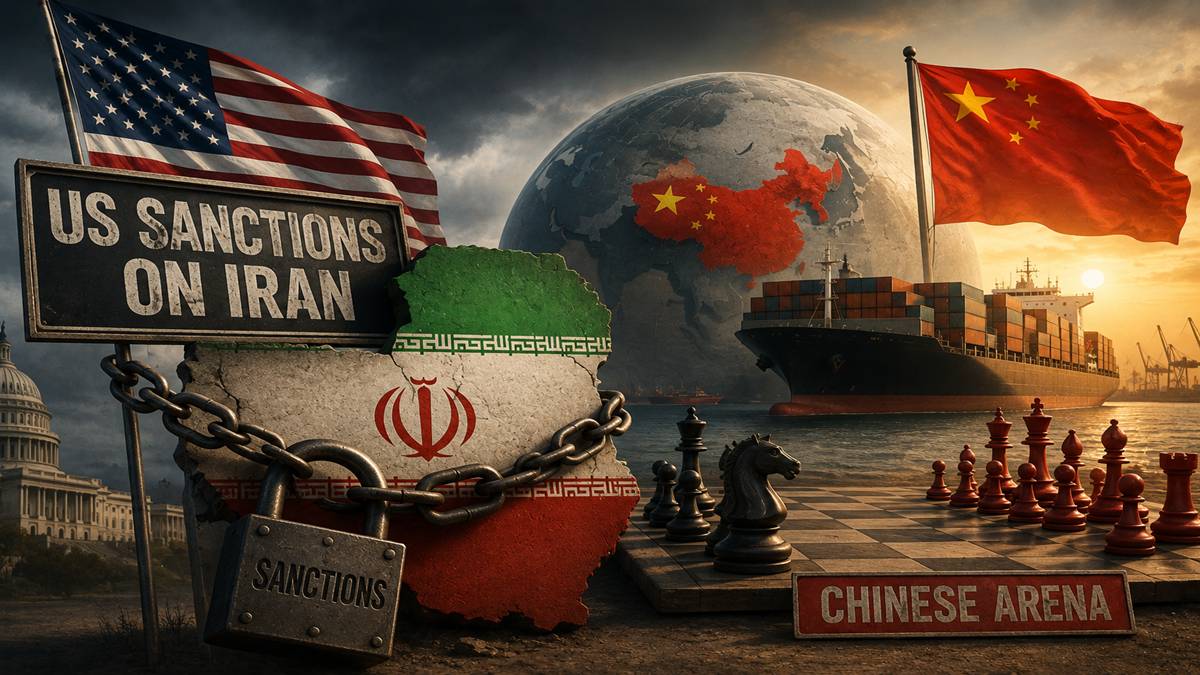
China still buys much of Iran’s oil, which gives Tehran an important source of money.
The United States may hesitate to punish Chinese banks because that could create a larger dispute with China.
Iran also has influence over important waterways, including the Strait of Hormuz and routes near the Red Sea.
The article says military attacks and earlier offers of money have not solved the disagreement.
India could face higher energy costs and shipping risks if the confrontation continues.

The United States announced sanctions on 60 Iranian individuals, entities and ships across five economic sectors.
Iran’s economy is under severe strain, with inflation at 88 percent, a weakened rial and falling oil exports.
China reportedly buys about 90 percent of Iran’s crude exports, limiting the sanctions’ potential impact.
The article says military pressure and earlier diplomatic incentives have not ended Iran’s nuclear programme or opened the Strait of Hormuz.
A prolonged confrontation could threaten India’s energy security, Gulf shipping and trade through the Red Sea.
- Who
- The United States, Iran and China are the principal actors; India is identified as a country exposed to the consequences.
- What
- Washington has imposed a new package of economic sanctions intended to pressure Tehran into accepting limits on its nuclear programme and making concessions related to the Strait of Hormuz.
- Where
- The dispute centers on Iran and affects the Gulf, the Strait of Hormuz, Yemen and Red Sea shipping routes.
- When
- The sanctions were announced on August 24; the article also discusses developments during 2025 and the approach of U.S. midterm elections.
- Why
- The United States is seeking a negotiated settlement after military pressure and previous diplomatic incentives failed to end the nuclear dispute.
Economic Pressure Can Force Concessions
Economic Pressure Risks Strategic Failure
Effect of sanctions
Economic Pressure Can Force Concessions
Washington’s strategy assumes that worsening Iran’s economic problems can persuade Tehran to negotiate over its nuclear programme and regional activities.
Economic Pressure Risks Strategic Failure
Iran has operated under sanctions since 1979 and has developed alternative financial and trading channels, including shadow banks, tankers and domestic payment systems.
Role of China
Economic Pressure Can Force Concessions
Additional pressure, including possible secondary sanctions on Chinese banks, could reduce Iran’s access to oil revenue.
Economic Pressure Risks Strategic Failure
China continues to buy most of Iran’s crude exports and has warned that new sanctions threaten global growth and financial stability; targeting Chinese institutions could widen the crisis into a U.S.-China confrontation.
Negotiated exit
Economic Pressure Can Force Concessions
The June MOU shows that substantial economic incentives could provide a path to a settlement if Washington uses them effectively.
Economic Pressure Risks Strategic Failure
Iran’s leadership appears more security-focused and uncompromising, and Tehran may demand significant financial and strategic compensation rather than accept coercion.
Key facts
- Sanctions operation
- The United States called the new campaign “Operation Economic Outcast.”
- Sanctions targets
- The package covers 60 individuals, entities and ships across five Iranian economic sectors.
- Iranian inflation
- Inflation in Iran has reached 88 percent, according to the article.
- Chinese oil purchases
- China buys about 90 percent of Iran’s crude exports, often at a discount of about $12 per barrel.
- Iranian oil holdings
- Iran reportedly has about 80 million barrels outside the Strait of Hormuz that sanctions make difficult to monetize.
- June memorandum
- A June MOU reportedly offered sanctions relief, unfreezing oil revenues and $300 billion for reconstruction in exchange for major Iranian concessions.
- India’s exposure
- A prolonged confrontation could affect India’s energy security, Hormuz shipping and Red Sea maritime commerce.
Sources
Related news
US Sanctions on Iran Shift Pressure Toward China and India
Economic front dominates US-Iran war as sanctions squeeze Tehran

Trump Threatens Economic D-Day Against Iran and Its Partners

US Prepares Unprecedented Economic Pressure Campaign Against Iran
Iran’s Hormuz Leverage Wanes as U.S. Economic Pressure Intensifies
U.S.-Iran War Stalemate Deepens Amid Sanctions and Strikes
Oil Prices Surge After Houthi, Gulf Ship Strikes

Saudi Pipeline Shutdown Sends Oil Prices Higher, Threatens India Supply
Saudi Pipeline Shutdown Threatens Global Oil Exports and Supplies
Iran-GCC Talks On Strait Of Hormuz Postponed Amid Tensions
