2 weeks ago
Economic front dominates US-Iran war as sanctions squeeze Tehran
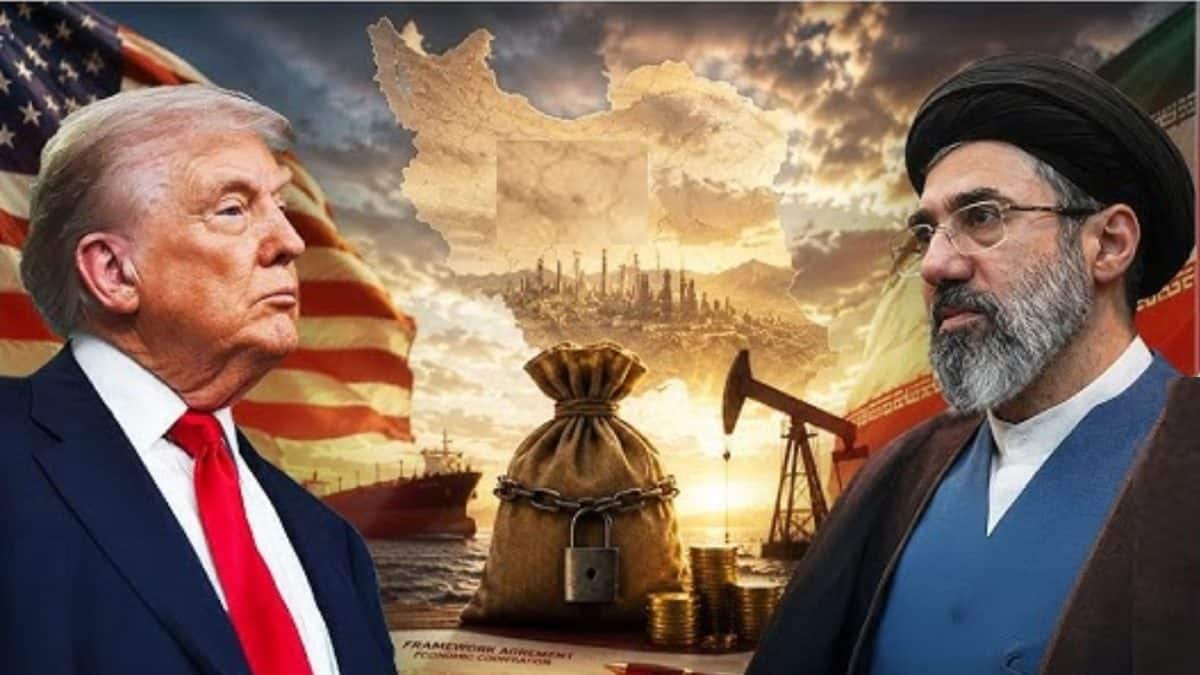
The United States and Iran are in a big fight.
Instead of only shooting missiles, they are now also fighting with money and trade.
The US is trying to stop Iran from selling its oil so Iran has less money.
It is using rules called sanctions and blocking Iran's ports with ships.
Iran is fighting back by slowing ships down in the Strait of Hormuz, a narrow waterway that many oil ships use.
Fewer ships now go through, which could make oil and shipping cost more for people all over the world, including in the US.
The US is also thinking about punishing Chinese companies that buy Iranian oil, and Iran sells most of its oil to China.
Nobody knows who will give in first.
Iran may run out of money, or the US may get tired of higher costs.
That is why people are watching what happens next.

The Trump administration is shifting the Iran war to an economic front, relying on sanctions, oil restrictions, financial pressure and a naval blockade of Iranian ports.
US Treasury Secretary Scott Bessent says Washington is preparing economic measures against Iran that are more severe than previous sanctions campaigns.
Washington is considering secondary sanctions against Chinese independent refineries, known as 'teapots,' that buy Iranian crude, and on Chinese banks processing Iranian oil revenues.
Reuters, citing Kpler data, reported that China bought more than 80% of Iran's shipped oil in 2025, with independent Chinese refineries accounting for much of that trade.
Commercial traffic through the Strait of Hormuz has fallen sharply after attacks on vessels, and a prolonged disruption could raise oil, shipping and insurance costs worldwide.
- Who
- The United States (Trump administration) and Iran, with Chinese refineries and banks drawn into the confrontation.
- What
- The Iran conflict has moved to an economic front: Washington is using sanctions, financial pressure and a naval blockade to force Iranian concessions, while Iran restricts Strait of Hormuz shipping to impose costs on the US and its allies.
- Where
- Iran, the Strait of Hormuz, and the international oil trade, including the US-China-Iran trade route.
- When
- Months into the conflict; additional Iran-related sanctions on insurers and tankers were reported in July, and 2025 oil-trade data is cited.
- Why
- The US aims to deprive Iran of oil revenue and international economic access to push it towards concessions; Iran aims to withstand the squeeze until the costs become uncomfortable for Washington and its allies.
US economic pressure campaign
Iranian resistance and analysts' caution
Will sanctions force Iran to concede?
US economic pressure campaign
The Trump administration bets that sanctions, financial restrictions and the naval blockade will deprive Tehran of revenue and economic access, eventually forcing concessions.
Iranian resistance and analysts' caution
Analysts and the Associated Press report that sanctions have produced mixed results over decades, take time to yield political change, and may not by themselves deliver the concessions Washington wants.
Strait of Hormuz as an economic weapon
US economic pressure campaign
Reopening the waterway is essential to restoring global energy flows, and Washington wants Iran to pay for keeping it restricted.
Iranian resistance and analysts' caution
Iran sees restricting Hormuz traffic as one of its most powerful ways to impose costs abroad, raising oil, shipping and insurance costs and creating political pressure on Washington if fuel prices rise.
Secondary sanctions on Chinese buyers
US economic pressure campaign
Targeting Chinese 'teapot' refineries and banks would make Iran's economic network harder to operate even when transactions involve companies outside Iran.
Iranian resistance and analysts' caution
This carries the risk of a direct economic confrontation with Beijing and could disrupt an important source of crude for Chinese refiners.
Key facts
- Conflict front
- Economic warfare: sanctions, oil restrictions, financial pressure and naval blockade
- US Treasury Secretary
- Scott Bessent
- Planned US measures
- Unprecedented economic measures; possible secondary sanctions on Chinese 'teapot' refineries and banks
- China's share of Iran's shipped oil (2025)
- More than 80% (Reuters, citing Kpler)
- Iran's countermeasure
- Restricting traffic through the Strait of Hormuz
- Strait of Hormuz traffic
- Fell sharply after vessel attacks and renewed US threats
- Existing US targets
- Tankers, insurers and other maritime trade linked to Iranian oil (additional sanctions reported in July)
Sources
Related news
US Prepares Unprecedented Economic Pressure Campaign Against Iran

Trump Threatens Economic D-Day Against Iran and Its Partners
Iran War Reaches Costly Stalemate as Trump Bets on Sanctions

US-Iran Strikes Return Focus to Strait of Hormuz

Vance Calls Economic Pressure Effective as Iran Rejects Sanctions

US Threatens Toughest Sanctions Yet as Iran Condemns Economic Warfare

Saudi Arabia Says Iranian Tanker Attack Killed Two Sailors
U.S.-Iran Exchange Escalates Across Middle East, Markets Slide
Trump Aides Seek Quiet Iran War Before Midterm Elections
US Warns Middle East Travelers Amid Escalating Iran-Linked Tensions

Indian Stocks Slide as Oil, Conflict and Yields Rise