2 days ago
India’s June Quarter Growth Defies War and Energy Pressures
India’s economy grew quickly in the three months from April to June.
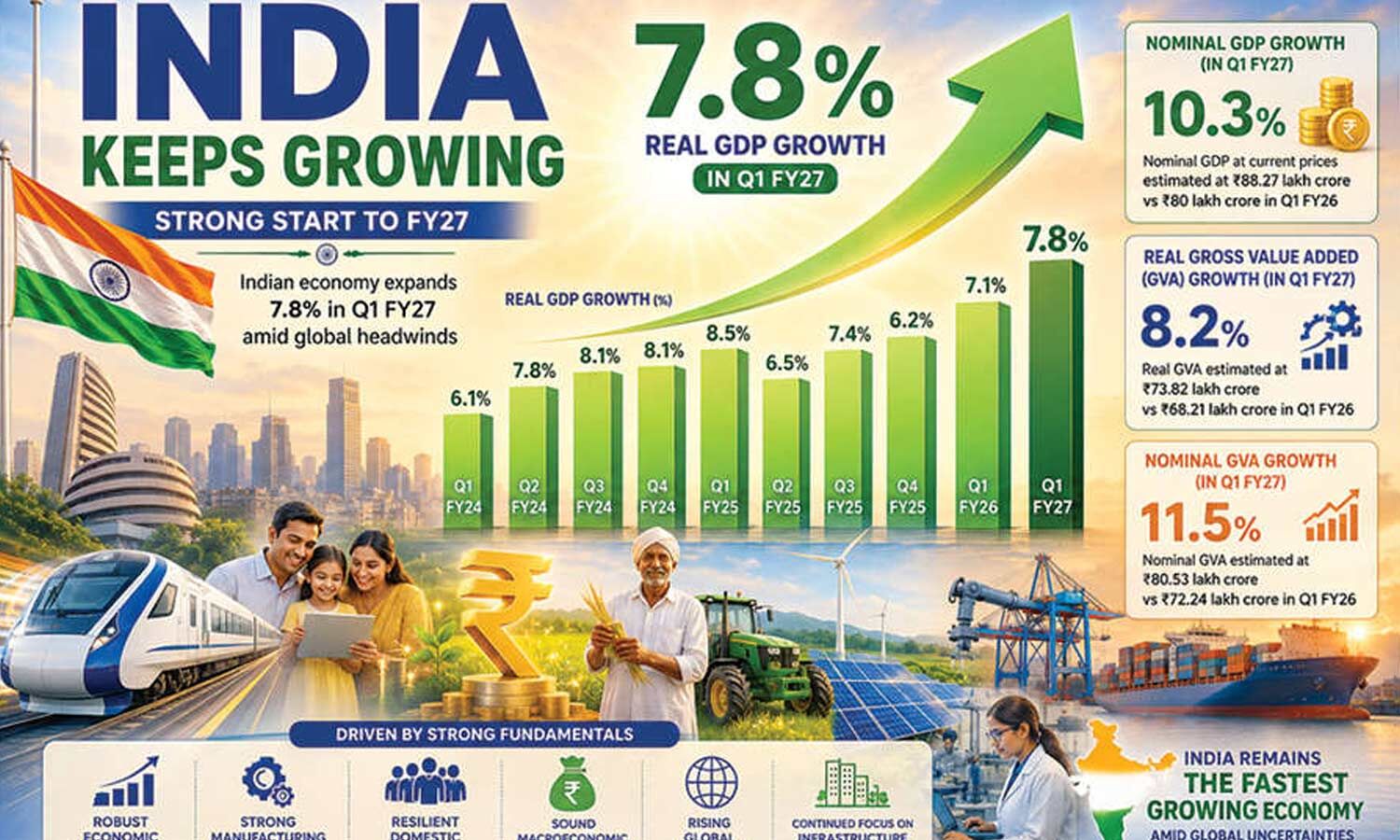
It expanded by 7.8%, even though a war in West Asia made energy more expensive.
Businesses in services, factories and construction helped the economy grow.
Investment also increased, partly because the government spent more on building projects.
People’s spending rose by 7.1%, showing that household demand remained fairly strong.
Exports grew while imports fell, which gave the economy another lift.
Farming grew more slowly than many other parts of the economy.
The results were stronger than expected, although higher energy costs and government spending pressures remain risks.

India’s GDP grew 7.8% in April-June, exceeding the Reserve Bank of India’s 7% forecast.
Gross value added rose 8.2%, led by 10% services growth and 9.2% manufacturing growth.
Gross fixed capital formation surged 11.9%, supported by government capital expenditure and domestic investment.
Exports of goods and services increased 12%, while imports contracted 1.1%, boosting net exports.
The West Asia conflict, elevated energy prices, higher subsidies and fuel-tax cuts created fiscal and economic pressures.
- Who
- India’s economy, measured by data from the Ministry of Statistics and Programme Implementation.
- What
- GDP grew 7.8% in the April-June quarter, while GVA increased 8.2%.
- Where
- India.
- When
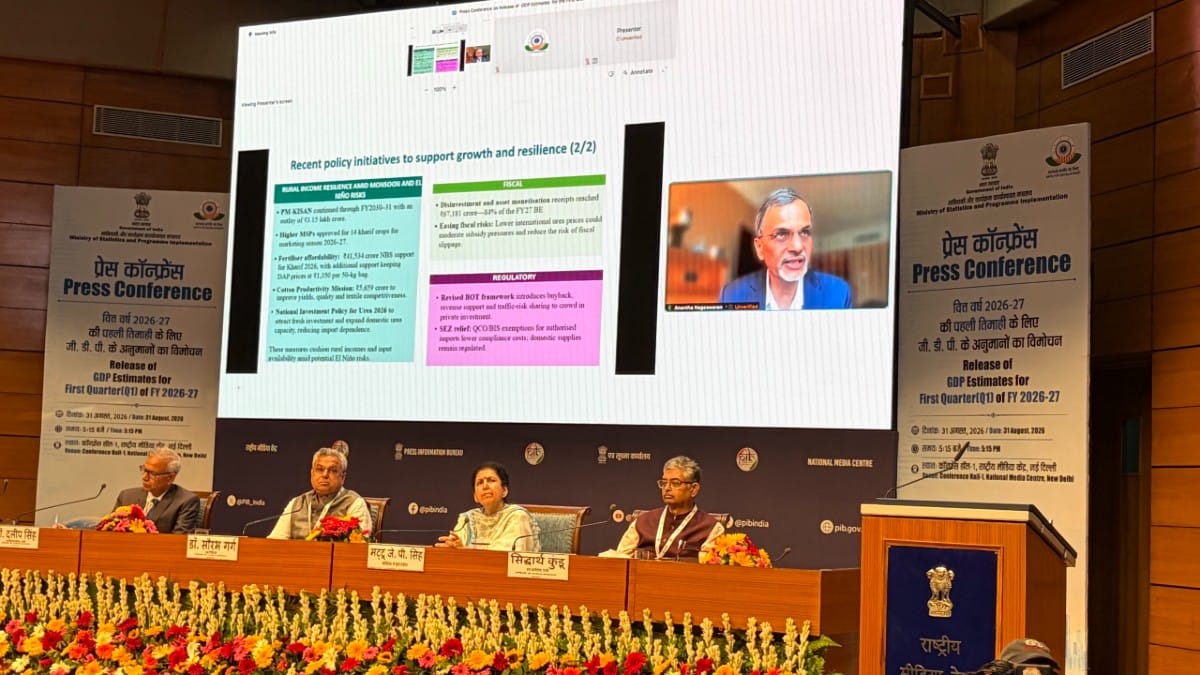
- The quarter ended in June; the data was released on August 31.
- Why
- Growth was supported by services, manufacturing, investment, domestic consumption and exports, despite geopolitical and energy-cost pressures.
Growth Optimism
Economic Risks
Strength of the expansion
Growth Optimism
The 7.8% GDP growth rate beat the Reserve Bank of India’s forecast and most analyst estimates, with services, investment and exports providing broad support.
Economic Risks
GDP growth slowed from the revised 8.6% rate in the previous quarter, while the central bank expects growth to moderate to 6.7% for the financial year.
Investment outlook
Growth Optimism
Investment growth accelerated to 11.9% for a fourth consecutive quarter, supported by government capital expenditure, corporate balance sheets and credit growth.
Economic Risks
Analysts said geopolitical uncertainty could temper the recovery, and the sustainability of investment growth remains exposed to external conditions.
Impact of the West Asia conflict
Growth Optimism
Despite the conflict and energy-price shock, domestic demand, services, manufacturing and exports kept economic activity resilient.
Economic Risks
Higher subsidy payouts and excise-duty cuts on auto fuels weighed on net product taxes, while elevated energy prices increased pressure on government finances.
Key facts
- Quarterly GDP growth
- 7.8% in April-June, compared with revised growth of 8.6% in the preceding quarter.
- GVA growth
- 8.2% during the quarter.
- Services growth
- 10%, making services the strongest broad contributor.
- Manufacturing growth
- 9.2%.
- Investment growth
- Gross fixed capital formation increased 11.9%.
- Household consumption
- Private final consumption expenditure grew 7.1%.
- Trade performance
- Exports rose 12%, while imports contracted 1.1%.
- Agriculture growth
- Agriculture, forestry and fishing grew 3.6%.
Quotes
Madan Sabnavis
Chief economist at Bank of Baroda
“This is a major takeaway as this involves both private and government expenditure, with the former being driven by data centres and power besides metals.”
 financialexpress.com
Alexandra Hermann Prasad
Lead India economist at Oxford Economics
“We expect growth to strengthen gradually towards the end of the year and into 2027, supported by resilient household demand and a recovery in investment.”
financialexpress.com
Sources
Related news
India's Q1 GDP Growth Hits 7.8% Despite Global Turmoil
India’s Q1 FY27 Growth Beats Forecast Despite Iran War Fears
India’s 7.8% Q1 Growth Outpaces Forecast Despite Global Risks
India's GDP Growth Beats Expectations Amid Persistent Economic Risks
India’s GDP Growth Beats Expectations at 7.8% in First Quarter
Goyal Defends India’s 7.8% GDP Growth Amid Data Debate
Government Defends India’s 7.8% Q1 Growth Amid GDP Debate
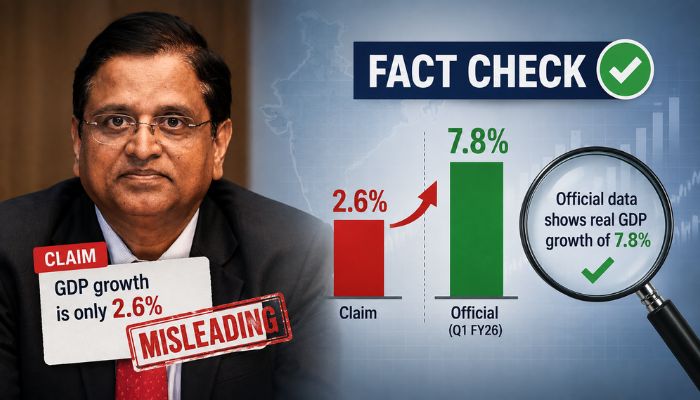
Government Rejects 2.6% Claim, Defends India’s 7.8% GDP Growth
Modi Hails 7.8% Q1 GDP Growth, Urges Swadeshi Amid Criticism

Modi Hails 7.8% GDP Growth as Congress Challenges Numbers