1 day ago
India’s 7.8% Q1 Growth Outpaces Forecast Despite Global Risks
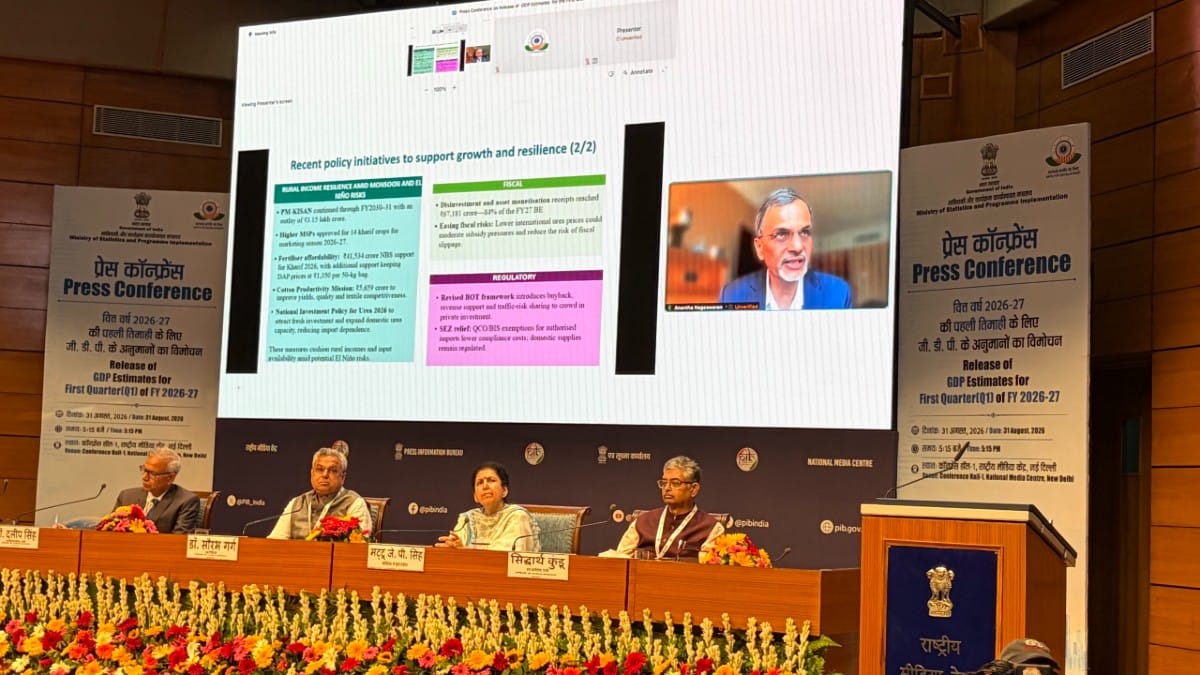
India’s economy grew faster than expected during the first three months of FY 2026-27.
It expanded by 7.8%, even though the world economy faced conflicts and higher energy costs.
Factories, construction companies and service businesses all grew strongly.
People also continued buying goods, including vehicles.
Exports increased, giving the economy another boost.
Investment grew quickly, but much of it came from the government rather than private businesses.
The impact of higher oil prices has been smaller than feared so far.
Experts still warn that expensive oil, weak private investment, inflation and uncertain rainfall could make growth slower later.

India’s real GDP grew 7.8% in the first quarter of FY 2026-27, exceeding the Reserve Bank of India’s 7% forecast.
Manufacturing grew 9.2%, services 10%, and construction 7.7%, while agriculture made a smaller contribution.
Real exports of goods and services rose 12%, while household consumption increased 7.1%.
Gross fixed capital formation grew 11.9%, driven largely by government capital expenditure and infrastructure spending.
Officials warned that oil prices, subdued private investment, inflation and uncertain rainfall could slow growth.
- Who
- India’s economy, with assessments from Chief Economic Adviser V. Anantha Nageswaran and CSEP adviser Valbha Shakya.
- What
- Real GDP grew 7.8% in the first quarter of FY 2026-27, supported by domestic demand, investment, manufacturing, services and exports.
- Where
- India, with Nageswaran addressing a press briefing virtually from the United States.
- When
- The first quarter of financial year 2026-27; the articles do not specify calendar dates.
- Why
- Growth was supported by resilient household consumption, government-led investment, strong manufacturing and services activity, and higher exports.
Growth Resilience
Risks and Constraints
Ability to withstand global shocks
Growth Resilience
V. Anantha Nageswaran said India’s growth has shown continued resilience, with domestic demand, exports, manufacturing, services and investment helping offset global uncertainty.
Risks and Constraints
Valbha Shakya said growth could moderate because India remains vulnerable to energy costs, volatile rainfall, inflation and subdued private investment.
Investment outlook
Growth Resilience
Government capital expenditure and infrastructure spending have provided a strong, less globally exposed pillar of growth.
Risks and Constraints
Private capital expenditure remains subdued, and private investment needs to take over from government spending to sustain growth in coming quarters.
Oil and exports
Growth Resilience
The impact of the West Asia conflict on crude prices has so far been more muted than initially feared, while non-oil and non-jewellery merchandise exports have grown briskly.
Risks and Constraints
Longer-lasting supply disruptions could keep Brent crude from falling sustainably below $80 a barrel, weaken demand in Europe and the United States, and hurt India’s export growth.
Key facts
- Quarterly GDP growth
- 7.8% in Q1 of FY 2026-27
- Reserve Bank forecast
- 7% for the quarter
- Manufacturing growth
- 9.2%
- Services growth
- 10%
- Export growth
- 12% in real terms, compared with 6% a year earlier
- Household consumption growth
- 7.1%
- Fixed investment growth
- 11.9%, up from 5.8% a year earlier
Quotes

V. Anantha Nageswaran
India’s Chief Economic Adviser
“The quarterly real GDP numbers in general, after a slight lull towards the latter part of 2024-25, have picked up quite well and have weathered global uncertainties rather well.”
 theprint.in
“Globally prices of petroleum products could pose a risk to global demand and therefore on the prospect for export growth in the coming years.”
theprint.in
Valbha Shakya
Project adviser for Finance at the Centre for Social and Economic Progress
“If oil prices retreat, the monsoon improves, inflation remains contained and private capex accelerates, growth could remain around 7 percent or higher.”
theprint.in
Sources
Related news
India's Q1 GDP Growth Hits 7.8% Despite Global Turmoil
India Posts 7.8% Growth as CEA Flags External Risks
India’s June Quarter Growth Defies War and Energy Pressures
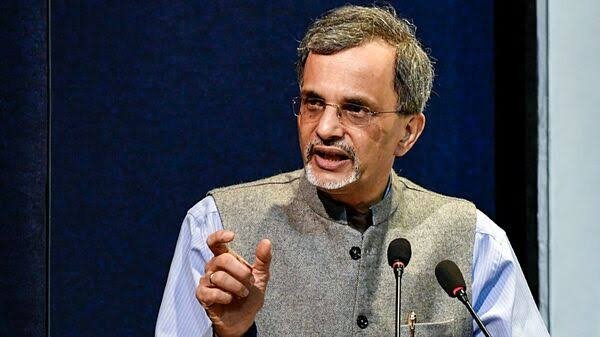
India’s GDP Grows 7.8% Despite West Asia Crisis
India’s Economy Shows Strong Resilience Despite External Pressures
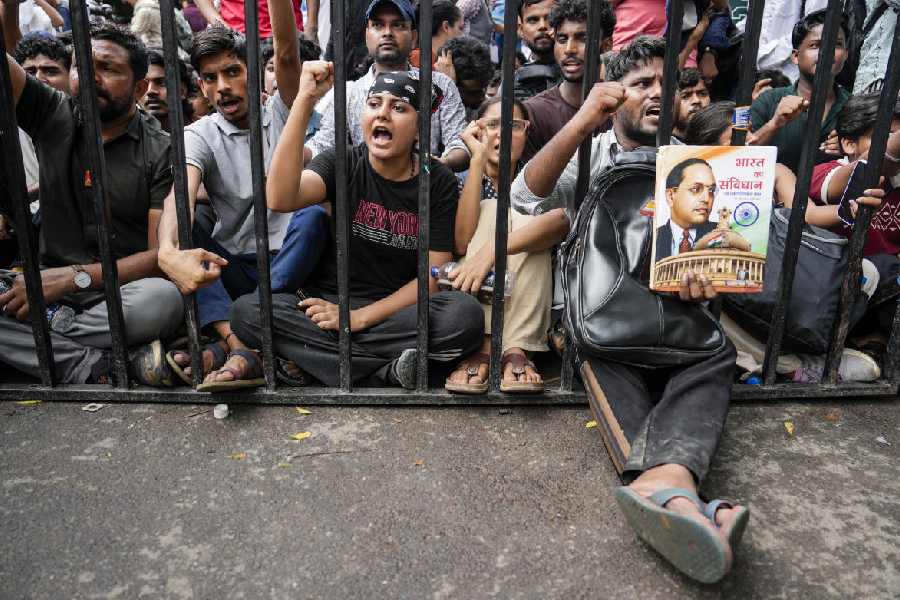
India’s Youth Protests Expose the Economic Cost of Waiting

SHANTI Rules Seek to Boost India’s Nuclear Investment

India’s Solar Boom Faces Regional and Manufacturing Challenges
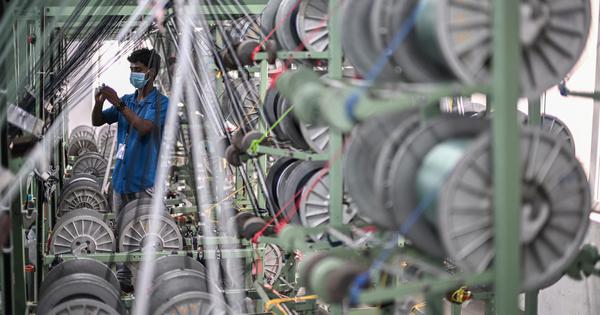
India Plans More Mega Textile Parks Amid Past Failures