

2 days ago
Humanity’s Economic Progress Still Lags Behind Its Wisdom
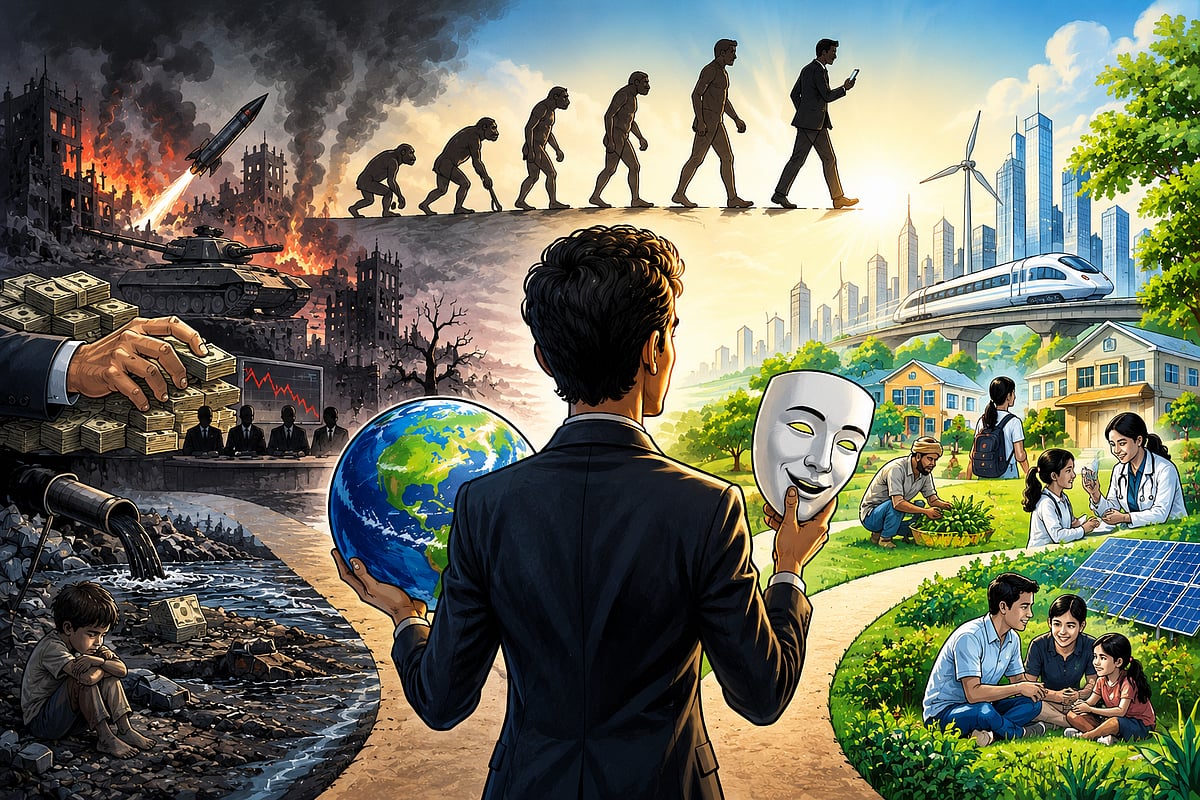
People only have a limited amount of time to live, and nobody can buy more time.
The article says this is why economics is about more than money.
Humans learned to trust one another and built currencies, companies, governments, and laws.
These systems helped create wealth and new technology.
But people still fight wars, act greedily, and sometimes manipulate the rules.
One conflict caused many deaths and made ships and oil more expensive, according to the article.
New tools such as artificial intelligence and robots could help people, but they could also give more power to a small group.
The article asks whether humans will become wiser as they become more powerful.
It concludes that peace and wisdom are important measures of development.

The article argues that economics ultimately concerns humanity’s finite time, not only money, production, or growth.
Humanity transformed shared beliefs into currencies, institutions, companies, laws, and credit systems.
Despite technological and economic advances, greed, institutional manipulation, war, and inequality remain unresolved.
The article says six months of conflict involving the United States, Israel, and Iran killed at least 7,900 people and disrupted energy markets.
It questions whether artificial intelligence and robotics will create broad abundance or concentrate power further.
- Who
- Humanity, including citizens, leaders, governments, regulators, and businesses; the article names Donald Trump, Narendra Modi, Vladimir Putin, Xi Jinping, and Emmanuel Macron.
- What
- An economic reflection on finite human life, wealth creation, war, institutional trust, technological progress, and humanity’s lack of wisdom.
- Where
- The discussion is global, with specific references to the conflict involving the United States, Israel, and Iran; the Strait of Hormuz; Russia and Ukraine; and India.
- When
- The article is framed at the end of August and cites energy-market figures through August 28.
- Why
- To argue that development should be judged not only by wealth and technology but also by peace, human dignity, institutional trust, and wisdom.
Progress and Abundance
Risks and Human Costs
Technology and wealth
Progress and Abundance
Humanity has created wealth, institutions, advanced technology, and machines capable of learning, while artificial intelligence and robotics may bring greater abundance.
Risks and Human Costs
The benefits of technology may become concentrated, increasing the power gap rather than improving life broadly.
Economic growth
Progress and Abundance
Profit gives businesses the resources to operate and supports enterprise and development.
Risks and Human Costs
Unchecked greed can undermine business’s purpose, human dignity, and public trust.
Institutions and governance
Progress and Abundance
Shared beliefs in laws, currencies, companies, and credit allow strangers to cooperate and turn trust into capital.
Risks and Human Costs
People can manipulate rules, exploit loopholes, rig markets, and create bureaucracy, weakening institutional credibility.
Key facts
- Global life expectancy
- Roughly 73 years at birth, according to the article.
- Conflict deaths
- At least 7,900 people were reported killed during six months of the United States-Israel conflict with Iran, according to the article.
- Reported U.S. war cost
- Washington put the cost at $37.5 billion.
- Strait of Hormuz traffic
- Traffic fell from more than 100 ships daily before the conflict to an average of seven.
- Brent crude price
- The price rose from $72.48 to $120.88 per barrel before easing to $88.58 on August 28.
- Oil-price change
- The article describes the peak increase as 67 percent and the August 28 price as still 22 percent above the earlier level.
- Core argument
- Humanity’s greatest development deficit may be wisdom rather than technology.
Quotes
Article author
The author reflecting on humanity’s achievements and unresolved shortcomings
“We conquered scarcity, created wealth and taught machines to think. Yet humanity’s greatest unfinished experiment remains Homo sapiens itself.”
 freepressjournal.in
Sources
Related news

Hubris Cannot Rewrite Nature’s Laws as Financial Excesses Grow
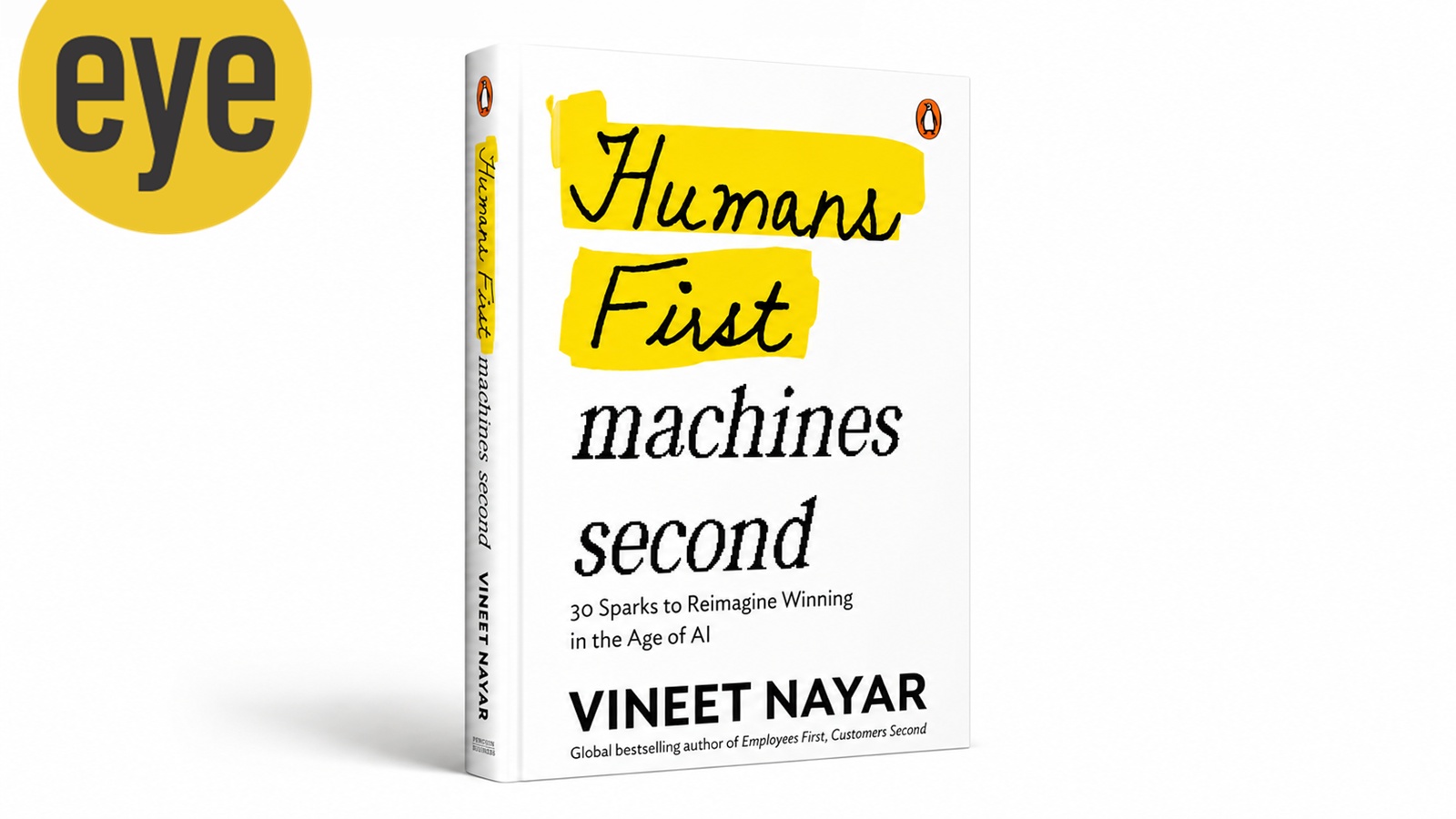
Ex-HCL CEO Vineet Nayar: Real AI risk is human self-doubt

AI Abundance Could Challenge Money, Work, Debt And Inequality

Modern Convenience Leaves People Running Out of Time

Book Explores Civilisational Forces Behind Bharat’s Economic Rise
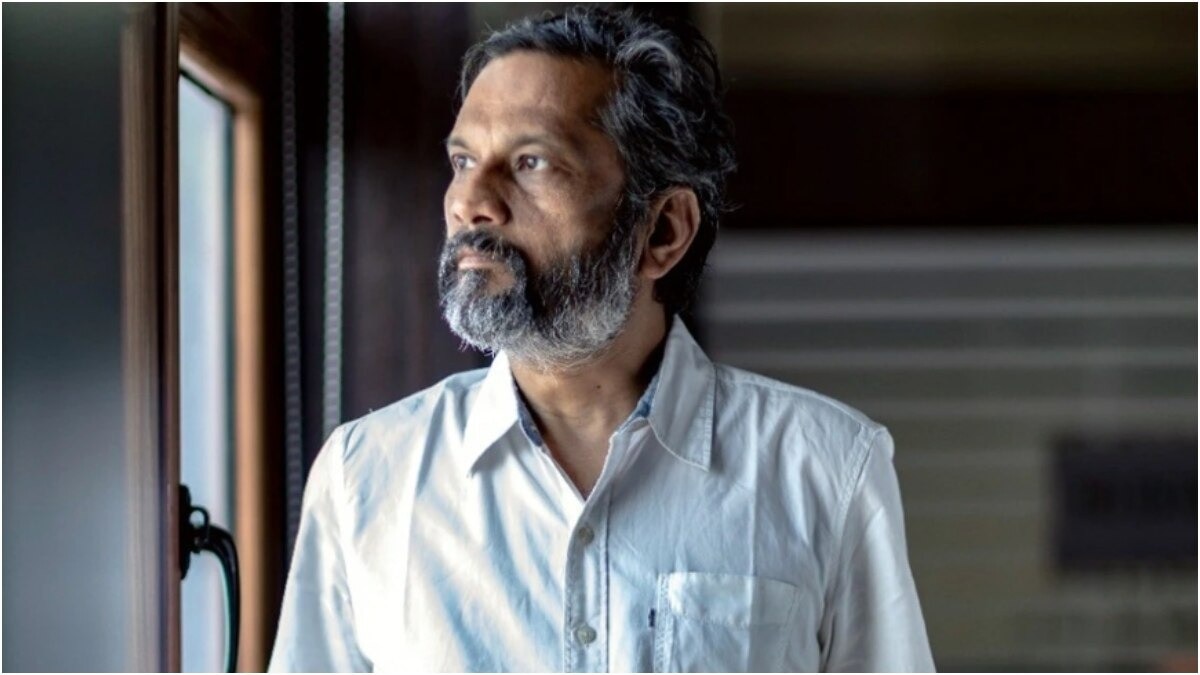
Sridhar Vembu Says Profit-Driven Economics Creates a Dystopian World

Government Defends 7.8% GDP Growth as Congress Raises Doubts
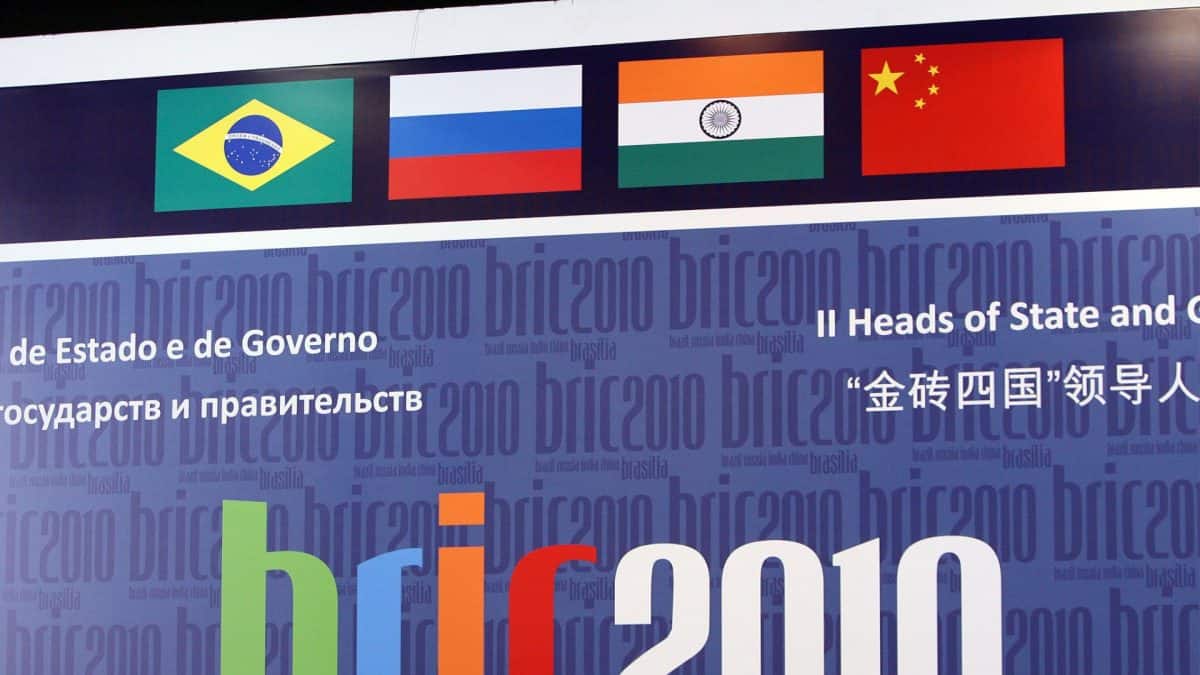
BRICS Expansion Puts Membership and Reform at New Delhi Summit

Piyush Goyal Defends India’s 7.8% GDP Growth Amid Criticism

Mahua Moitra Questions India’s 7.8% GDP Growth Figures

Goyal Defends India’s 7.8% GDP Growth Amid Data Debate
