1 day ago
Ex-Telecom Secretary Reveals BSNL, 2G and Trade Policy Battles
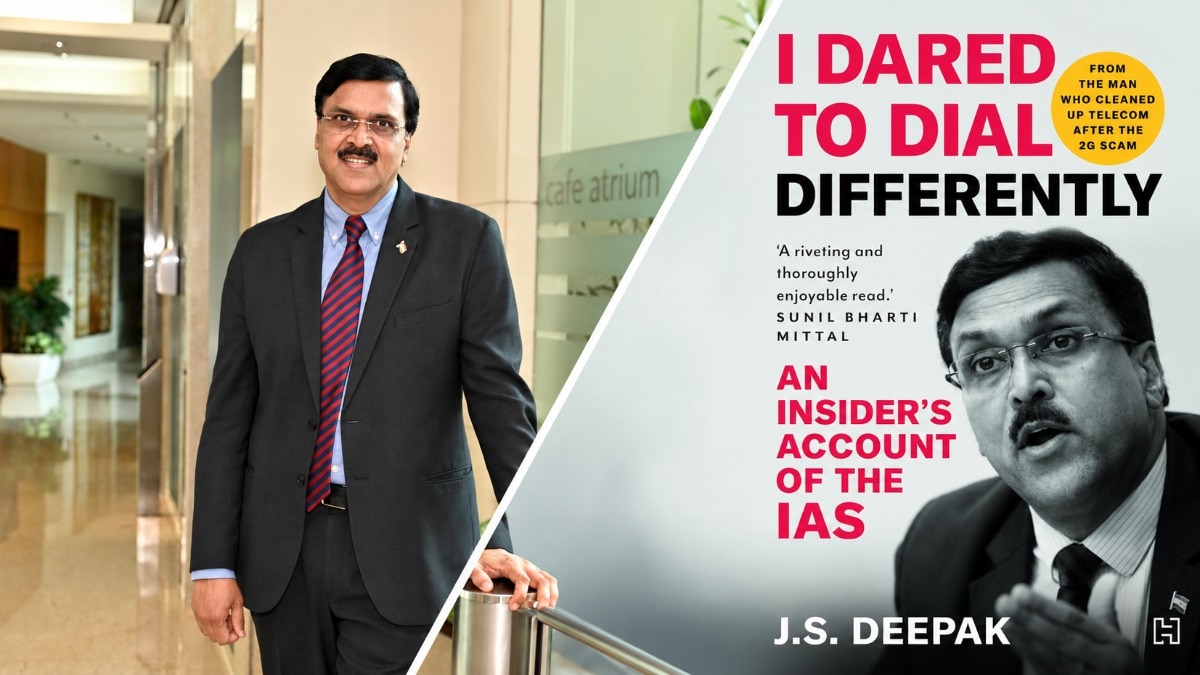
J.S. Deepak, a former senior government official, has written a memoir about difficult decisions in government.
He says officials stopped a large BSNL purchase because much of the equipment was unnecessary and too expensive.
He believes this prevented a possible loss of about Rs 8,000 crore.
He also says the possible loss in the 2G spectrum case was larger than the government auditor’s estimate.
Deepak says some leaders wanted spectrum to be sold at higher prices, but that plan was not properly enforced.
He says BSNL struggled because it had very high staff costs and did not adjust quickly when private companies entered the market.
He supports India’s decision not to join a major regional trade agreement.
He also says India should attract investment while protecting sensitive industries and farmers.

J.S. Deepak says he and other officials blocked a BSNL equipment tender worth more than Rs 30,000 crore that could have caused an estimated Rs 8,000 crore loss.
Deepak argues that the Comptroller and Auditor General’s Rs 1.76 lakh crore estimate in the 2G case understated the potential loss, which he places above Rs 2 lakh crore.
He says the Prime Minister and Finance Ministry wanted higher 2G spectrum prices in 2008, but their position was not enforced through the Cabinet or Telecom Commission.
Deepak attributes BSNL’s decline to high staff costs, weak adaptation to competition and harmful procurement decisions, saying its revenue market share fell from 18–20% to 4–5%.
He defends India’s decision not to join the Regional Comprehensive Economic Partnership while calling for carefully controlled foreign investment and expanded production-linked incentives.
- Who
- J.S. Deepak, a former telecom secretary and civil servant, discussing his memoir I Dared to Dial Differently.
- What
- He described controversies involving BSNL procurement, 2G spectrum pricing, the Commonwealth Games, trade agreements and civil-service reform.
- Where
- The events primarily concern India, including the Department of Telecommunications, BSNL and the Delhi Commonwealth Games village.
- When
- The interview discusses events including the 2G allocation in 2008, the Commonwealth Games in 2010 and RCEP negotiations before India declined to join.
- Why
- Deepak says he wrote about how civil servants faced pressure while trying to prevent waste, corruption and policy decisions he considered harmful.
Deepak’s Policy Arguments
Competing Concerns and Existing Positions
2G spectrum pricing
Deepak’s Policy Arguments
Deepak says the Prime Minister and Finance Ministry were right to seek higher prices in 2008 and argues that allocating spectrum at old prices contributed to the scam.
Competing Concerns and Existing Positions
The spectrum was allocated at 2001–02 prices on a level-playing-field argument, allowing incumbent and new operators to receive it at the same price; the CAG calculated a Rs 1.76 lakh crore potential loss using one of its methods.
India’s decision on RCEP
Deepak’s Policy Arguments
Deepak says staying out of RCEP protected Indian industry and agriculture, especially vulnerable dairy producers.
Competing Concerns and Existing Positions
The interview notes that India’s trade deficit with China has continued to rise, while Deepak responds that trade deficits alone should not determine whether an agreement is beneficial.
Investment from China
Deepak’s Policy Arguments
Deepak supports allowing Chinese investment in non-sensitive manufacturing and special economic zones, with safeguards for sectors such as telecom and power grids.
Competing Concerns and Existing Positions
India’s Press Note 3 restricted investment from countries sharing a land border with India; Deepak says this prevented some companies leaving China from investing in India.
Potential India–US trade agreement
Deepak’s Policy Arguments
Deepak supports only a limited deal and says a full agreement could harm Indian agriculture, pharmaceuticals, poultry, dairy and data-policy interests.
Competing Concerns and Existing Positions
The United States is described as seeking a full, high-standard free-trade agreement involving agricultural market access and rules on areas such as intellectual property and digital trade.
Key facts
- Memoir
- I Dared to Dial Differently
- Blocked BSNL tender
- A proposed procurement exceeding Rs 30,000 crore involving a single vendor
- Potential BSNL loss
- About Rs 8,000 crore, according to Deepak
- CAG 2G estimate
- Rs 1.76 lakh crore
- Deepak’s 2G estimate
- More than Rs 2 lakh crore, based on his argument that spectrum quality was not properly considered
- BSNL market share
- Deepak says it declined from 18–20% to 4–5% of telecom revenue market share
- 3G auction revenue
- The government received $24.5 billion, according to Deepak
Quotes
JS, former telecom secretary
Former telecom secretary and author discussing decisions made during his government service.
“If the tender had gone through, it would have resulted in wasteful procurement of equipment that was not required and at higher prices, leading to a loss of about Rs 8,000 crore.”
 businesstoday.in
“If the methodology used by the CAG is taken to its logical conclusion, the loss would be more than Rs 2 lakh crore.”
businesstoday.in
Sources
Related news
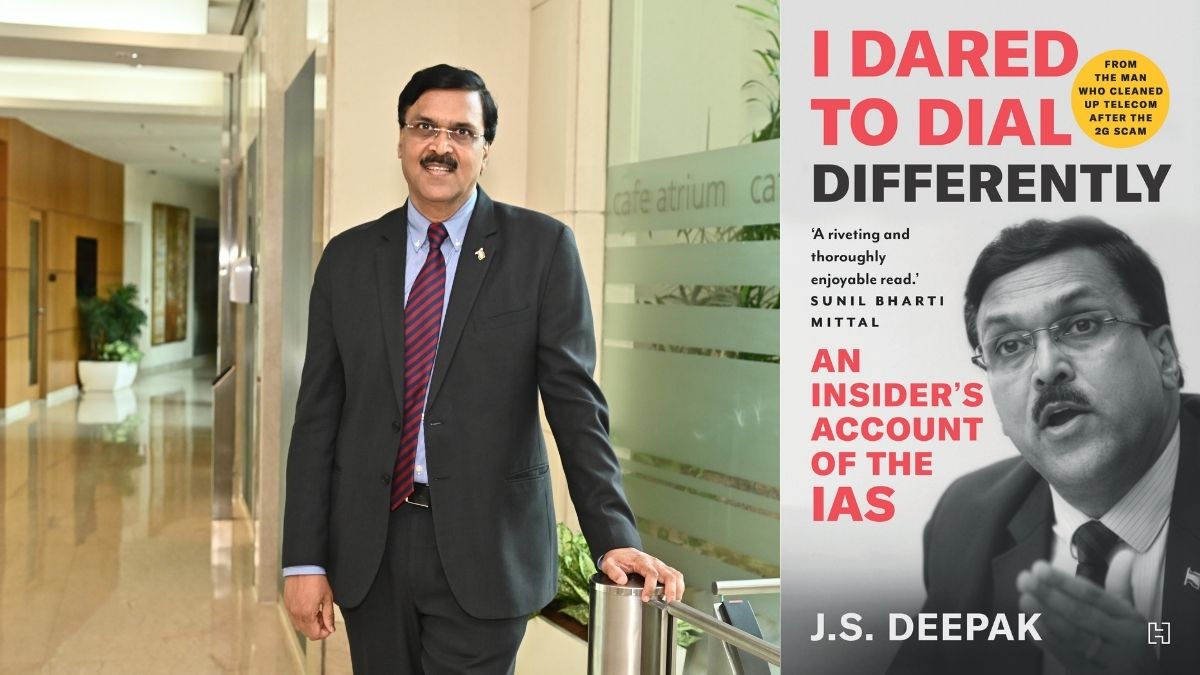
JS Deepak’s Memoir Offers A Candid, Humorous View Of Governance
India’s Electronics, Energy, Economy and Regional Affairs Explained
UPSC Key Covers India-China Talks, Judiciary, Economy and Security

Chidambaram Challenges India’s Growth, Competition and Reform Record
UPSC Key Examines China, Elephants, AI and Chipflation
UPSC Current Affairs: India’s Diplomacy, Economy, Law and Policy

DoT likely clears 5% spectrum charge for satellite internet
SOA Ideathon 2026 Showcases Student Innovation and Prototypes

Ashish Joshi Seeks FIR Copy After Nine-Hour Police Questioning

India’s Mumbai Cable Concentration Exposes Its Digital Vulnerability