2 hrs ago
Chidambaram Challenges India’s Growth, Competition and Reform Record

P Chidambaram said India’s economy is growing, but many workers are not earning more money.
He said rural workers’ wages have stopped growing, while some casual workers’ wages have fallen.
He believes businesses need more competition so that the economy can work better.
He also said too many rules, investigations and government delays make companies hesitant to invest.
Chidambaram criticized what he called crony capitalism and too much decision-making in the Prime Minister’s Office.
He said India should work with other countries to strengthen the World Trade Organization.
He also discussed the economic reforms introduced in 1991.
He said Manmohan Singh designed much of the economic policy, while P V Narasimha Rao helped secure political support for it.
Chidambaram said both leaders were needed to make those reforms happen.

P Chidambaram said India’s economic growth has not translated into higher wages, with rural wages stagnant and casual workers facing negative wage growth.
He argued that competition has declined across sectors including telecom, cement, airlines, ports and petroleum, which he linked to crony capitalism.
Chidambaram said regulation, investigations, bureaucratic hurdles and policy centralisation are holding back private investment.
He called for India to support a rules-based global trading system and help revive the World Trade Organization’s dispute-resolution process.
Reflecting on the 1991 reforms, he said P V Narasimha Rao provided political leadership while Manmohan Singh supplied the technical economic expertise.
- Who
- P Chidambaram, former Indian finance and home minister, discussed India’s economy and reforms.
- What
- He criticized the government’s economic record and proposed more competition, investment certainty and revived global trade rules.
- Where
- The discussion concerns India and its domestic economy, trade policy and government institutions.
- When
- The comments were made in an interview discussing the prime minister’s current Independence Day speech and the 1991 reforms.
- Why
- Chidambaram said weak competition, policy uncertainty, bureaucratic barriers and protectionism are limiting investment, wages and manufacturing growth.
Chidambaram’s Critique
Government’s Position
Economic reforms
Chidambaram’s Critique
Chidambaram said Prime Minister Narendra Modi may have moved toward economic openness but questioned which sectors had been opened in recent years, arguing that competition had declined.
Government’s Position
The prime minister said in his Independence Day speech that the government’s reforms were driven by conviction rather than compulsion.
Responsibility for economic performance
Chidambaram’s Critique
Chidambaram attributed weak competition, low wage growth and limited private investment to regulation, centralisation, bureaucratic hurdles and crony capitalism under the current government.
Government’s Position
The interview does not provide a detailed government response to these criticisms.
1991 reform credit
Chidambaram’s Critique
Chidambaram said Manmohan Singh was the technical economist and P V Narasimha Rao was the political leader who made the reforms possible; both were necessary.
Government’s Position
The article notes that some, including Yashwant Sinha, have argued that much of the groundwork for the reforms existed before the July 1991 Budget.
Key facts
- Economic growth
- Chidambaram referred to annual economic growth of 6.5–7%.
- Wage growth
- He said rural wages have stagnated, casual and irregular workers’ wage growth was negative, and regular salaried wage growth was 0.4%.
- Income distribution
- He said the bottom 50% receives 10% of India’s income, while the top 1% receives 10% and the top 10% receives 25%.
- Competition
- He described telecom as an oligopoly and said competition is also shrinking in cement, airlines, ports and petroleum.
- Private investment barriers
- He identified regulation, investigation and enforcement, crony capitalism and bureaucratic hurdles as four barriers to private capital expenditure.
- 1991 reforms
- Chidambaram said the 1991 trade package followed the rupee devaluation and preceded the industrial policy and Union Budget.
- Global trade
- He urged countries to revive the World Trade Organization and its dispute-resolution system.
Quotes

Palaniappan Chidambaram
Former Indian finance and home minister discussing wages and economic policy
“Wages have not risen. Rural wages have stagnated. The growth was 0.7 per cent last year. For casual and irregular labour, the wage growth is negative.”
 rediff.com
Sources
Related news
India Needs Deeper Reforms to Reach 8% Growth, Ahluwalia Says

Chidambaram Criticizes India’s Economic Model, Manufacturing and Trade Policies

Modi Pitches Deregulation and Reforms as India’s Growth Driver

Maruti Suzuki Chairman Urges Faster Reforms for Wealth Creation

Sitharaman Pitches India's Reform-Led Growth to New York Investors
Sitharaman Says Reforms Helped India Withstand Global Headwinds

India GDP Base-Year Revision Triggers Political Growth Data Storm
BJP Plans Month-Long Mobilisation Around Modi’s 25 Years
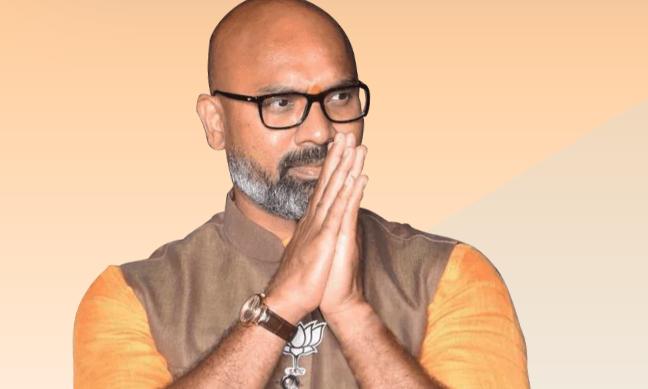
JPC Examines FCRA Bill as BJP MP Arvind Thanks Leaders

India Hails GSLV-F17 Launch as Major Space Milestone

Letters Debate Domestic Labour, Himalayan Disasters, Prices And Dated Rules