1 hr ago
India’s Mumbai Cable Concentration Exposes Its Digital Vulnerability
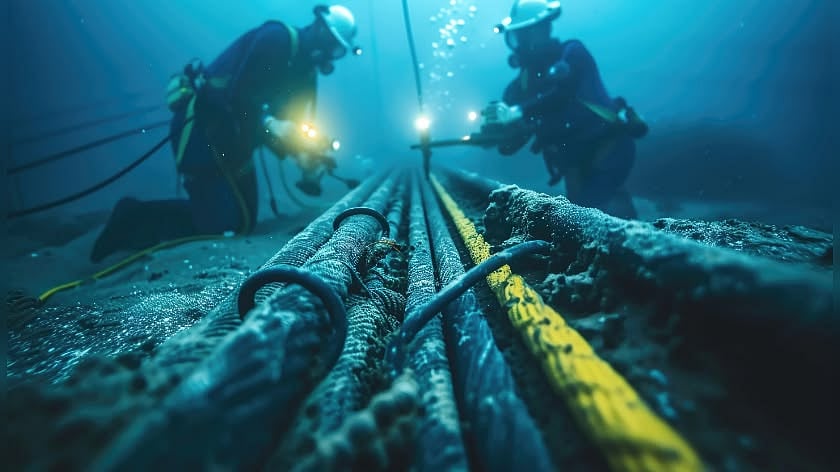
Most of India’s internet connection to other countries comes through cables under the sea.
Many of those cables reach land in one small area near Mumbai.
This means several accidents or other problems there could slow a large part of India’s international internet traffic.
The internet would probably not disappear because data could be rerouted through places such as Chennai and Kochi.
However, slower connections could hurt banks, stock exchanges, cloud companies and government computer systems.
Many of India’s cables are also old and close to the end of their expected working lives.
India does not have its own ships to repair broken cables, so it must wait for foreign vessels and approvals.
At the same time, data centres and artificial-intelligence services are creating more demand for fast connections.
New cables and landing sites are being developed, but experts say faster approvals and better repair capabilities are also needed.

At least 13 of India’s 18 undersea intercontinental cables land within six kilometres near Versova in Mumbai, carrying up to 95% of international data traffic to Europe, Africa and West Asia.
India accounts for roughly a fifth of global data consumption but has only about 21 cable landing stations and 3% of the world’s submarine cables.
Eleven of India’s 18 international cables are more than 20 years old, while the country relies on foreign repair ships that can take weeks to reach damaged cables.
Data-centre capacity has grown from 375MW in 2020 to about 1,575MW, potentially increasing demand faster than new cable infrastructure can be built.
Four new submarine cable systems are under construction and three more are planned, including I-2SEA, which will use landing points in Machilipatnam and South Chennai.
- Who
- India’s telecommunications and data-centre sectors, along with experts including Anwesha Sen, Aruna Sundararajan and Amajit Gupta.
- What
- A report highlights that India’s international internet connectivity is heavily concentrated near one Mumbai beach and faces risks from cable damage, ageing infrastructure and slow repairs.
- Where
- At least 13 of India’s 18 international cables land within a six-kilometre radius near Versova in Mumbai, with alternative landing points including Chennai and Kochi.
- When
- The report cites India’s broadband total surpassing one billion subscribers by late 2025; other infrastructure figures are described as current in the article.
- Why
- The concentration, ageing cables, reliance on foreign repair vessels and lengthy approvals could make it harder to maintain reliable connectivity as data and artificial-intelligence demand grows.
Diversification and faster approvals
Current concentration and capacity risks
Main vulnerability
Diversification and faster approvals
Aruna Sundararajan and Anwesha Sen emphasize that India needs more landing stations, geographic diversification and quicker government approvals to reduce concentration near Mumbai.
Current concentration and capacity risks
Amajit Gupta argues that rerouting is not the main structural weakness; the more immediate bottleneck is India’s lack of domestic repair ships and the delays involved in bringing foreign vessels into Indian waters.
Future connectivity
Diversification and faster approvals
New systems such as I-2SEA, with landing points at Machilipatnam and South Chennai, could spread connectivity beyond the Mumbai-heavy network.
Current concentration and capacity risks
Experts warn that data-centre and artificial-intelligence growth may outpace cable construction, since planning and laying a new subsea cable can take several years.
Nature of the threat
Diversification and faster approvals
Cable systems have rerouting capacity, and traffic could shift to landing points such as Chennai and Kochi if Mumbai cables are damaged.
Current concentration and capacity risks
Even without a complete outage, simultaneous damage or ordinary faults could cause costly slowdowns; globally, most of the estimated 150–200 annual cable faults result from fishing, ship anchors, natural hazards or equipment failure rather than deliberate attacks.
Key facts
- Mumbai concentration
- At least 13 of India’s 18 undersea intercontinental cables land within six kilometres near Versova.
- Traffic carried
- The cables handle up to 95% of India’s international data traffic to Europe, Africa and West Asia.
- Cable age
- Eleven of India’s 18 international cables are more than 20 years old; such systems are built for roughly 25 years.
- Global comparison
- India uses roughly 3% of the world’s submarine cables and has about 21 cable landing stations, despite accounting for roughly a fifth of global data consumption.
- Data-centre growth
- Installed data-centre capacity rose from 375MW in 2020 to about 1,575MW.
- Repair capacity
- India has no domestic cable-repair vessels and currently depends on foreign ships based out of Dubai or Singapore.
- New infrastructure
- Four submarine cable systems are being built and three more are in the pipeline.
Sources
Related news
Mumbai breaks into world's Top 15 data centre markets
Australia Investigates Undersea Cable Faults Threatening Internet Security
Mumbai Leads India’s Data Centre Boom as Hyderabad Surges
India warns China's underwater data collection not for peaceful purposes
Antarctica Undersea Cable Could Connect Continent, But Hurdles Remain
Ex-Civil Servant Says Police Focused on Earlier Home Ministry Post

Ex-Bureaucrat Ashish Joshi Alleges Nine-Hour Incommunicado Delhi Police Questioning
Delhi Police Questions Ex-Bureaucrat Ashish Joshi Over Posts

Former DoT Officer’s Nine-Hour Delhi Police Questioning Sparks Controversy