1 week ago
Congress-Ruled States Plan Supreme Court Challenge to Mines Law
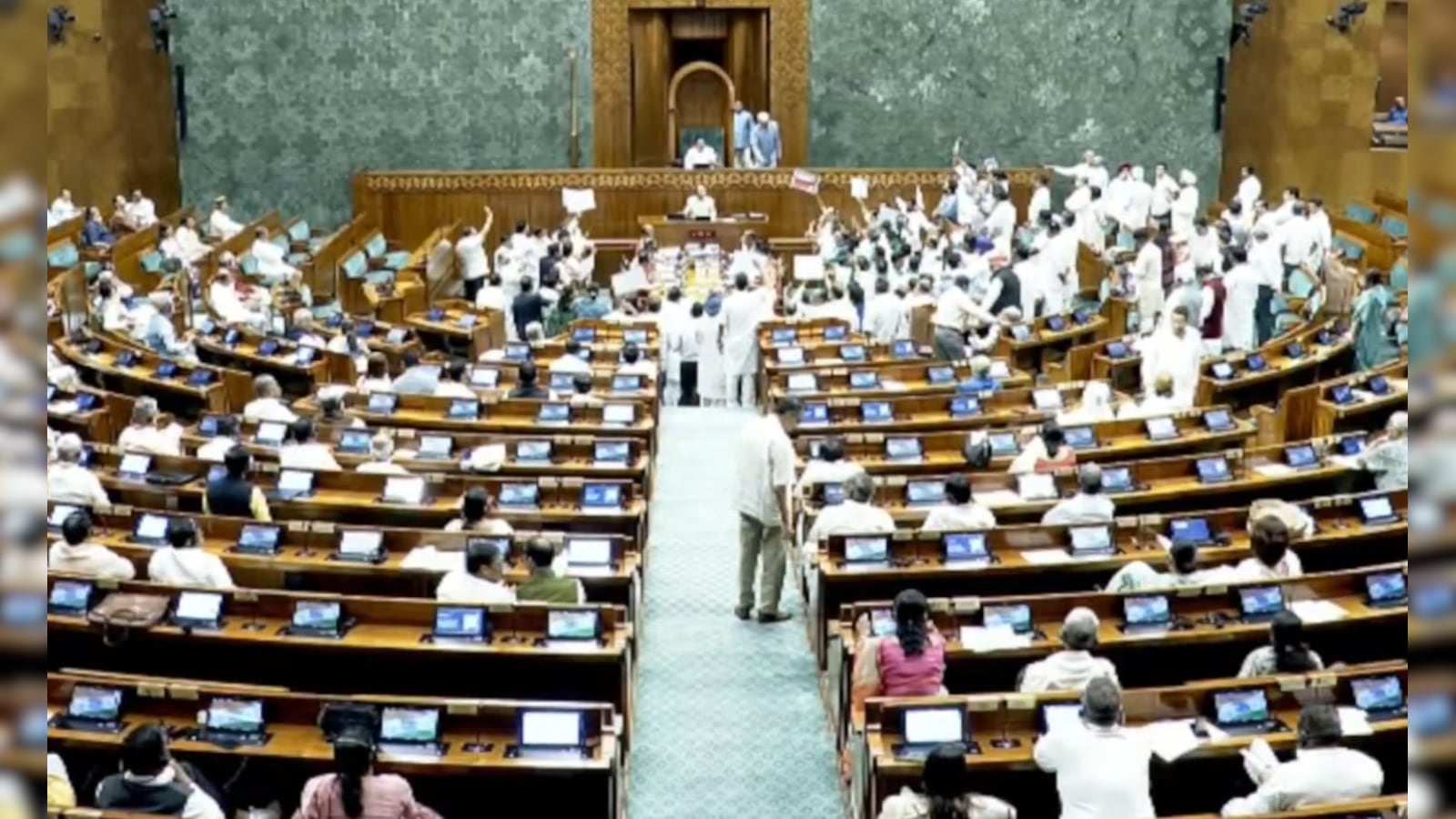
Some Indian states led by the Congress party may ask the Supreme Court to examine a new mining law.
They say the law gives too much power to the national government over money collected from minerals.
They also say the states were not properly consulted before Parliament passed it.
The national government says the law will make mineral charges more similar across India.
It says states will still control 49 types of minor minerals.
The bill passed both houses of Parliament on August 12 and 13.
Leaders from several states are discussing whether to join the court challenge.
The disagreement is mainly about how much power states and the national government should have over mining revenue.

Congress sources say Telangana, Karnataka and Kerala leaders are preparing a joint Supreme Court petition against the Mines and Minerals Development and Regulation Amendment Act.
The Congress argues the law weakens states’ constitutional taxing powers and was passed without adequate consultation, debate or committee scrutiny.
The Centre says the legislation will create uniformity, predictability and stability in mineral taxation while preserving state powers over 49 minor minerals.
The Lok Sabha passed the bill on August 12 and the Rajya Sabha on August 13, with the proceedings taking about 10 minutes in each chamber amid opposition protests.
Congress plans to discuss a wider legal coalition with Jharkhand Chief Minister Hemant Soren, while mineral-rich Odisha and Jharkhand have also criticised the measure.
- Who
- Congress leaders and governments in Telangana, Karnataka and Kerala are preparing the challenge, with discussions planned with Jharkhand Chief Minister Hemant Soren; the Central government supports the law.
- What
- A proposed Supreme Court challenge to the constitutionality of the Mines and Minerals Development and Regulation Amendment Act.
- Where
- The challenge would be filed in the Supreme Court of India and concerns mineral-rich states across India.
- When
- The bill passed the Lok Sabha on August 12 and the Rajya Sabha on August 13; the proposed petition was reported afterward.
- Why
- Congress and several state leaders say the law restricts states’ fiscal and constitutional powers, while the Centre says it is needed for uniform mineral rates and a stable fiscal framework.
State Governments and Congress Critics
Central Government
Federal powers
State Governments and Congress Critics
Congress and several state leaders say the law erodes constitutionally guaranteed state revenue and taxing rights over mineral-bearing land.
Central Government
The Centre says the legislation does not interfere with state autonomy or revenue rights and is intended to establish consistent mineral rates.
Consultation and scrutiny
State Governments and Congress Critics
The Opposition says the bill was passed without meaningful consultation with states, detailed parliamentary debate or review by a Standing Committee.
Central Government
The government proceeded with the legislation during Parliament’s monsoon session and defended its regulatory objectives.
Economic control over minerals
State Governments and Congress Critics
Critics say limiting state levies centralises control over natural resources and could reduce states’ ability to address mining-related social and environmental costs.
Central Government
The Centre says central regulation of major minerals will provide a nationwide, predictable fiscal framework, while states retain powers over 49 minor minerals.
Key facts
- Proposed challengers
- Leaders from Telangana, Karnataka and Kerala are expected to join a proposed joint petition.
- Potential wider coalition
- Congress plans to discuss the challenge with Jharkhand Chief Minister Hemant Soren.
- Parliamentary passage
- The Lok Sabha passed the bill on August 12 and the Rajya Sabha on August 13.
- State objection
- Opponents say restrictions on state levies could reduce states’ fiscal space and undermine federalism.
- Centre’s stated aim
- The Centre says the law is intended to bring uniformity, predictability and stability to mining-sector fiscal rules.
- Minerals covered
- The Mines Minister said the Centre would regulate major minerals including coal, limestone, iron ore, copper and manganese.
- State powers cited by Centre
- The Centre said states would retain authority over 49 minor minerals.
Sources
Related news
Congress-Backed States Challenge New Mining Law in Supreme Court

Karnataka urges PM Modi to reconsider MMDR Amendment Bill
India's mining tax overhaul reignites Centre-state tussle over revenue

Naveen Patnaik says mining bill infringes Odisha's financial rights
Parliament passes mineral bill limiting state taxes on mining resources
Mineral Rights Amendment Bill Sparks States' Revenue Concerns
Deputy CM Warns Against Drought Loan Recovery Harassment
Karnataka Plans Second Drought List After Wider Coverage Demands
Karnataka BJP Padayatra Draws Sharp Response From Deputy CM

Kumaraswamy Turns Nagendra Resignation Into Attack On Karnataka Government

Karnataka Declares 101 Taluks Drought-Affected, Seeks Central Relief