

2 days ago
Trump’s Canada Tariff War Strains Deeply Integrated North American Trade
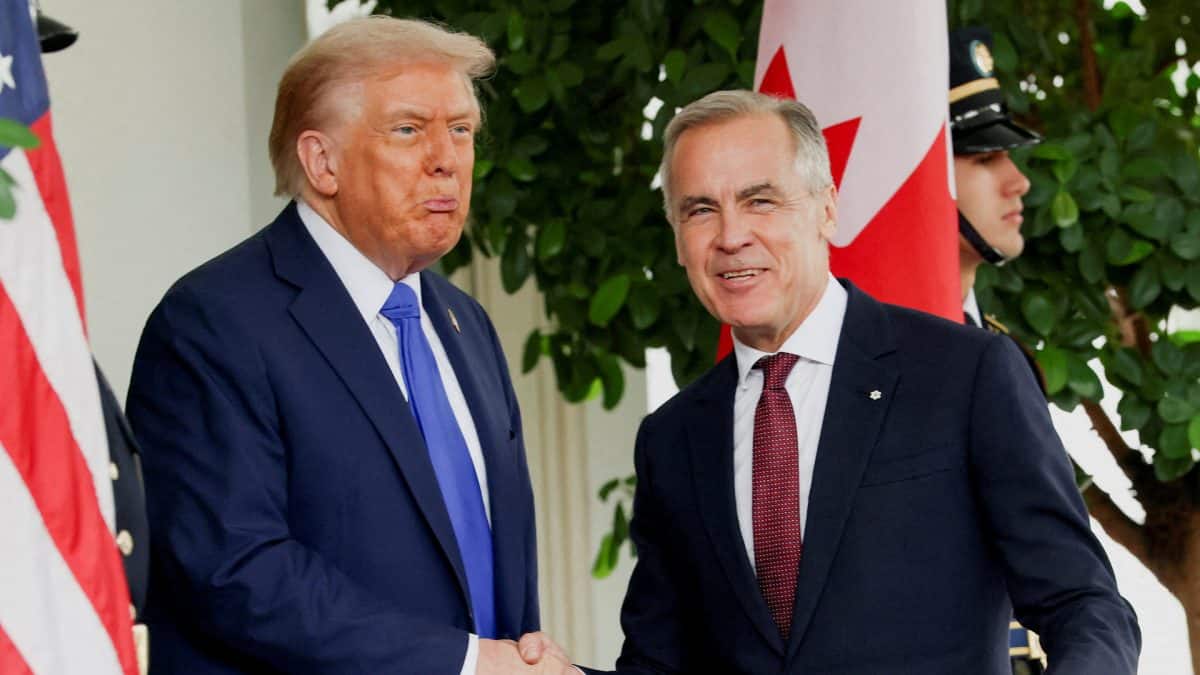
The United States and Canada buy and sell nearly $880 billion in goods and services each year.
Many products cross the border several times before they are finished.
For example, car parts may be made in one country and assembled in the other.
Tariffs make imported goods more expensive.
This can raise costs for factories, businesses, and shoppers in both countries.
The United States imposed tariffs on Canadian goods, and Canada announced similar tariffs on American goods.
Canada wants to find more customers in other countries, but that cannot quickly replace the United States market.
Because the two economies are so connected, changing their trade relationship could be expensive and slow.

The United States and Canada traded nearly $880 billion in goods and services during 2025.
The United States imposed 50% tariffs on $27.6 billion of Canadian goods on August 22.
Canada plans matching tariffs on $27.6 billion of United States imports beginning September 8.
Industrial inputs, vehicles, parts, machinery, and equipment make up much of bilateral trade.
Canada is seeking new markets, but integrated supply chains cannot be rapidly relocated or replaced.
- Who
- The governments of the United States and Canada, including Donald Trump’s administration and Prime Minister Mark Carney’s government.
- What
- The countries are imposing and preparing retaliatory tariffs while their highly integrated trade relationship faces disruption.
- Where
- Across the United States-Canada border and their interconnected North American supply chains.
- When
- The trade figures cover 2025; United States tariffs began August 22, Canadian retaliation is scheduled for September 8, and proposed automotive tariffs would begin January 1, 2027.
- Why
- The United States is using tariffs to pressure trading partners and reshape trade flows, while Canada is retaliating and seeking to reduce its dependence on the United States.
Tariff Advocates
Critics and Affected Industries
Purpose of tariffs
Tariff Advocates
The United States strategy uses tariffs to pressure Canada and other trading partners and reshape American trade flows.
Critics and Affected Industries
Critics point to higher costs for United States manufacturers, exporters, businesses, and consumers because many Canadian imports are production inputs.
Canadian response
Tariff Advocates
United States tariffs are intended to change the structure of trade and reduce reliance on foreign supply chains.
Critics and Affected Industries
Canada is retaliating against more than 700 United States products and accelerating efforts to diversify beyond the United States, potentially raising costs for businesses on both sides.
Automotive supply chains
Tariff Advocates
Higher tariffs could encourage companies to reorganize production and sourcing away from Canada.
Critics and Affected Industries
The auto industry’s cross-border network has developed over decades, and companies cannot relocate plants and parts production as quickly as tariffs can be announced.
Key facts
- 2025 bilateral trade
- Nearly $880 billion in United States goods and services trade with Canada.
- United States imports
- $453.6 billion from Canada in 2025.
- United States exports
- $426.3 billion to Canada in 2025.
- United States trade deficit
- $27.3 billion in 2025, down from $39.4 billion in 2024.
- Initial United States tariffs
- A 50% tariff on $27.6 billion of Canadian goods began August 22.
- Canadian retaliation
- Canada announced tariffs on $27.6 billion of United States imports, covering more than 700 products, beginning September 8.
- Canadian export dependence
- More than 70% of Canadian exports go to the United States.
- Proposed auto tariffs
- Donald Trump proposed raising tariffs on Canadian-built cars, trucks, and parts to 50% from January 1, 2027.
Sources
Related news

Trump threatens 50% tariffs on Canadian cars amid trade fight

Trump Escalates Trade Confrontation as Canada Vows Tariff Retaliation

Trump’s ‘We Don’t Need Canada’ Claim Meets Deep US Reliance

Canada-US Trade Talks Collapse as Tariffs Deepen Economic Rift

Trump Escalates US-Canada Trade War With 50% Tariffs

Tata Motors Rises to No. 2 in India's PV Market

Shriram Finance Targets Japanese Supplier Ecosystem After MUFG Investment

Lexus Launches ES 350h Hybrid Sedan In India

Hyundai’s 2030 Roadmap Tests Its Strength In India
