1 hr ago
UPI Merchant Charges Trigger Opposition and Fintech Expert Backlash

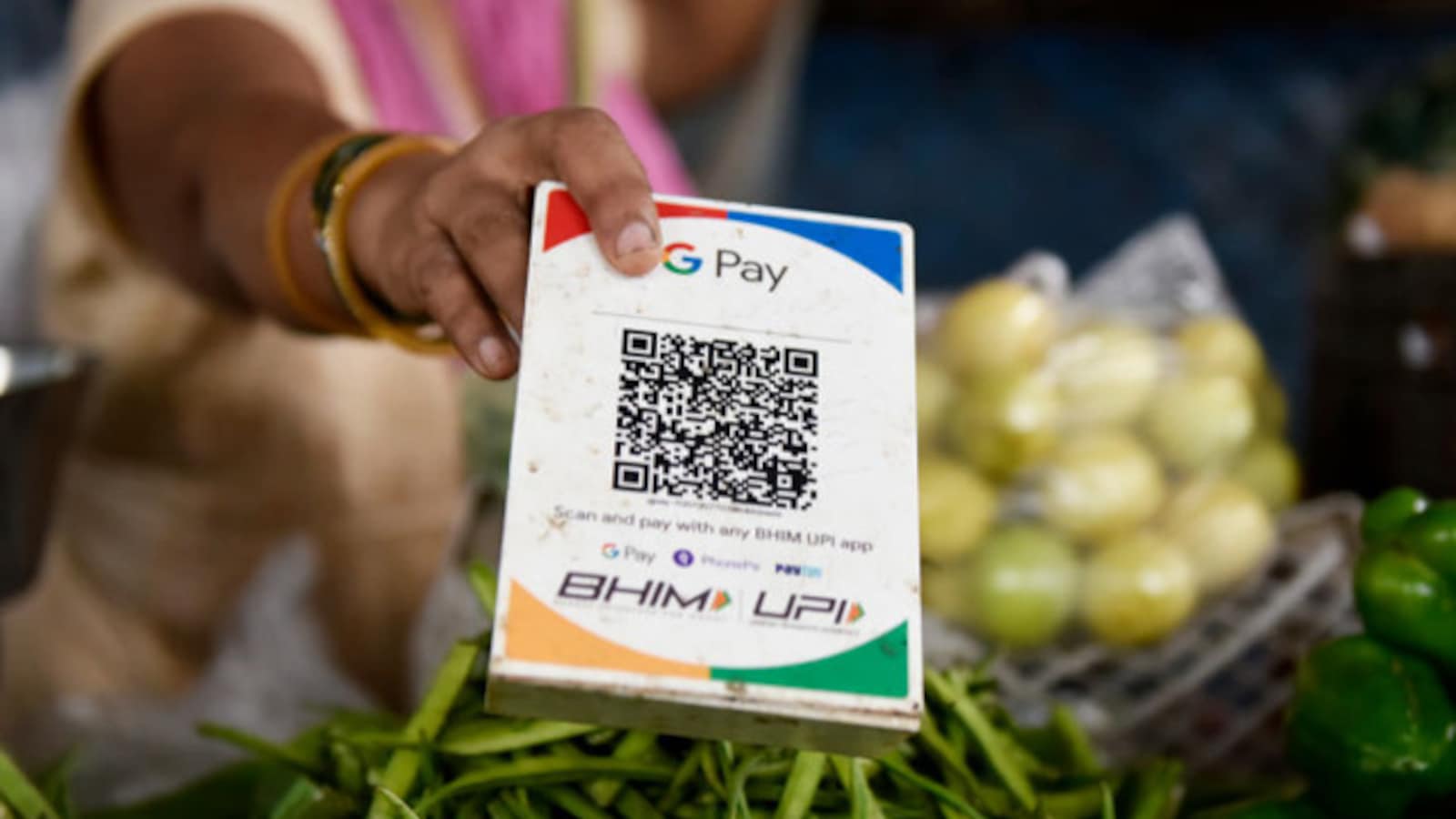
The government has introduced a new charge for some UPI payments made to businesses.
The charge applies when a merchant payment is above ₹2,000.
It is set at 0.4%, with a maximum fee of ₹300 for payments of ₹75,000 or more.
Ashneer Grover says UPI could have stayed free because the system has money and earns profits.
He also says digital payments could reduce the cost of running ATMs and handling cash.
Congress leaders disagree with the decision and call it a “Modi tax.”
They say the government had earlier said no such fee framework had been finalised.
They are also asking how much money the new charge will raise.

The government introduced a 0.4% charge on UPI merchant payments above ₹2,000.
The fee is capped at ₹300 for payments of ₹75,000 or more.
Former BharatPe CEO Ashneer Grover said UPI could remain free through government support and NPCI’s own finances.
The Congress called the levy a “Modi tax” and accused the government of reversing earlier statements.
Congress leaders questioned how much revenue the charge would generate from high-value UPI transactions.
- Who
- The Modi government introduced the charge; Ashneer Grover and Congress leaders criticised it.
- What
- A 0.4% charge was imposed on UPI merchant payments above ₹2,000, capped at ₹300 for payments of ₹75,000 or more.
- Where
- India.
- When
- The article cites government statements on August 6 and August 10, followed by a notification on September 14; the year is not specified.
- Why
- The charge was introduced as part of a framework for large digital merchant payments; critics say UPI could be funded without imposing a levy.
Critics of the charge
Government payment framework
Need for the levy
Critics of the charge
Ashneer Grover argued that government support and the National Payments Corporation of India’s cash and profits could keep UPI free.
Government payment framework
The government introduced the charge through a framework for large digital merchant payments, but the article does not provide a detailed official explanation of the levy’s necessity.
Tax versus payment policy
Critics of the charge
The Congress called the charge a “Modi tax,” while Grover said it would effectively become tax collection.
Government payment framework
The measure is presented by the government as a charge within a merchant-payment framework rather than explicitly described in the article as a tax.
Government transparency
Critics of the charge
Jairam Ramesh said officials stated on August 6 and August 10 that no framework had been finalised before a September 14 notification introduced the charges.
Government payment framework
The notification was issued as part of the government’s rollout of the large digital merchant-payment framework.
Key facts
- Payment threshold
- The charge applies to merchant UPI payments above ₹2,000.
- Charge rate
- 0.4% of the eligible payment.
- Maximum fee
- ₹300 for payments of ₹75,000 or more.
- UPI transactions in 2025-26
- ₹314 lakh crore, according to Congress spokesperson Supriya Shrinate.
- Transactions above ₹2,000
- Congress estimated these represented 66%, or about ₹207 lakh crore, of 2025-26 UPI transactions.
- National Payments Corporation of India finances
- Ashneer Grover cited ₹6,119 crore in cash and pre-tax operating profit of about ₹1,900 crore.
- Cash-related costs
- Grover estimated ATM operations and cash logistics cost ₹30,500 crore.
Quotes
Ashneer Grover
Former BharatPe chief executive and critic of the UPI merchant charge
“Decision-making in Modi Govt -- Aug 6: Hon'ble Finance Minister says 'no decision has been taken on MDR'. Aug 10: FM in Parliament says 'No MDR framework has yet been finalised'. Sep 14: Notification is issued. Within 24 hrs, MDR charges introduced.”
 telegraphindia.com
“If the government had not waived Rs 22,000 crore for Chandra Sahab, UPI in India could have remained free for the next 20 years with the government’s ₹8,000 crore subsidy”
telegraphindia.com
Sources
Related news

India Introduces New UPI Merchant Fee Above ₹2,000
India's UPI Funding Debate Reopens Question of Transaction Charges

Ashneer Grover Warns UPI Charges Could Revive India’s Cash Economy
Congress Warns UPI Fees Loom After Government Notification

Keep UPI Free by Funding It From Savings

UPI Charges Debate Grows as MDR Framework Opens Higher Payments
Cabinet Reshuffle Nears Amid Pressure, Portfolio Concerns and Uncertainty
Madhya Pradesh Leaders Plan Youth Outreach and Public Campaigns

Kishau Dam Agreement Called Historic for Haryana, States Sign Deal
Modi, Putin View Vande Bharat Sleeper Model at INNOPROM