

3 days ago
Why AI Still Cannot Completely Replace Human Translators
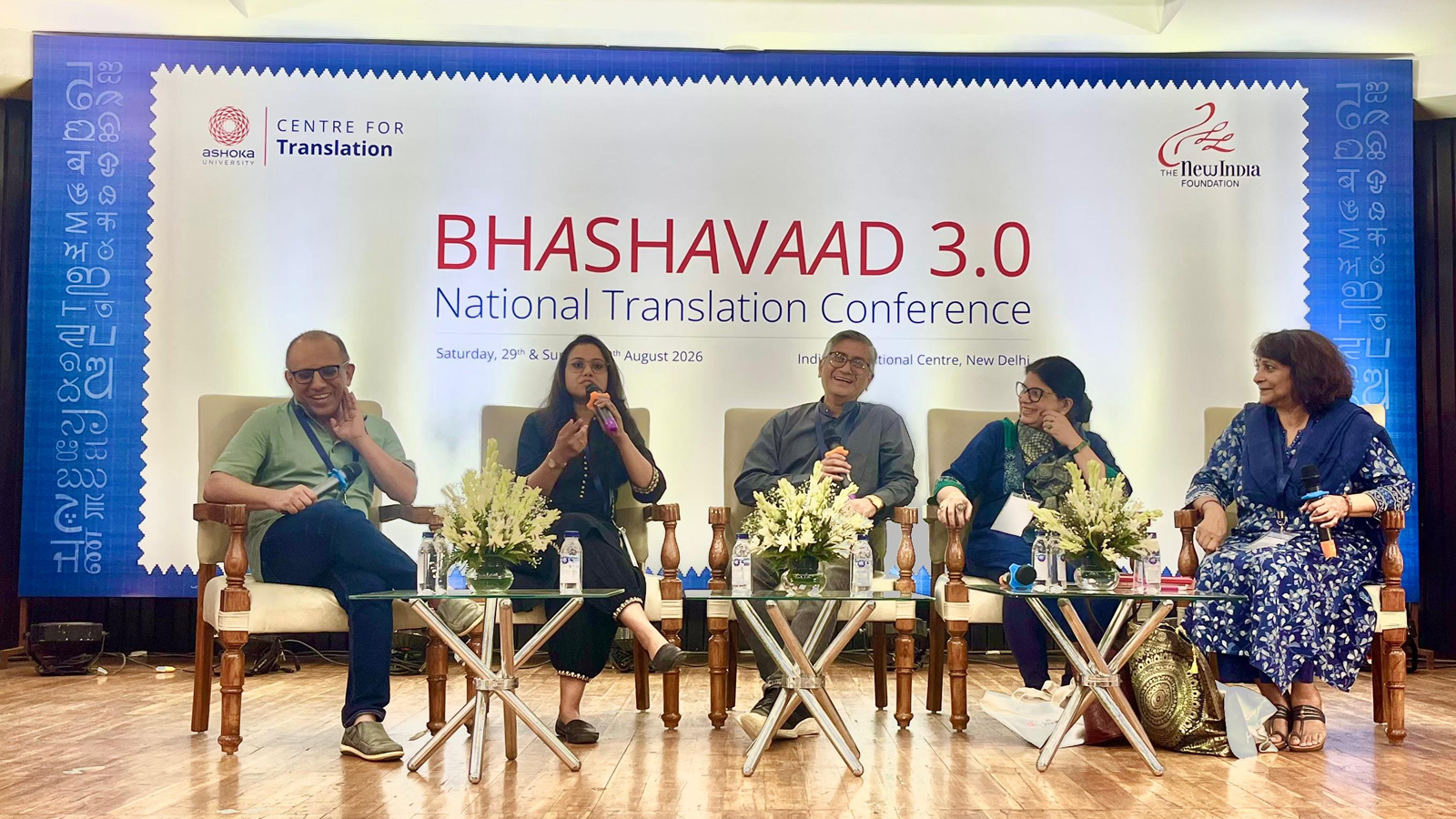
People at a translation conference discussed whether computers could replace human translators.
They agreed that AI may work well for stories that follow simple, repeated formulas.
Literary works are harder because words can have hidden meanings based on culture and context.
One example from Gaban uses the Triveni Sangam to suggest suicide, even though the sentence does not say that directly.
The panelists said a machine may not understand this kind of human meaning reliably.
They also discussed who would own the copyright when AI helps translate a book.
Some participants said AI can sometimes preserve an author’s voice better than older translations.
The speakers still believed that human reading, research, and interpretation remain necessary.
They ended by saying translators have not disappeared, despite earlier predictions that AI would quickly replace them.

A translation conference at Ashoka University examined whether artificial intelligence could make translators redundant.
Panelists agreed that AI can handle formulaic fiction, but questioned its ability to translate context-dependent literary meaning.
Poonam Saxena cited a passage from Munshi Premchand’s Gaban whose meaning depends on cultural knowledge of the Triveni Sangam.
Speakers raised concerns about copyright, machine-generated language, authorship, and the ethical limits of AI-assisted translation.
The discussion concluded that AI cannot simply be dismissed, but human translators remain important for research, interpretation, and literary judgment.
- Who
- Journalist-translator Poonam Saxena, Nishat Zaidi, Murali Ranganathan, Moutushi Mukherjee, and moderator Arunava Sinha participated in the discussion.
- What
- The panel debated whether artificial intelligence could make human translators redundant, especially in literary translation.
- Where
- The conference was held at the India International Centre in New Delhi.
- When
- The discussion took place on a Saturday during the third edition of the two-day Bhashavaad National Translation Conference; Harlequin’s proposal was made earlier in the year.
- Why
- The debate addressed AI’s growing use in translation, its ability to handle formulaic fiction, and its limitations with cultural context, interpretation, and copyright.
Human-led translation
AI-assisted translation
Ability to understand context
Human-led translation
Human translators can use cultural knowledge, research, and lived experience to interpret meanings that are not stated directly.
AI-assisted translation
AI can reproduce formulaic fiction and may be useful for some projects, though its performance in literary translation remains debated.
Role in the profession
Human-led translation
Nishat Zaidi and Poonam Saxena argued that literary translation creates knowledge and requires deep reading and interpretation that machines cannot replicate.
AI-assisted translation
Arunava Sinha argued that human corrections can train AI, while an audience member said Google Gemini preserved an original voice better than existing English translations in one Spanish-to-Hindi project.
Responsibility and ethics
Human-led translation
Poonam Saxena placed responsibility on publishers because translators can only perform the work they are commissioned to do.
AI-assisted translation
Nishat Zaidi placed responsibility on translators, arguing that they must decide how to protect the reading, research, and interpretation central to literary translation.
Key facts
- Event
- Third edition of the two-day Bhashavaad National Translation Conference
- Organizer
- Ashoka University’s Centre for Translation
- Location
- India International Centre, New Delhi
- Formula fiction
- Panelists said AI can already handle formulaic fiction.
- Literary example
- Poonam Saxena used Munshi Premchand’s Gaban to show how cultural context changes a translation’s meaning.
- Industry concern
- Moutushi Mukherjee raised questions about copyright when translators use AI extensively.
- Harlequin proposal
- Harlequin proposed running French translations through AI and using human translators for later cleanup.
Quotes
Poonam Saxena
Journalist and translator who spoke about contextual meaning in literary translation
“No AI translator is going to know these things.”
 indianexpress.com
“Publishers, AI or translators themselves?”
indianexpress.com
Sources
Related news
Why Literary Translators Still Matter in India’s AI Age
AI is flooding online book market with poor translations
Great Book Grab: Who Owns Knowledge in the AI Age?
Anthropic destroying books to make AI data: an existential challenge
Anthropic’s Destructive Book Scanning Raises Copyright and Preservation Fears
AI Detection Tools Bring Accuracy Questions and Distrust to Writing

September Android Update Adds Gemini Memory, Motion Assist and Accessibility
Pentagon Launches AI Portal Without Anthropic’s Claude Model

Samsung Galaxy Watch 9 review praises comfort, performance, health tracking

South Korea Plans Free AI Access for Everyday Tasks
