3 weeks ago
Anthropic destroying books to make AI data: an existential challenge
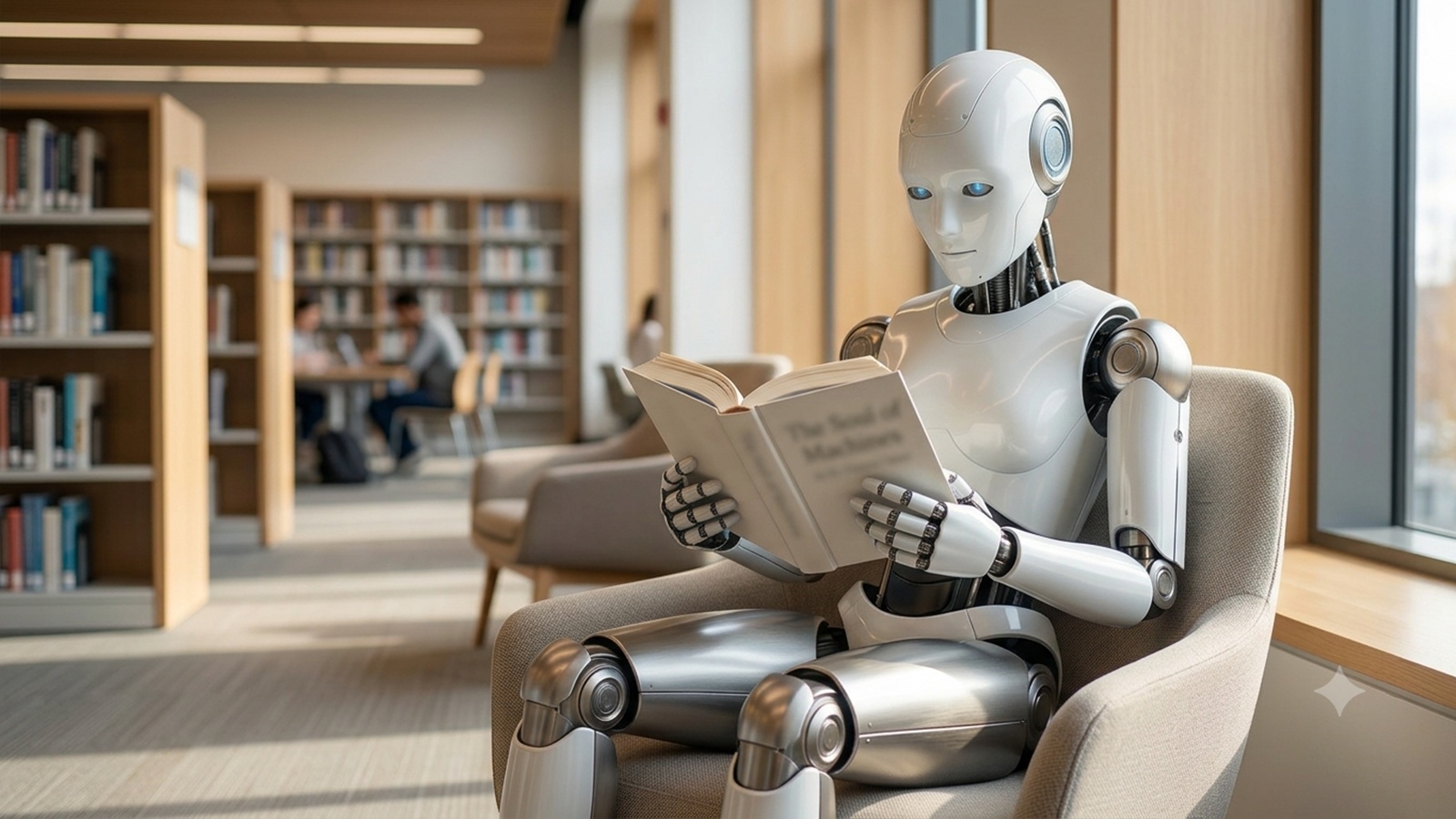
Some companies that make smart computer programs are buying real, printed books and then destroying them after taking pictures of the pages.
The pictures of the words are used to teach the computers how to talk and think.
One of those companies is called Anthropic, and its special project has the name Project Panama.
That means the books are no longer kept around for people to read.
Some people love books and feel sad when they are destroyed.
They think a book is more than just words, because reading slowly, scribbling in the margins and finding new ideas by chance are precious.
Computer programs can read a million books very fast and find patterns in them.
This helps more people learn things, even if they live far from big universities.
But the writer of the article worries that people will stop having those happy, surprising book adventures.
He hopes there will always be readers who make their own meanings, just like the miller Menocchio did hundreds of years ago.

Reports say AI companies, including Anthropic, have acquired and destroyed thousands of printed books after digitising their contents for machine learning.
Anthropic's Project Panama reportedly destroyed millions of books, with the digitised texts dissolving into statistical memory behind machine-generated responses.
The column argues the book risks becoming a vessel for information extraction rather than a work to be read as a whole.
The author worries that efficient information retrieval will erode the unpredictable encounters and personal meaning-making that reading fosters, as in the case of 16th-century miller Menocchio.
The piece also acknowledges AI can widen access to knowledge, letting students far from major universities ask questions, translate texts and search archives with ease.
- Who
- Anthropic and other AI companies that acquire and destroy printed books; the column is by Indian Express Opinions Editor Kaushik Das Gupta.
- What
- AI companies acquire and destroy thousands of printed books after digitising their contents for machine learning, raising questions about the future of reading.
- Where
- The locations of the reported book acquisitions are not specified in the article.
- When
- The article does not specify when the reported acquisitions took place.
- Why
- To extract text for training machine-learning models that can identify patterns, make connections and generate new combinations of knowledge.
Preserving the printed word and the reading experience
AI widening access to knowledge
Destruction of printed books
Preserving the printed word and the reading experience
Destroying printed books after digitising them is deeply unsettling; physical books carry readers' marks and social value beyond the text extracted from them.
AI widening access to knowledge
Once the text has been captured for machine learning, the physical object has served its purpose, and digitisation can preserve and reproduce knowledge.
The role of reading in the AI age
Preserving the printed word and the reading experience
If efficient retrieval of information becomes reading's predominant function, unpredictable encounters, rereading and personal meaning-making may be lost.
AI widening access to knowledge
AI can widen access to the world of knowledge, allowing students far from major universities to ask questions, translate texts and search archives with unprecedented ease.
Key facts
- AI company involved
- Anthropic
- Project
- Project Panama (Anthropic)
- Reported action
- Acquisition and destruction of printed books after digitising their contents for machine learning
- Scale of destruction
- Thousands of books per reports; Anthropic described as having destroyed millions of books
- Publication
- The Indian Express (Opinions Editor column)
- Author
- Kaushik Das Gupta
- Central concern
- The book risks becoming a vessel for information extraction rather than a work to be read
- Historical reference
- Carlo Ginzburg's 'The Cheese and the Worms' and 16th-century Italian miller Menocchio
Quotes
Domenico Scandella Menocchio
16th‑century Italian miller and subject of Carlo Ginzburg’s study
““In my opinion, all was chaos; that is, earth, air, water and fire were mixed together. Out of that mass, just as cheese is made from milk, worms appeared, and these were the angels.””
 indianexpress.com
Sources
Related news
Anthropic’s Destructive Book Scanning Raises Copyright and Preservation Fears

AI firms buy second-hand books for destructive scanning surge

Amazon Reportedly Scanning Books for AI Training Data
When AI destroys books, Kolkata finds comfort in second-hand pages