

1 week ago
AI Detection Tools Bring Accuracy Questions and Distrust to Writing
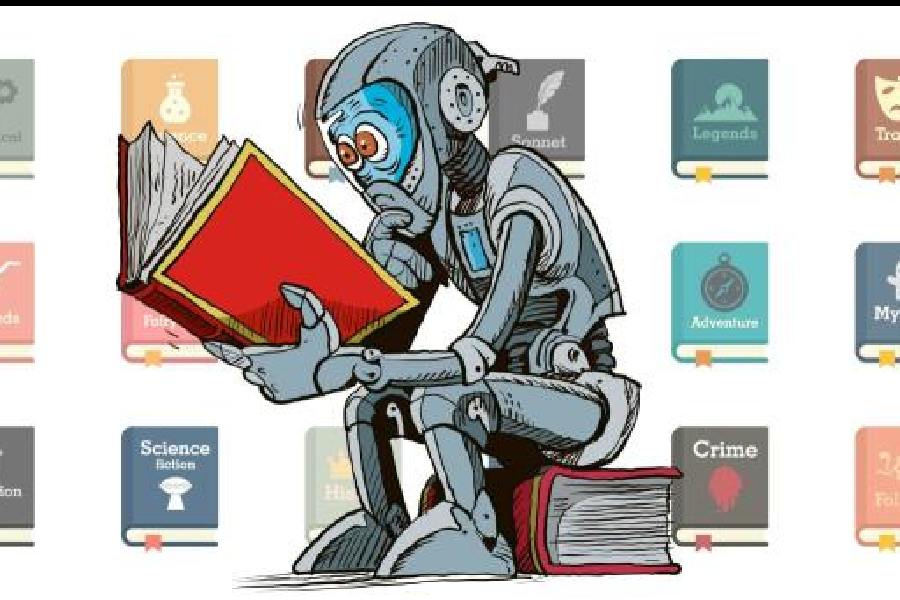
AI tools can help people write, but writing is also a way to practice thinking.
Special programs try to guess whether a person or a computer wrote something.
These programs look at word choices, rhythm, and sentence patterns.
Sometimes they disagree with one another or accuse people unfairly.
A Stanford study found that non-native English writers were especially likely to be misidentified.
Some universities have therefore limited the use of these detectors.
Anthropic says its future Claude text will include watermarks that may remain after copying and some editing.
Experts say better assignments may be more useful than trying to catch every use of AI.

AI detectors analyze wording, rhythm, structure, and word-choice patterns to estimate whether text was machine-generated.
Pangram identified deliberately AI-altered passages in testing, but different detectors can produce conflicting results.
A 2023 Stanford study found detectors often misclassified non-native English writing as AI-generated.
OpenAI discontinued its own AI writing detector in 2023 because of low accuracy, while Grammarly advises users not to rely on detectors alone.
Several universities have restricted or disabled AI detectors, and Anthropic says Claude-generated text will carry embedded watermarks under European transparency rules.
- Who
- AI researchers, detector companies, writers, students, universities, and AI companies including Anthropic and OpenAI.
- What
- The article examines how AI-detection tools identify machine-generated writing and the accuracy and fairness concerns surrounding them.
- Where
- The issue is discussed across internet publishing, schools and universities in the United States, Europe, Canada, South Africa, and Australia.
- When
- The examples span 2023, May, recent weeks, and an announcement made last week.
- Why
- Detectors are being used to assess whether writing was AI-generated, but false positives, conflicting results, and easily modified text have created distrust.
Detector Supporters
Detector Critics
Whether detectors are useful
Detector Supporters
Supporters say tools such as Pangram can identify patterns in AI-generated writing and successfully detected deliberately AI-altered passages in testing.
Detector Critics
Critics say detectors are not foolproof, can disagree with one another, and AI-generated text can be modified to evade detection.
Academic integrity
Detector Supporters
Detectors can help schools investigate whether students used AI in writing assignments.
Detector Critics
Critics argue that false accusations can harm students and that good assessment design is more reliable than attempting to stop all AI use.
Fairness and accuracy
Detector Supporters
Pangram claims a 1-in-10,000 false-positive rate, suggesting that some tools can achieve high accuracy.
Detector Critics
A 2023 Stanford study found frequent misclassification of non-native English writing, while OpenAI shut down its detector because of low accuracy.
Key facts
- Internet AI content
- Graphite Growth said in May that primarily AI-generated articles accounted for 50% of internet articles, matching the 50% written by humans.
- Detection tools
- Examples include Pangram, Turnitin AI Detector, GPTZero, and Grammarly.
- Pangram claim
- Pangram says it has an industry-leading false-positive rate of 1 in 10,000.
- Stanford study
- A 2023 study found popular detectors frequently misclassified writing by non-native English speakers as AI-generated.
- OpenAI detector
- OpenAI turned off its own AI writing detector in 2023 because of low accuracy.
- University responses
- Vanderbilt, Yale, Johns Hopkins, Northwestern, Waterloo, Cape Town, and Curtin have restricted or disabled AI-detector use.
- Anthropic watermarking
- Anthropic said Claude-generated text will carry embedded watermarks that may persist through copying and some editing.
Quotes
Judy Williams
Pro vice-chancellor for education and students at Queen’s University Belfast
“The technology is still developing, false positives can be unacceptably high and AI-generated text can easily be modified, making detection unreliable.”
 telegraphindia.com
“AI detection involves figuring out how the tree works.”
telegraphindia.com
Anthropic
AI company announcing measures for transparency in generated text
“Generated text will carry embedded watermarks.”
telegraphindia.com
Sources
Related news
AI Slop Detector Excels at Text, Struggles With Images
AI accusations against authors of colour spark publishing bias debate
Developers Race to Remove Anthropic’s Invisible AI Watermarks
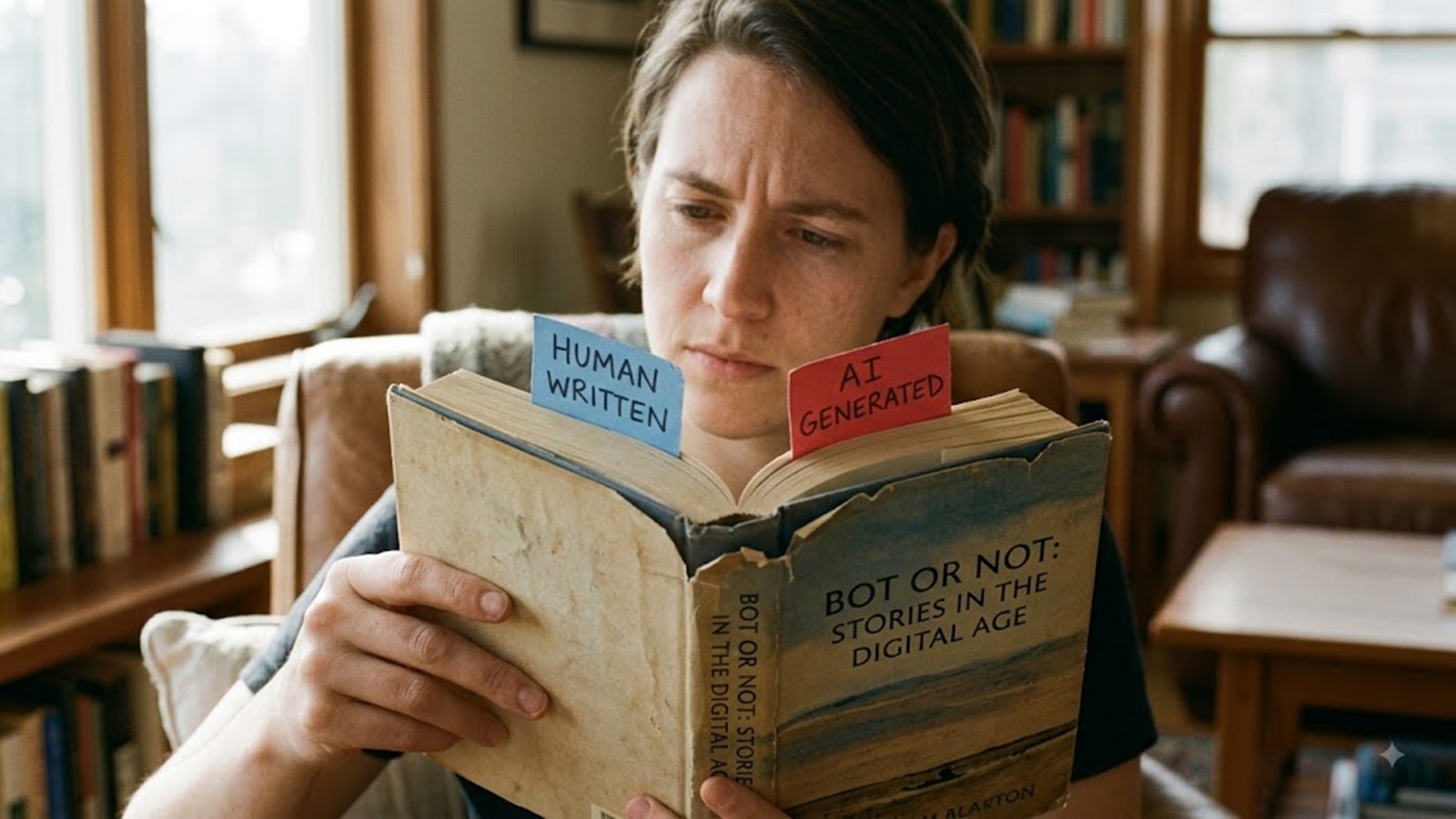
Knowing a Story Is AI-Generated Ruins Reader Enjoyment, Study Finds

Humanising AI Makes Online Content Harder to Verify
