3 weeks ago
Great Book Grab: Who Owns Knowledge in the AI Age?
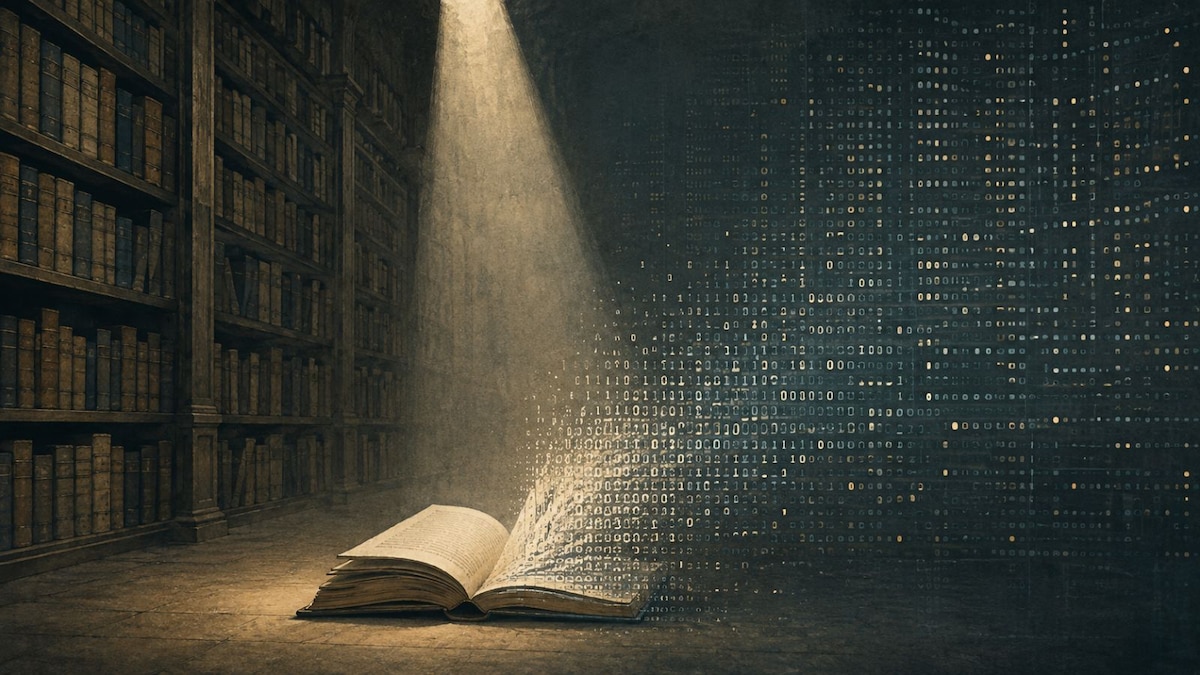
A company called Anthropic makes computer programs called AI that can read and write like people.
To teach its AI, Anthropic secretly bought many books, cut off their spines, and scanned them into computers.
This project was called 'Project Panama.'
Some of those books were rare, and some were obtained in ways that broke the rules.
The people who wrote the books were upset and took Anthropic to court.
A judge said what Anthropic did was okay because it changed the books' use into something new that helps society.
But many people worry that big companies will own all the world's knowledge and keep it away from everyone else.
In India, the rules are different and courts look at whether AI copies exact words from books.
People everywhere are still asking who should own the world's knowledge.

A US judge ruled that Anthropic's secret 'Project Panama' book-scanning program qualifies as 'fair use.'
Anthropic bought books, cut off their spines, and destructively scanned them to train its AI models.
The authors' class-action lawsuit revealed some books were rare and many were acquired illegally through piracy.
Court documents showed Anthropic aimed to build a 'central library of all the books in the world' kept only for itself.
Indian experts say courts there would weigh 'fair dealing' and whether AI reproduces copyrighted content verbatim, as in ANI versus OpenAI.
- Who
- Anthropic, the authors who filed a class-action lawsuit, a US judge, and legal experts including Dr Ashit Kumar Srivastava and Sharanya Mukherjee.
- What
- A court ruled that Anthropic's secret 'Project Panama' — buying and destructively scanning books, including pirated and rare works, to train AI models — qualifies as fair use.
- Where
- United States, with discussion of India's Delhi High Court ANI versus OpenAI case and the European Union.
- When
- Not specified in the article.
- Why
- To decide whether copyrighted books may legally be used to train AI models and who should control the knowledge that powers them.
Authors and Copyright Advocates
AI Companies and Fair-Use Supporters
Using copyrighted books to train AI
Authors and Copyright Advocates
Authors argue that scanning books — including pirated and rare works — without permission infringes their copyright and devalues their work.
AI Companies and Fair-Use Supporters
The court ruled the scanning is "fair use" because Anthropic used the material in a "transformative" way that advances society.
Concentration of knowledge in private datasets
Authors and Copyright Advocates
Critics, including Sharanya Mukherjee, warn that a few companies will control vast AI training datasets, creating a structural market advantage and a regulatory "blind spot."
AI Companies and Fair-Use Supporters
Supporters see the ruling as a milestone win for emerging tech companies that need large, high-quality datasets to build frontier AI.
Key facts
- Company
- Anthropic
- Secret project
- Project Panama
- Project method
- Bought books, removed spines, and destructively scanned them for AI training
- Court ruling
- Judge ruled the scanning qualifies as "fair use" (transformative use for society)
- Lawsuit findings
- Some books were rare and many were acquired illegally through piracy
- Anthropic's goal
- A "central library of all the books in the world" retained for itself
- India's legal standard
- Fair dealing, unlike the US fair use doctrine
- Key Indian litigation
- Delhi High Court's ANI versus OpenAI case
Quotes
Dr Ashit Kumar Srivastava
Professor of law at Dharmashala National Law University
“"The real question is at what layer copyright applies," he said, explaining that AI models involve three stages: input, processing and output.”
 CNBC TV 18
“"To me, this is fundamentally a market structure issue rather than simply a copyright issue."”
CNBC TV 18
Judge
U.S. court judge who ruled on Anthropic’s use of copyrighted books
“"fair use" as Anthropic utilized the material in a "transformative" way, for the advancement of society”
CNBC TV 18
Sources
Related news

AI Copyright Debate Puts the Future of Information Ahead
Anthropic’s Destructive Book Scanning Raises Copyright and Preservation Fears
Sony, Warner Sue Anthropic Over Alleged Music Copyright Theft

Sony and Warner Sue Anthropic Over AI Music Training

Sony and Warner Sue Anthropic Over Claude Copyright Claims