2 hrs ago
Technology Enhances Human Power but Cannot Replace Manpower

Technology helps people do many tasks faster and more accurately.
During the COVID-19 pandemic, digital tools helped track infections, provide telemedicine, and coordinate relief.
However, doctors, nurses, sanitation workers, and volunteers were still needed to care for people.
Video calls and online classes helped people stay connected, but they could not replace real human companionship.
Machines can repeat tasks and analyze data, but they do not understand compassion or right and wrong like people do.
New technologies can also create problems involving privacy, unfairness, and safety.
Humans are still needed to design, supervise, and make decisions about machines.
The article says technology should empower people rather than replace them.
It asks whether technology can be guided by human values.

The COVID-19 pandemic showed that technology could support healthcare but not replace doctors, nurses, and other workers.
Digital tools connect people, expand services, and improve governance, but they cannot substitute for human relationships or trust.
Automation changes the nature of work while creating demand for engineers, designers, supervisors, and other skilled workers.
Artificial intelligence can process information and detect patterns but cannot independently provide empathy, accountability, or moral judgment.
The article argues that future technology should be responsible, inclusive, and guided by human values.
- Who
- Doctors, nurses, health workers, sanitation staff, administrators, engineers, scientists, decision-makers, and technology users are central to the discussion.
- What
- The article argues that technology can amplify human abilities and automate tasks but cannot replace human creativity, relationships, leadership, or moral judgment.
- Where
- The examples include India, rural households, global society, and technological applications across governance, healthcare, education, politics, and science.
- When
- The discussion refers to the COVID-19 pandemic, the 2024 warning by Geoffrey Hinton, and the continuing development of artificial intelligence and other technologies.
- Why
- Technology lacks human empathy, discretion, accountability, ethical responsibility, and the ability to build trust and understand human values.
Technology’s Benefits
Human Limits and Responsibilities
Work and productivity
Technology’s Benefits
Automation, robotics, and digital platforms can increase productivity, transform economies, and create new fields such as data science, AI ethics, and robotics.
Human Limits and Responsibilities
Automated systems still require human designers, engineers, supervisors, cybersecurity experts, and maintenance staff; technology changes work rather than eliminating the need for manpower.
Communication and connection
Technology’s Benefits
Video calls, social media, telemedicine, and digital classrooms help people communicate, access services, and continue learning.
Human Limits and Responsibilities
Digital communication cannot fully replace companionship, human touch, or collective relationships, and unequal smartphone access can deepen the digital divide.
Decision-making and governance
Technology’s Benefits
Technology can improve governance, deliver targeted benefits, increase transparency, process data, and support scientific missions.
Human Limits and Responsibilities
Human leaders remain necessary for negotiation, empathy, democratic accountability, ethical decisions, and responding to risks such as surveillance, manipulation, and algorithmic bias.
Key facts
- Core argument
- Technology can extend human capabilities but cannot replace human beings.
- COVID-19 applications
- Digital tools helped with infection tracing, telemedicine, medical-equipment delivery, genome sequencing, education, and relief coordination.
- Digital access
- The article cites ASER 2021 as reporting that 67% of rural households had access to a smartphone.
- Governance example
- India’s Aadhaar-linked Direct Benefit Transfer was presented as reducing leakages and targeting subsidies.
- Economic example
- India’s Open Network for Digital Commerce was described as helping connect small farmers with markets and reduce intermediaries.
- AI concern
- The article says artificial intelligence can identify patterns but cannot independently determine right and wrong through ethical judgment.
- Space example
- Chandrayaan-3 was described as combining autonomous algorithms with human engineers, mission planners, and scientists.
Quotes

George Orwell
English novelist and essayist cited in the article regarding control of information and technology.
“Those who control information, control the world”
 freepressjournal.in
Sources
Related news

Ex-HCLTech CEO urges humans-first approach amid AI-led layoffs
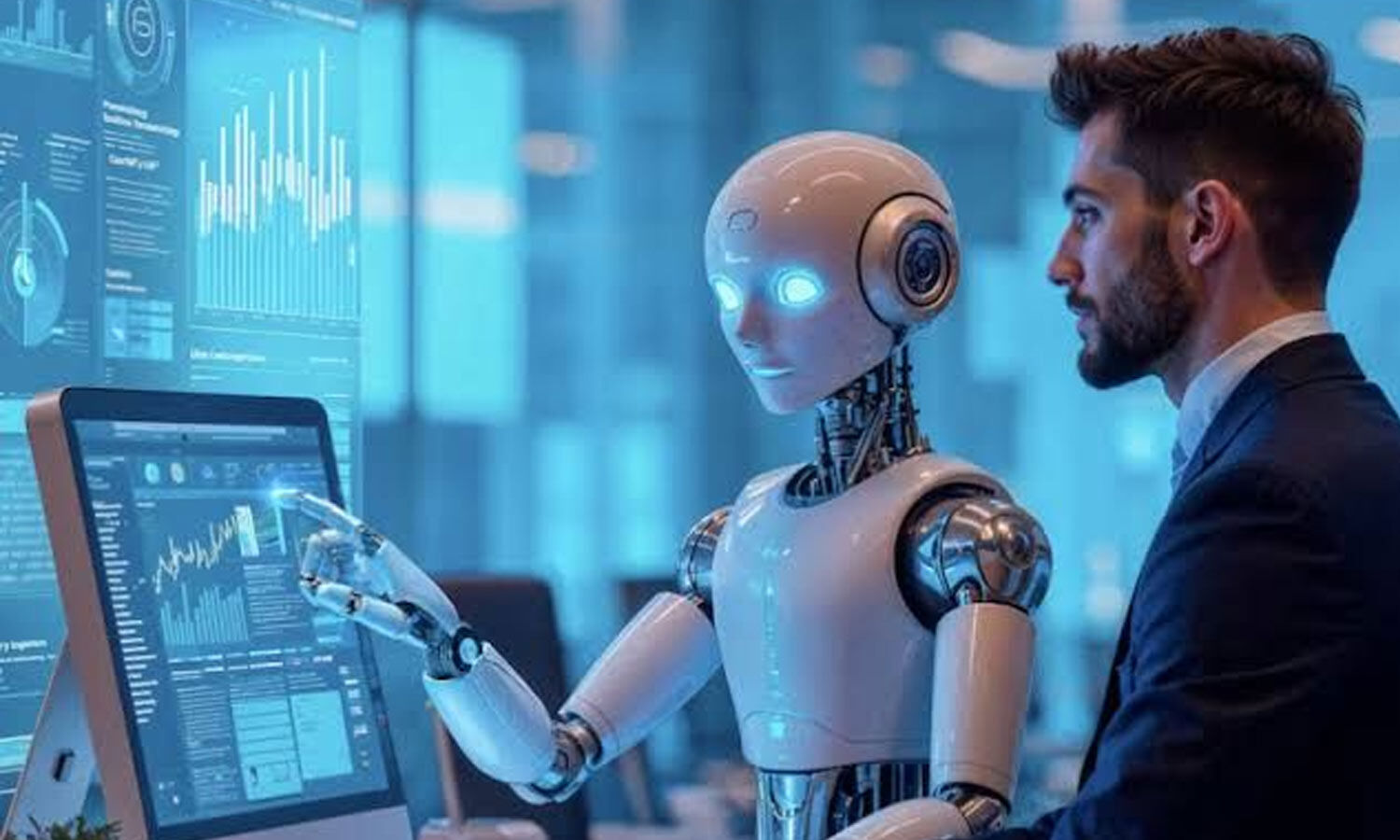
AI May Change Human Work More Than Replace It

Engineers’ Roles Shift as AI Elevates Human Judgement

Jalgaon Conference Urges Technology Balance With Mindfulness And Human Values

Robots Still Need Humans as AI Reshapes Future Jobs

How Literature Turned the Cockroach Into a Symbol of Resistance

University of Hyderabad Lecture Examines Journalism in the AI Era

Backlash Grows as Flock Surveillance Cameras Spread Across America
‘Dimagi Naxal’ Debate Casts Dissent as Political Threat