3 days ago
India’s Carrier Debate: Power, Vulnerability and Strategic Choice
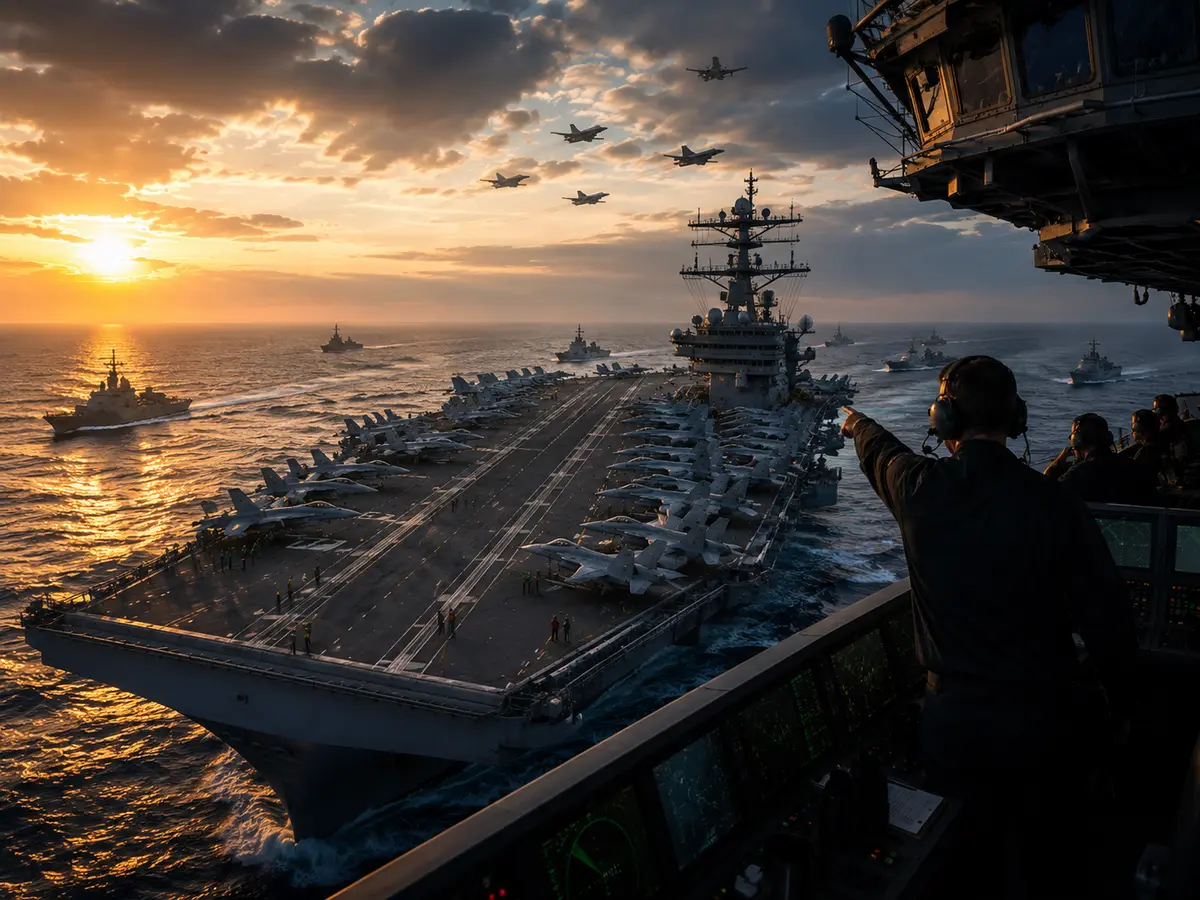
An aircraft carrier is like a movable military base at sea.
It can carry aircraft to places where a country wants to show strength or offer support.
It can send a message without immediately starting a war.
Modern missiles, submarines and satellites can make carriers easier to find and attack.
This means carriers can be hurt, but it does not automatically make them useless.
India must decide what it wants its navy to do in the coming 40 years.
It is considering whether to build a third carrier and what kind of ship it should be.
India also needs to plan the aircraft, drones, escort ships, submarines and supplies that would work with the carrier.

Aircraft carriers provide mobile, sovereign military power that can reassure, warn or pressure without immediately escalating to war.
Despite faster anti-ship missiles, submarines and improved surveillance, carriers remain vulnerable but are not necessarily irrelevant.
India is urged to decide what political and military options it wants at sea over the next four decades.
Key choices include whether to build a third carrier and whether it should repeat Vikrant or use a larger design.
India must also determine the carrier’s air wing and integrate unmanned systems, escorts, submarines, logistics and information networks.
- Who
- India and its navy are the central actors in the carrier-force debate.
- What
- India must decide the size, design and supporting capabilities of its future aircraft-carrier force.
- Where
- The issue concerns India’s military capabilities at sea.
- When
- The decisions concern India’s maritime options over the next four decades.
- Why
- The choices will determine what political and military options India can create at sea, including the ability to reassure, warn or pressure others without immediately entering war.
Carrier proponents
Carrier skeptics
Strategic value
Carrier proponents
Carriers offer flexible, sovereign military power that can reassure, warn or pressure others without immediately escalating to war.
Carrier skeptics
Carriers are costly and exposed, making their value questionable against modern maritime threats.
Survivability and relevance
Carrier proponents
Vulnerability does not equal irrelevance; carriers can remain useful even when missiles, submarines and surveillance make them harder to protect and conceal.
Carrier skeptics
Faster anti-ship missiles, submarines and space-based surveillance make large carriers increasingly vulnerable.
Key facts
- Core capability
- A carrier is described as a mobile, sovereign package of military power, rather than only a movable airfield.
- Strategic functions
- A carrier can reassure without creating a base, warn without firing and apply pressure without immediately crossing into war.
- Main threats
- Faster and longer-range anti-ship missiles, submarines and space-based surveillance challenge carriers.
- India’s pending question
- Whether India needs a third aircraft carrier to generate reliable availability.
- Design choice
- India must consider whether its next carrier should repeat Vikrant or use a larger design.
- Supporting systems
- The carrier force would require suitable air wings, unmanned systems, escorts, submarines, logistics and information architecture.
- Planning horizon
- The debate is framed around India’s maritime needs over the next four decades.
Sources
Related news
India's Carrier Dilemma Deepens as China's Fujian Nears Readiness
Why aircraft carriers matter more than ever for India's navy

India’s 2047 Ambitions Raise Need for Stronger Navy
China’s Indian Ocean Expansion Drives India’s Fleet Buildup
China Builds Carrier Pilot Pipeline Amid Growing Naval Ambitions

Iran War Pulls US Carrier, Leaving Pacific Gap for China

India hands third Bailey bridge consignment to cyclone-hit Sri Lanka