7 hrs ago
Mumbai’s ₹13,000-Crore Sponge City Plan Faces Ecological Contradictions
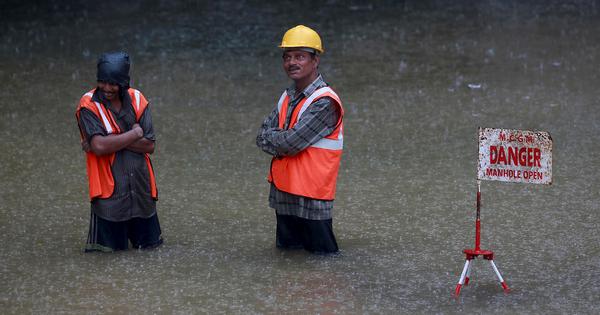
Mumbai can become very dry and then suddenly have dangerous floods.
The government has announced a ₹13,000-crore plan to help the city absorb and move away rainwater.
The plan includes drains, ponds, plants, wetlands and special pavements that let water soak into the ground.
This is called a “sponge city” because the city is supposed to work like a sponge.
Critics say Mumbai is destroying many of the natural places that already absorb water.
These include mangroves, wetlands, forests, lakes and salt-pan lands.
They also say new concrete projects can make flooding worse by stopping water from entering the soil.
The article argues that the city should study its drainage problems more carefully and involve many experts and residents.
It also says ordinary work, such as cleaning drains and building basic sewers, should receive more attention.

Maharashtra Chief Minister Devendra Fadnavis announced a ₹13,000-crore integrated flood mitigation plan for Mumbai after severe flooding in early July.
The proposed sponge-city strategy combines conventional drainage works with mangrove restoration, wetlands, permeable pavements, bioswales and other blue-green infrastructure.
Critics say the plan conflicts with projects that destroy or cover ecological systems, including mangroves, wetlands, open spaces, forests and salt-pan lands.
The plan is larger and costlier than the existing Brihanmumbai Storm Water Drainage masterplan, known as BRIMSTOWAD.
The article argues that better maintenance, local rainfall data, basic drainage, public participation and protection of natural water systems may be more effective than expensive technology-led projects.
- Who
- The Maharashtra government, Mumbai’s municipal authorities, urban planners, researchers and city residents are involved or affected.
- What
- A ₹13,000-crore integrated flood mitigation plan proposes combining drainage engineering with ecological, or “sponge city,” measures.
- Where
- Mumbai, Maharashtra, including areas around the Mithi River, coastal mangroves, wetlands, salt-pan lands and Sanjay Gandhi National Park.
- When
- The plan was announced after devastating floods in early July; the article also notes that the last official drainage analysis was conducted in 2006.
- Why
- The plan aims to address Mumbai’s chronic flooding, particularly in low-lying areas, but critics question whether it can succeed while ecological systems continue to be damaged.
Plan Supporters
Plan Critics
Flood-control approach
Plan Supporters
Supporters present the integrated plan as a combination of conventional drainage and nature-based measures that could help Mumbai absorb and manage heavy rainfall.
Plan Critics
Critics argue that the plan is being proposed without a sufficiently current assessment of Mumbai’s drainage and ecology, and that budgeting is driving planning rather than the reverse.
Nature-based infrastructure
Plan Supporters
Mangrove restoration, wetlands, sponge parks, permeable pavements, bioswales and detention systems are presented as tools for improving ecological resilience.
Plan Critics
Critics say these measures contradict simultaneous projects that remove mangroves, cover open spaces with concrete, tunnel through forest land and encroach on waterbodies and salt-pan lands.
Technology and expertise
Plan Supporters
The plan includes scientific modelling, AI-powered smart drains and technology-based flood monitoring.
Plan Critics
The article says effective flood management also requires routine drain maintenance, neighbourhood-level rainfall records, basic drainage and input from hydrologists, geologists, conservationists, sociologists and citizens.
Key facts
- Proposed investment
- ₹13,000 crore for the integrated flood mitigation plan.
- Existing drainage program
- The Brihanmumbai Storm Water Drainage masterplan, or BRIMSTOWAD, has existed since 1993.
- Earlier drainage study
- The Chitale Committee conducted the last official analysis of Mumbai’s drainage in 2006.
- Coastal Road North
- The article says the project is valued at ₹33,000 crore and would involve removing 45,000 mangroves.
- National Park tunnel
- An 11.85-kilometre tunnel-road through 49.39 hectares of Sanjay Gandhi National Park is cited as costing ₹18,838 crore.
- Proposed measures
- The plan includes mangrove and wetland restoration, permeable pavements, bioswales, bioretention systems, detention systems and AI-powered smart drains.
- Recommended governance
- The article highlights public participation and reviving the 2006 recommendation for a Mumbai Watershed Council.
Sources
Related news

Mumbai’s Expansion Raises Questions About Nature-Based City-Making
Gurugram Flooding Demands Hydrological Planning, Not Just Bigger Drains
BMC Launches Fresh Study of Mumbai’s Coastal Flooding Risk
Climate-Resilient Urban Planning Could Make India’s Cities Safer
Gurugram Flooding Blamed on Growth as MPs Promise 2047 Fix
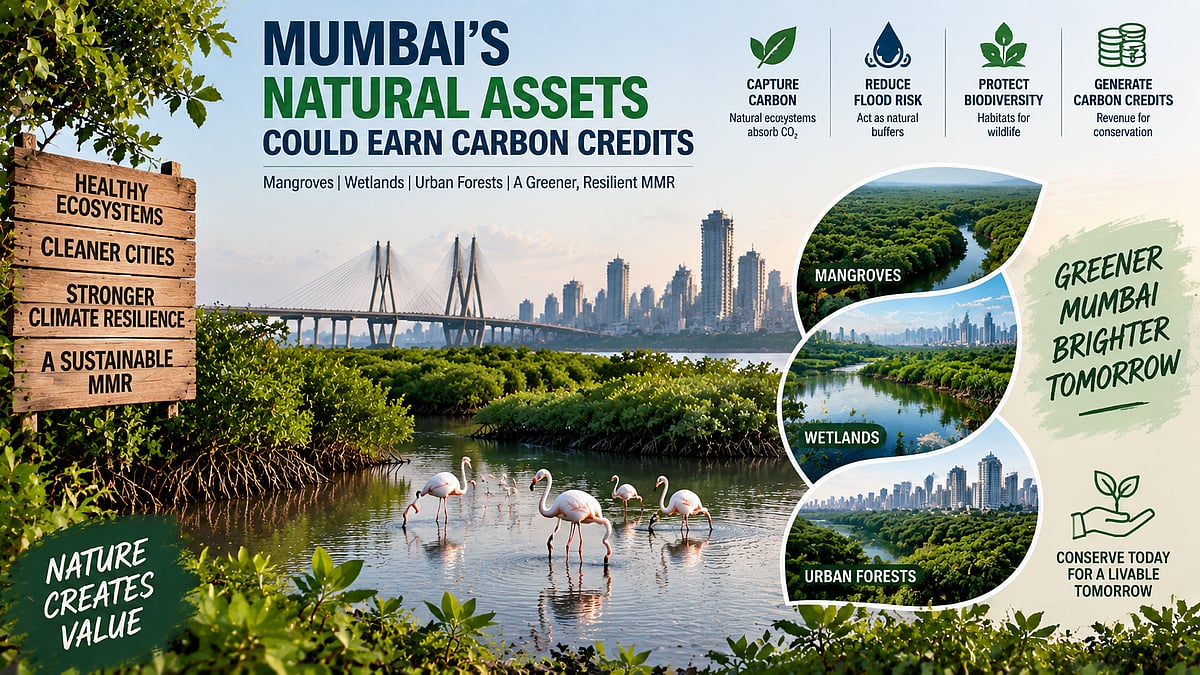
Mumbai Mangroves and Wetlands Considered for Carbon Credits
Fadnavis Promises Drought Declaration, Loan Waivers Amid Maharashtra Crisis
Maharashtra Approves Neknoor Upper Tehsildar Office After 27 Years

Uddhav Thackeray Seeks Maharashtra Special Session Over Dry Spell
Farmers Seek Drought Declaration During Fadnavis’s Washim Visit