1 hr ago
Mumbai Mangroves and Wetlands Considered for Carbon Credits
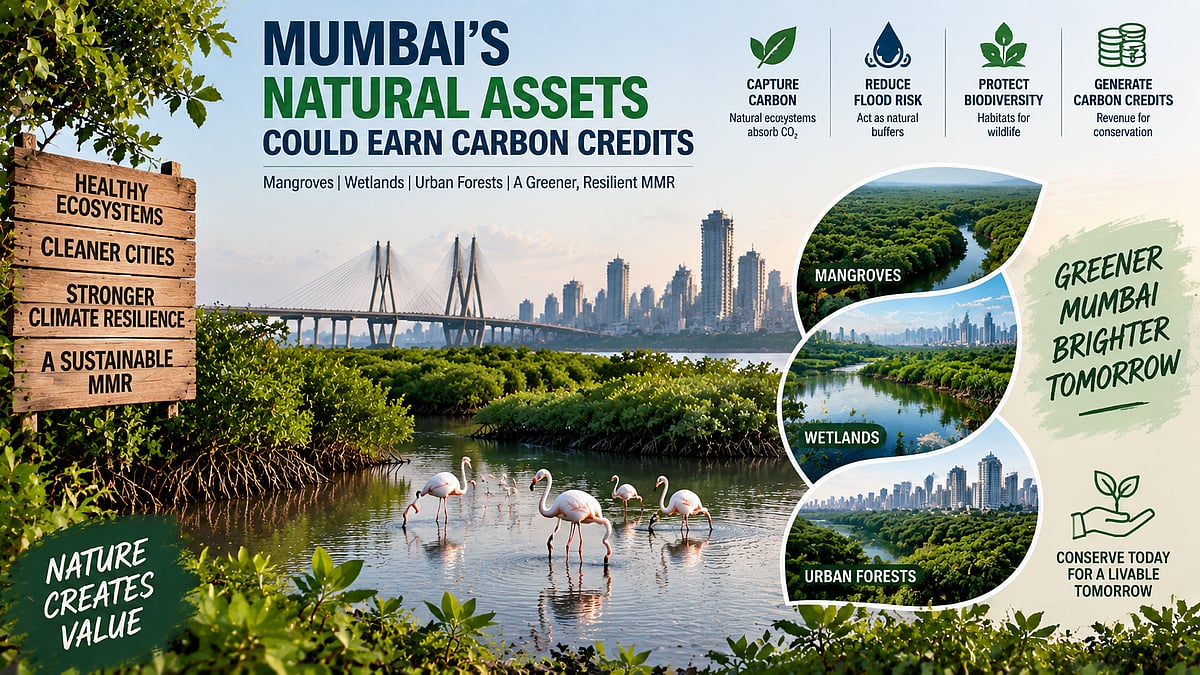
A group has suggested creating a special carbon bank for the Mumbai region.
It would study how much carbon mangroves, wetlands and urban forests store.
If the carbon can be measured and checked, it might be turned into carbon credits.
Companies or other buyers could potentially purchase those credits.
The money could then help protect the natural areas.
Supporters say wetlands also help reduce flooding and protect biodiversity.
The idea was partly inspired by the high development value placed on a Navi Mumbai wetland.
Experts say a study is needed before deciding whether the plan can work.
The proposal has been sent to government authorities and is also being examined through academic research.
If successful, Mumbai could become a model for other coastal areas.

NatConnect Foundation has proposed a Green-Blue Carbon Bank for the Mumbai Metropolitan Region.
The plan would measure, certify and potentially convert ecosystem carbon storage into carbon credits.
Revenue from credits could support conservation of mangroves, wetlands, urban forests and other ecosystems.
The proposal followed a government valuation of Navi Mumbai’s 12-hectare DPS Flamingo Lake at about Rs 3,600 crore.
A proposed six-month study would assess whether the region’s stored carbon can become credible, verifiable carbon assets.
- Who
- NatConnect Foundation, carbon-market experts, environmental professionals and Maharashtra officials are involved in the proposal.
- What
- A Green-Blue Carbon Bank could measure and certify carbon stored in Mumbai-region ecosystems and potentially convert it into carbon credits.
- Where
- The proposed program would cover the Mumbai Metropolitan Region, including mangroves and wetlands in and around Navi Mumbai.
- When
- The proposal is currently under consideration; a six-month multidisciplinary exercise has been proposed.
- Why
- The aim is to quantify the economic and climate value of natural ecosystems and use potential carbon-credit revenue to support conservation.
Conservation Through Carbon Finance
Questions About Nature’s Commercialization
How ecosystems should be valued
Conservation Through Carbon Finance
Supporters argue that wetlands and mangroves should receive financial recognition for carbon storage, flood mitigation, biodiversity and climate resilience.
Questions About Nature’s Commercialization
The proposal acknowledges a concern that assigning market value to nature could be seen as commercializing ecosystems, although NatConnect says that is not its intention.
Whether carbon credits can fund protection
Conservation Through Carbon Finance
Experts believe existing blue-carbon methods could potentially measure ecosystem carbon and generate revenue for conservation.
Questions About Nature’s Commercialization
The proposed multidisciplinary study must first determine whether the carbon can be measured, verified and converted into credible assets.
Key facts
- Proposed initiative
- Green-Blue Carbon Bank for the Mumbai Metropolitan Region
- Proposing organization
- NatConnect Foundation
- Potential assets
- Mangroves, wetlands, urban forests and other ecosystems
- DPS Flamingo Lake valuation
- About Rs 3,600 crore for the 12-hectare Navi Mumbai wetland
- Proposed assessment period
- Six months
- Potential use of revenue
- Conservation and protection of natural ecosystems
- Government status
- The proposal was sent to the Prime Minister’s Office and the Union Ministry of Environment, Forest and Climate Change, then referred to Maharashtra’s environment department
Quotes
Sachhin Patra
Climate and sustainability professional specialising in carbon markets
“If a wetland can be assigned a market value for development, its larger economic value in carbon storage, flood mitigation, biodiversity and climate resilience should also be quantified.”
 freepressjournal.in
“Coastal wetlands store carbon at rates per hectare that far exceed most terrestrial forests, so the underlying science is on our side.”
freepressjournal.in
Sources
Related news
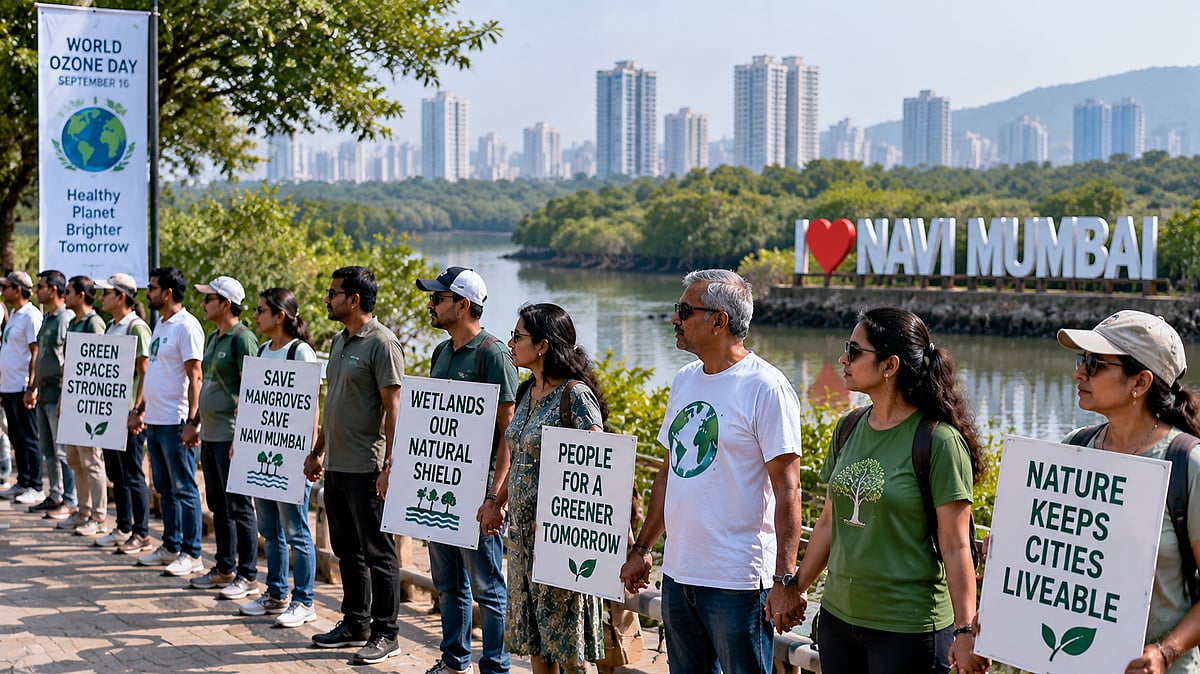
Navi Mumbai Citizens Plan Human Chain to Protect Green Spaces

Environmentalists Seek Fast Conservation Status for Navi Mumbai’s DPS Lake

Mumbai’s Expansion Raises Questions About Nature-Based City-Making

Mumbai Climate Risk Study Draws Scrutiny Over Coastal Development
BMC Launches Fresh Study of Mumbai’s Coastal Flooding Risk

Delhi’s 2047 Plan Balances Development, Ecology and Heritage
Maharashtra Begins Drought Assessment for Fishermen and Fish Farming
Maharashtra Plans Country-Specific Skill Passports for Global Jobs

BJP Spokesperson Escalates Clash With Sanjay Raut Over Fadnavis
MPSC Aspirants to Resume Pune Agitation Over Exam Demands