2 days ago
India’s GDP Grows 7.8% Despite West Asia Crisis
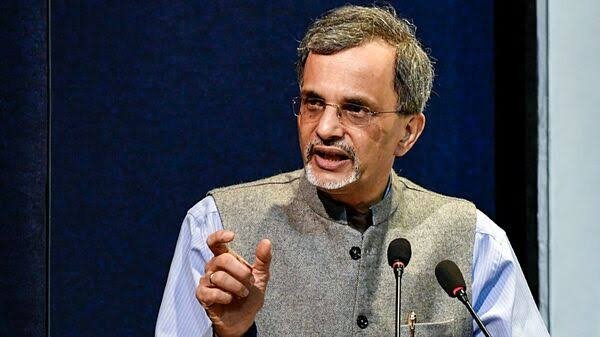
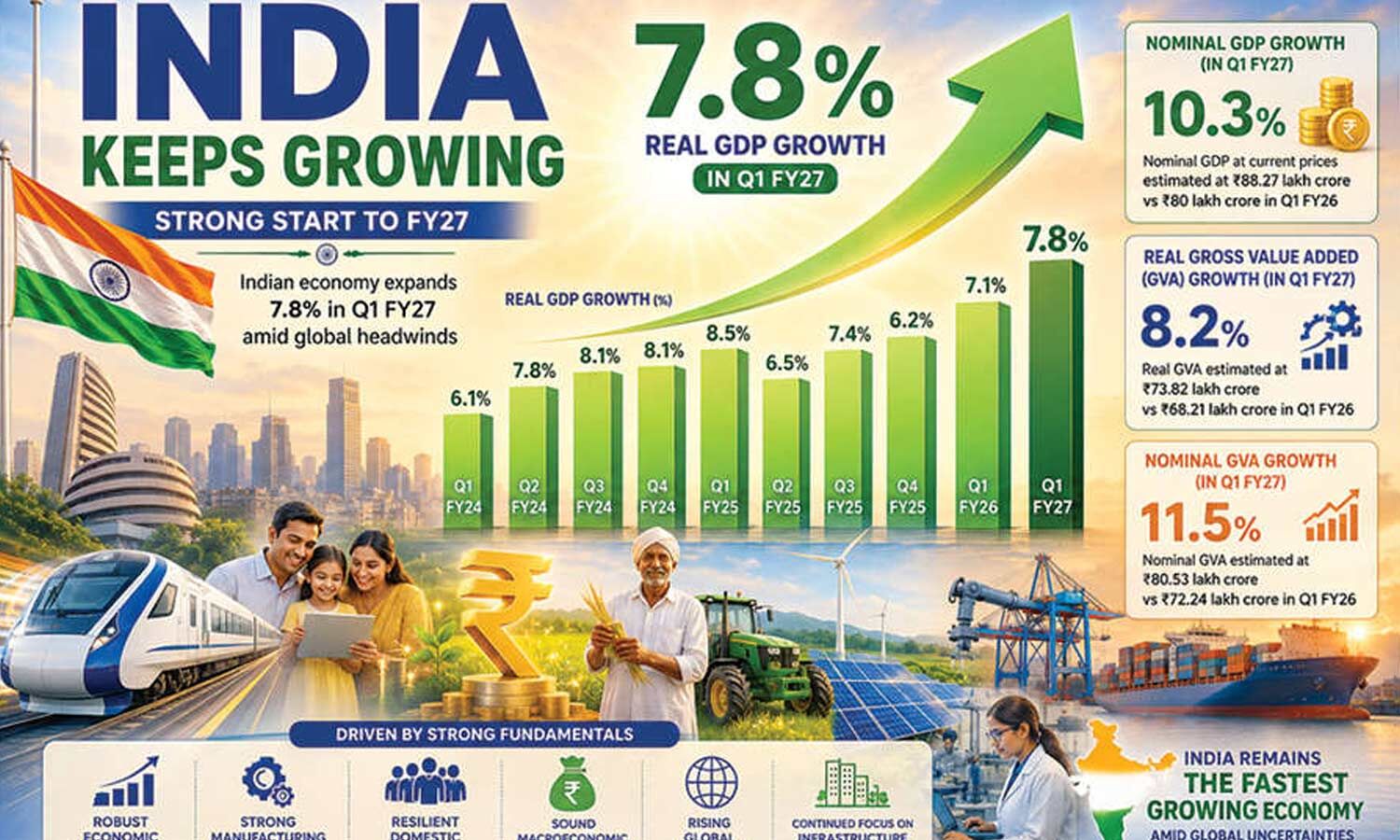
India’s economy grew strongly in the first three months of FY 2026-27.
It grew by 7.8 percent compared with the same period used for comparison.
Manufacturing and services were important reasons for this growth.
Farming also contributed, but less than some other sectors.
The government worked to keep factories and businesses supplied during uncertainty in West Asia.
Oil prices have not risen as sharply as initially feared.
However, diesel and natural gas have become more expensive in some parts of the world.
Higher energy costs could reduce spending and demand in other countries.
This may eventually make it harder for India to increase its exports.

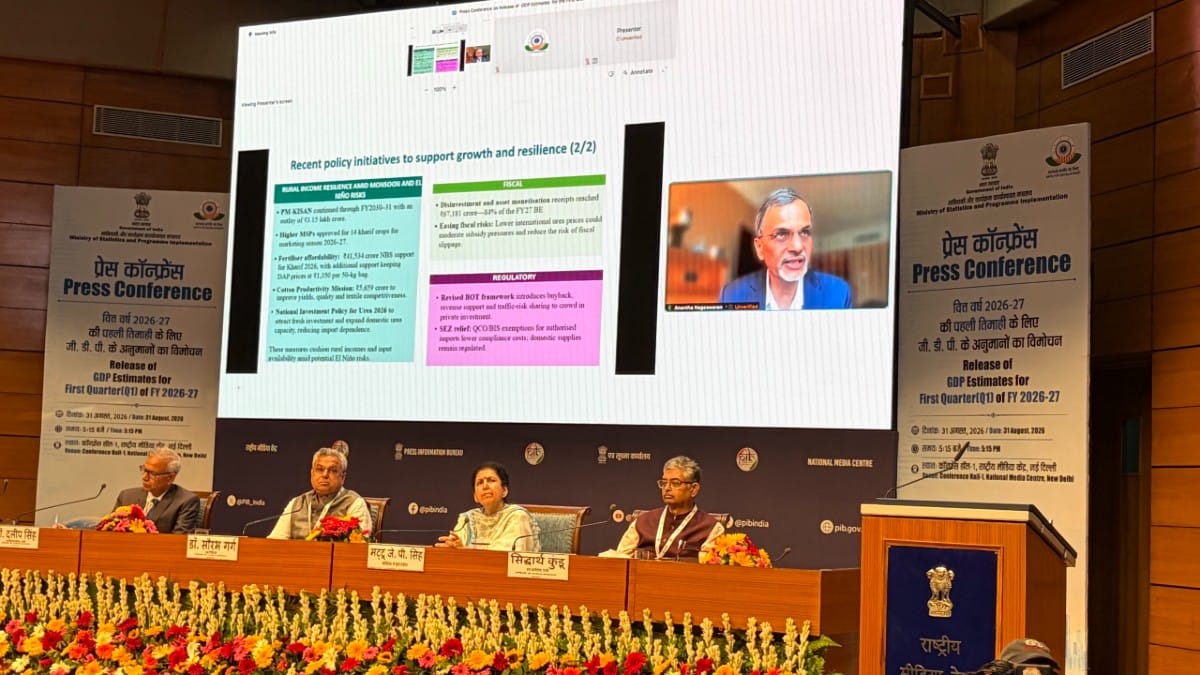
India’s real GDP in the first quarter of FY 2026-27 was estimated at Rs 81.36 lakh crore, up 7.8%.
Chief Economic Advisor V Anantha Nageswaran said the economy has remained resilient despite global uncertainties.
Manufacturing and services performed strongly, while agriculture contributed somewhat less to growth.
Nageswaran attributed the performance partly to government efforts to prevent input-supply disruptions linked to the West Asia crisis.
He warned that prolonged energy-market disruptions could threaten global demand and India’s future export growth.
- Who
- India’s economy and Chief Economic Advisor V Anantha Nageswaran.
- What
- India recorded 7.8% real GDP growth in Q1 of FY 2026-27, with manufacturing and services performing strongly.
- Where
- India, amid economic effects and uncertainties connected to the West Asia crisis and global energy markets.
- When
- In the first quarter of financial year 2026-27; Nageswaran discussed the data on Monday.
- Why
- Growth was supported by contributions from several sectors and government efforts to prevent input-side disruptions.
Resilience and Growth
Energy and Global-Demand Risks
India’s economic performance
Resilience and Growth
V Anantha Nageswaran said India’s growth has remained resilient and has weathered global uncertainties well.
Energy and Global-Demand Risks
The article identifies continued global uncertainty and energy-market disruptions as risks that could affect future growth.
Impact of the West Asia crisis
Resilience and Growth
Manufacturing and services performed well despite the crisis, partly because government efforts protected input supplies.
Energy and Global-Demand Risks
A longer-lasting disruption could still affect crude-oil supply, petroleum-product prices and economic conditions.
Exports and global demand
Resilience and Growth
Muted oil-price effects have limited the immediate impact on India, according to the Chief Economic Advisor.
Energy and Global-Demand Risks
Higher diesel and natural-gas prices could reduce consumption in Europe and the United States, weakening global demand and India’s export prospects.
Key facts
- GDP growth
- 7.8% real GDP growth in Q1 of FY 2026-27.
- Real GDP estimate
- Rs 81.36 lakh crore at constant prices.
- Strongest contributors
- Manufacturing and services performed strongly; agriculture contributed somewhat less.
- Government response
- Measures were taken to ensure input supplies were not disrupted by the West Asia crisis.
- Oil-price risk
- The Chief Economic Advisor said lingering supply risks could prevent Brent crude from falling materially and sustainably below $80 per barrel.
- Global energy impact
- Higher petroleum-product prices could affect global demand and India’s export-growth prospects.
Quotes

V Anantha Nageswaran
India’s chief economic advisor
“So there is always a lurking risk of crude oil supply disruption, which is there, which probably will prevent the oil prices from coming down materially and sustainably below $80 per barrel in terms of the Brent crude”
 deccanchronicle.com
“We are witnessing continued resilience in the Indian growth performance, and that is the key message here. Resilience in the quarterly data is well backed by the high frequency data.”
deccanchronicle.com
Sources
Related news
India Posts 7.8% Growth as CEA Flags External Risks
India's Q1 GDP Growth Hits 7.8% Despite Global Turmoil
India’s 7.8% Q1 Growth Outpaces Forecast Despite Global Risks
India’s Q1 FY27 Growth Beats Forecast Despite Iran War Fears
India’s GDP Growth Beats Expectations at 7.8% in First Quarter

India’s June Quarter Growth Defies War and Energy Pressures

Trump Floats Renaming Strait of Hormuz as ‘Trump Strait’

Chevron Plans $7 Billion Venezuela Expansion Amid U.S. Oil Push

Saudi Arabia Says Iranian Tanker Attack Killed Two Sailors
U.S.-Iran Exchange Escalates Across Middle East, Markets Slide

Trump Aides Seek Quiet Iran War Before Midterm Elections