

3 weeks ago
UPI Was Meant To Be a Protocol, Not a Product

UPI is a way for people in India to send and receive money using their phones, and it is mostly free.
It was built like a public playground that everybody can use, instead of a private road owned by one company.
The article explains how payment systems can be used as tools of political control, like when Iran and Russia were cut off from global payment networks.
In 2016, India launched UPI so that no single company could control how Indians pay.
UPI became super popular — in one year it handled more payments inside India than the card network Mastercard handled all over the world.
Now, banks say keeping UPI running costs them a lot of money and want to charge for every payment.
In August, India's government changed the law so that charging could be allowed.
Some experts worry that charging for every payment would turn a public playground into a private business.
They think India should instead make money from extra services, like blocking money for stock market orders, and keep the basic transfer free.
They also suggest sharing UPI's design openly with other countries, the way Brazil shared its Pix system.

UPI, launched in 2016, was designed as a public, vendor-neutral protocol following the RBI's 2009 Vision so India would not depend on foreign payment networks.
Geopolitical shocks — Iranian banks cut from SWIFT in 2012 and 2018, and Visa and Mastercard suspending Russian operations in March 2022 — underscored payments as tools of political control.
In FY26, UPI processed 24,162 crore transactions worth Rs 314 lakh crore across 554.9 million users, exceeding Mastercard's roughly 175 billion transactions worldwide.
In FY25, NPCI earned Rs 3,270 crore and kept Rs 1,552 crore as surplus, which the author argues shows UPI is being run as a product rather than reinvested in as a protocol.
After Parliament amended the law on August 6, banks say the Rs 2,196 crore incentive does not cover their costs, while the author opposes ad valorem transfer fees and favors pricing value-added services above the rail.
- Who
- The National Payments Corporation of India (NPCI), the banks that carry UPI traffic, the Reserve Bank of India, the Indian Parliament, and the Financial Express author of the opinion piece.
- What
- Parliament amended the law that made UPI free, reopening the debate over whether UPI should be priced as a product or preserved as a free public protocol.
- Where
- India, with comparisons to international systems including Brazil's Pix, MOSIP, SWIFT, Visa and Mastercard.
- When
- On August 6 (year not specified in the article); cited financial data spans FY25 and FY26, and UPI was launched in 2016.
- Why
- Because banks say the incentives they receive do not cover the load UPI places on their core systems, while critics argue that pricing transfers would turn a public good into a commercial product.
Keep UPI a free public protocol
Allow pricing to cover banks' costs
How to fund UPI's operations
Keep UPI a free public protocol
Charging a percentage of every transfer (ad valorem pricing) taxes the payment itself and ignores where economic value accrues; revenue should come from priced value-added services like IPO fund blocking and subscriptions, leaving the rail free.
Allow pricing to cover banks' costs
Banks legitimately carry UPI's load on their core systems, and the Rs 2,196 crore incentive does not cover their costs, so they need compensation.
Protocol vs product
Keep UPI a free public protocol
NPCI keeping Rs 1,552 crore in surplus from the rail itself proves UPI is being sold as a product; a true protocol would reinvest surplus into resilience against outages.
Allow pricing to cover banks' costs
The current operation treats UPI as a viable business that earns surplus from the rail rather than as a pure public protocol.
Global expansion strategy
Keep UPI a free public protocol
India should publish the UPI specification under an open licence with a working implementation so other countries can own and run it, like MOSIP or Brazil's open-sourced Pix.
Allow pricing to cover banks' costs
The present approach — 12 linkages across 10 countries, mostly enabling Indian tourists to pay foreign merchants — treats UPI's international presence as a service rather than a locally adopted protocol.
Key facts
- UPI launch year
- 2016
- FY26 transaction volume and value
- 24,162 crore transactions worth Rs 314 lakh crore
- FY26 users
- 554.9 million
- FY25 NPCI earnings
- Rs 3,270 crore
- FY25 NPCI surplus
- Rs 1,552 crore
- Bank incentives
- Rs 2,196 crore
- International presence
- 12 UPI linkages live across 10 countries; only 3 carry person-to-person payments
- Law change
- Parliament amended the section that made UPI free by law on August 6
Sources
Related news

India Should Fund UPI as Digital Public Infrastructure

GTRI Urges India to Resist US Pressure on UPI Policies
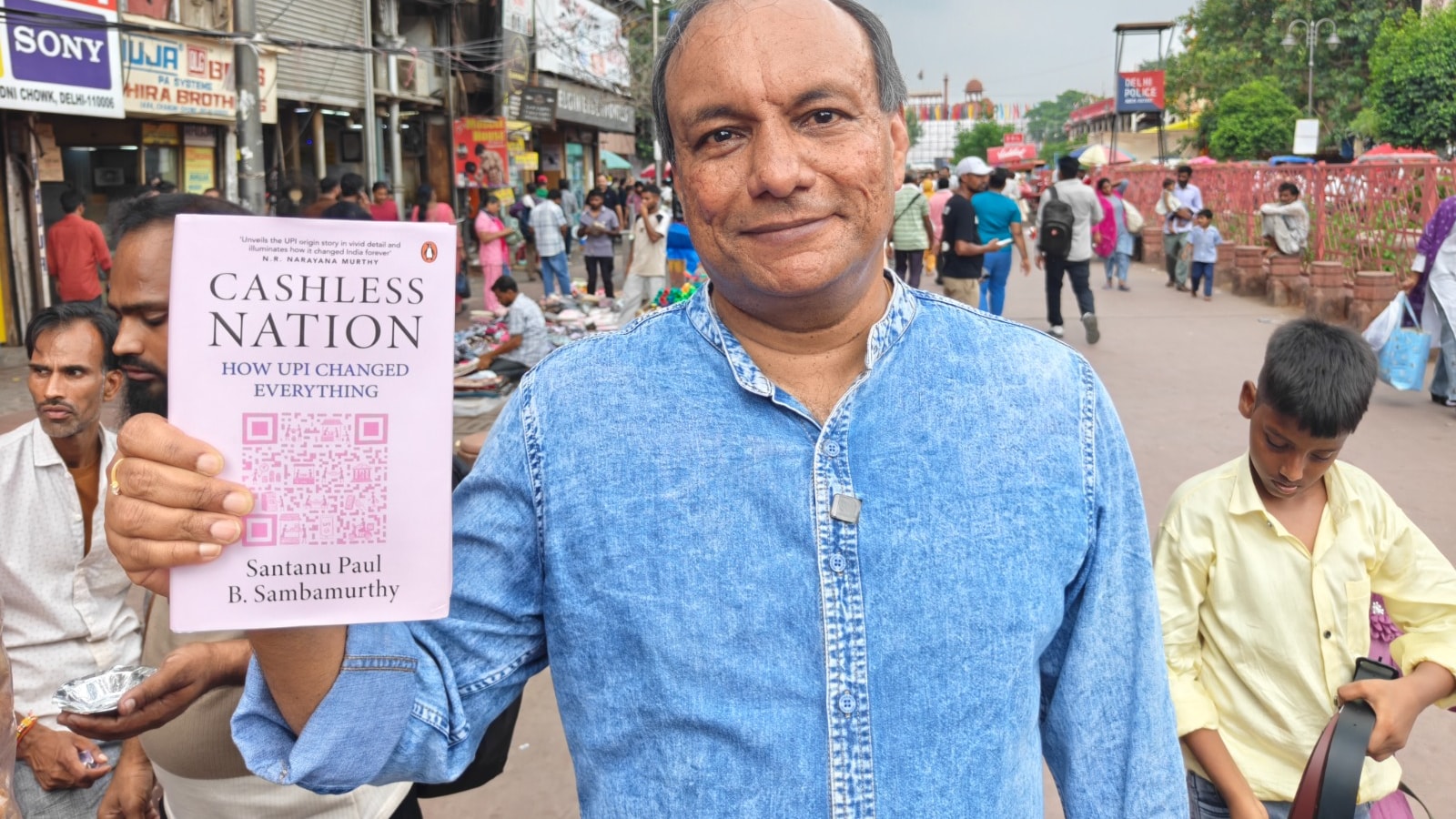
India’s UPI Revolution Pushes Digital Payments Toward Cashlessness

UPI’s Decade Transforms India’s Digital Economy Toward 2047

India's UPI Is Public Infrastructure, Not Just Commercial Service
