4 days ago
India Weighs Carrot and Stick as Bangladesh’s Islamist Drift Grows
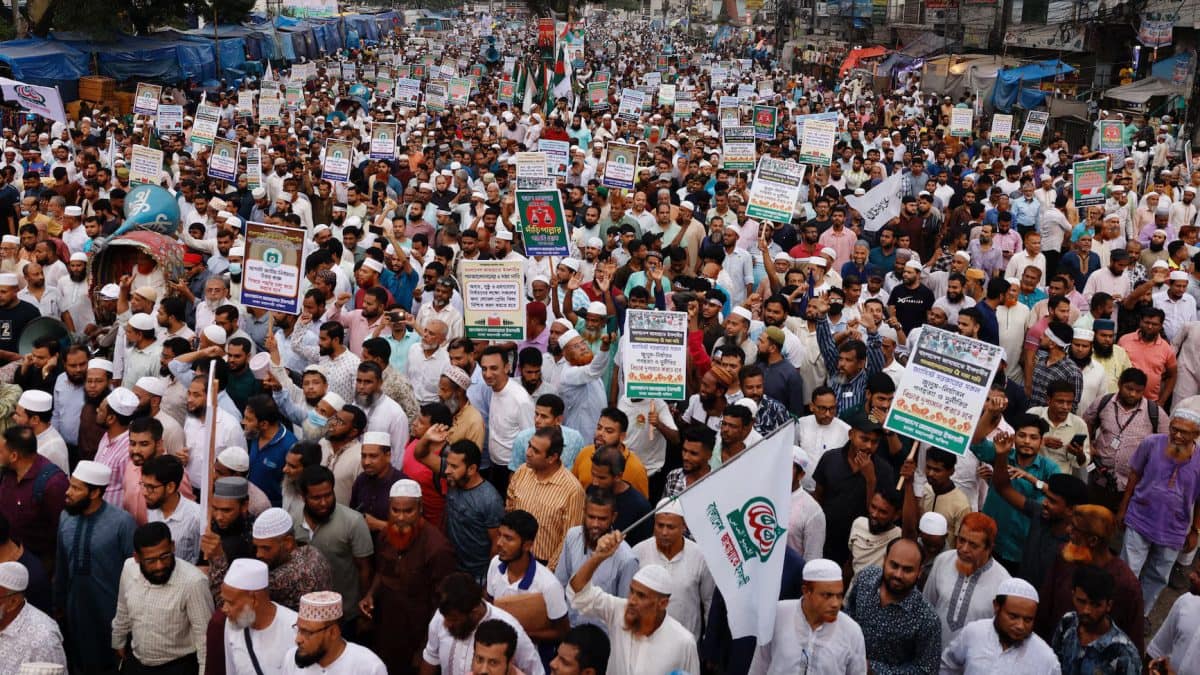
The article says some Islamist groups are becoming stronger in Bangladesh.
It argues that this could change the country’s politics and its commitment to secularism.
Bangladesh’s main opposition party, the Bangladesh Nationalist Party, may try to control or cooperate with these groups.
The article warns that giving them too many concessions could let them gain more power.
It also says Bangladesh and India have had more disagreements since Sheikh Hasina left office in August 2024.
India has already reduced some services and economic advantages for Bangladesh, according to the article.
The writer wants India to use both friendly talks and stronger economic measures.
Bangladesh depends heavily on clothing exports, which could make it vulnerable to economic pressure.
The article also warns that political instability or military involvement could follow if Islamist forces gain power.

The article argues that Islamist parties are gaining political and social influence in Bangladesh.
It says groups including Jamaat-e-Islami Bangladesh and Hefazat-e-Islam have become more openly active.
India-Bangladesh relations have deteriorated since Sheikh Hasina’s ouster in August 2024.
The author urges India to combine diplomacy with economic and strategic pressure.
Bangladesh’s garment-dependent economy and upcoming water-treaty deadlines are identified as potential pressure points.
- Who
- The governments and political forces of Bangladesh and India, including the Bangladesh Nationalist Party, Jamaat-e-Islami Bangladesh and other Islamist organizations.
- What
- An opinion article argues that Bangladesh is experiencing growing Islamist influence and that India needs a new strategy combining engagement with pressure.
- Where
- Bangladesh and its relations with India, including regional political and economic ties.
- When
- The article focuses on developments since Sheikh Hasina’s ouster in August 2024; it also notes that the Ganges Treaty is due to expire in December 2026.
- Why
- The author believes Islamist gains could threaten Bangladesh’s secular political foundations and regional stability.
Strategic Pressure
Democratic Caution
India’s response
Strategic Pressure
The author argues that India should use economic, trade and water-policy leverage alongside diplomatic engagement to discourage Islamist expansion.
Democratic Caution
The article’s discussion of democratic dilemmas suggests that pressure or intervention against an elected Islamist government could undermine democratic principles.
Islamist participation in politics
Strategic Pressure
The article warns that concessions to Jamaat-e-Islami and other Islamist forces could lead to institutional capture, polarization and instability.
Democratic Caution
The Bangladesh Nationalist Party under Tarique Rahman is described as seeking to co-opt or contain radical currents while presenting a pragmatic nationalist position, rather than excluding all Islamist participation.
Possible military involvement
Strategic Pressure
The article says domestic and international actors might consider a military-mediated alternative if an Islamist government were viewed as incompatible with national or regional interests.
Democratic Caution
The article also presents such intervention as a dilemma because it would prioritize security preferences over the outcomes of democratic elections.
Key facts
- Bangladesh’s population
- More than 170 million people, with the article projecting 200 million within two decades.
- Garment-sector dependence
- Ready-made garments account for roughly four-fifths of Bangladesh’s merchandise exports and directly employ six million people, according to the article.
- Recent economic growth
- Fiscal year 2023-24 growth was below 4 percent after successive revisions by the Bangladesh Bureau of Statistics.
- India’s measures
- India suspended visa services and scaled back some preferential access and practical arrangements for Bangladeshi garment exports.
- Water disputes
- The Teesta water-sharing agreement remains unsigned, while the 1996 Ganges Treaty is described as nearing expiry in December 2026.
- Political shift
- The article says Jamaat-e-Islami’s proscription was lifted and that Islamist groups have become more openly active.
Sources
Related news
Sheikh Hasina's Return to Bangladesh Viewed as Favourable for India
Bangladesh’s Mecca Pact Debate Raises India Strategic Concerns
Bangladesh Radicalisation Raises Concerns About Security Spillover Into India

Bangladesh Weighs Mecca Pact Amid Foreign Policy Test
Bangladesh’s China and Sunni Bloc Ties Alarm India
Hasina vows December return to Bangladesh, son warns of extremism
India’s Record Wheat Harvest Opens $1.5 Billion Export Window

West Bengal CM Crushes Nearly 2 Lakh Seized Syrup Bottles
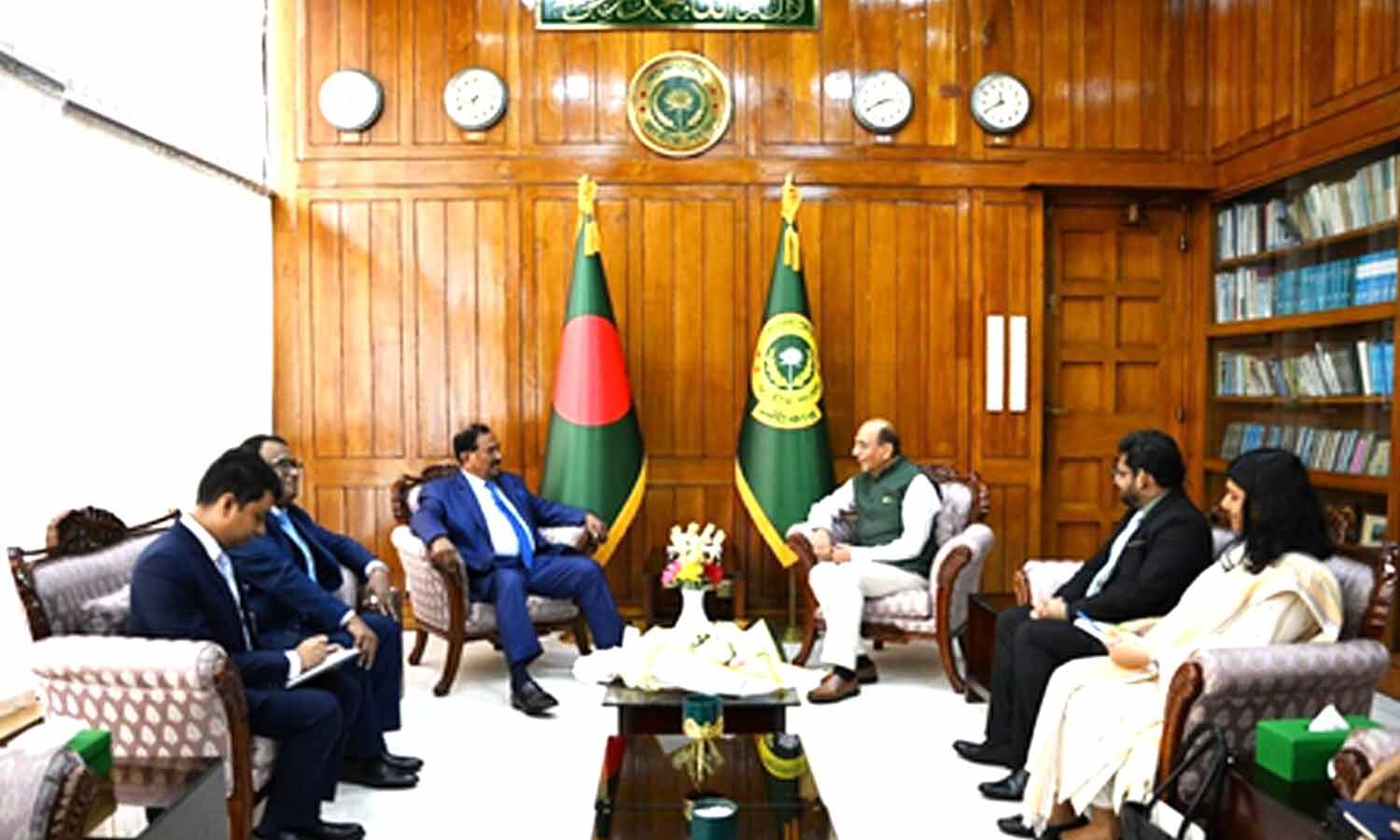
India, Bangladesh Seek Deeper Parliamentary and People-to-People Ties

Bengaluru Police Transfer 31 Bangladeshi Nationals for Deportation