1 week ago
Bangladesh’s Mecca Pact Debate Raises India Strategic Concerns
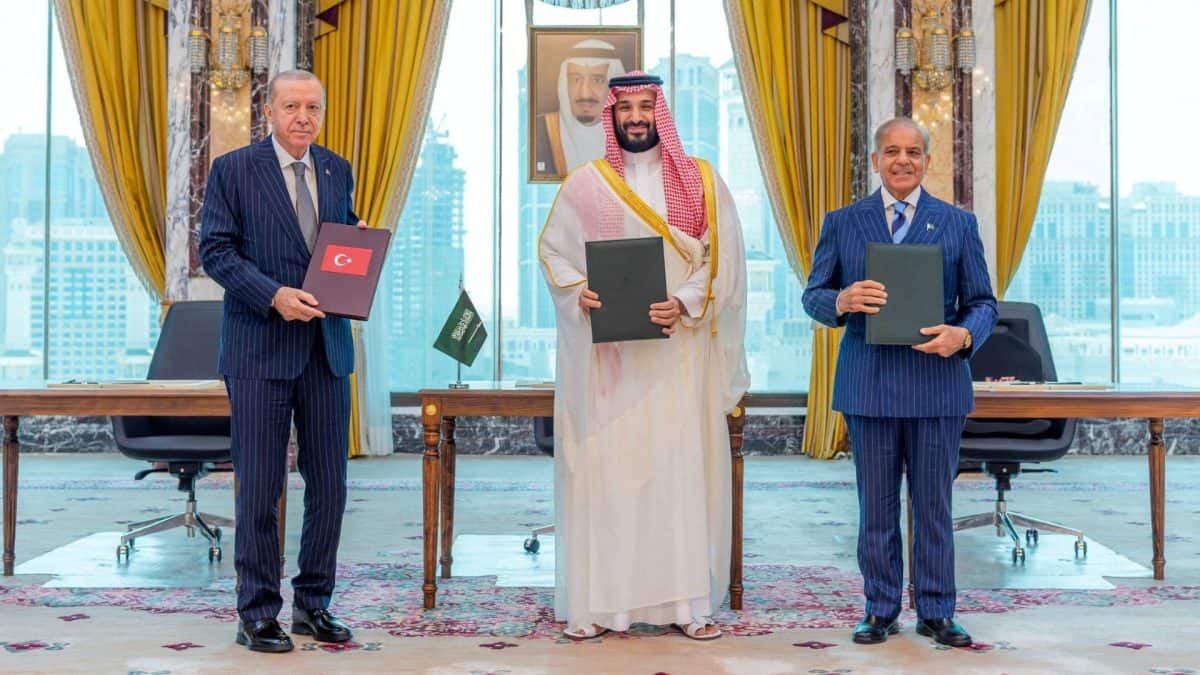
Bangladesh is considering joining a group that includes Pakistan, Saudi Arabia and Turkey.
The group may require members to support one another if one is attacked.
India is worried because it has difficult relations with Pakistan and shares borders with Bangladesh.
If Bangladesh joined, a future India-Pakistan conflict could create new problems in eastern India.
Bangladesh says the idea could be connected to its economic and trade interests.
The article argues that it might also be trying to gain bargaining power with India.
Bangladesh’s clothing industry relies heavily on supplies and transportation connected to India.
The article says both countries should continue talking, but with clearer limits and tougher negotiations.

Bangladesh’s foreign affairs adviser said Dhaka was open to joining the Mecca Pact, signed by Pakistan, Saudi Arabia and Turkey on August 7.
The pact reportedly treats an armed attack against one member as an attack against all, raising concerns about Bangladesh’s position in a future India-Pakistan conflict.
The article argues that joining could create an eastern or northeastern security dimension for India and strain relations with Dhaka.
Bangladesh’s possible membership may be intended as economic diplomacy or as leverage in negotiations over water and other bilateral issues.
India has diplomatic, economic and strategic leverage, while Bangladesh’s garment sector depends heavily on Indian yarn supplies, market access and transport links.
- Who
- Bangladesh, its Foreign Affairs Adviser Humayun Kabir and Prime Minister Tarique Rahman; India is the concerned neighboring country.
- What
- Bangladesh is considering joining the Mecca Pact, a collective-security arrangement involving Pakistan, Saudi Arabia and Turkey.
- Where
- The issue concerns relations among Bangladesh, India and Pakistan, with possible implications for India’s eastern and northeastern regions.
- When
- The pact was signed on August 7; the article also says the 1996 Ganges Water Sharing Treaty expires in December 2026.
- Why
- Bangladesh says the move could reflect its interests and changing global trade dynamics, while the article argues it could affect regional security and strengthen Dhaka’s bargaining position with India.
Bangladesh’s Strategic and Economic Interests
India’s Regional Security Concerns
Purpose of joining the pact
Bangladesh’s Strategic and Economic Interests
Bangladesh may view participation as serving its national interests, trade objectives and diplomatic autonomy, or as leverage in negotiations with India.
India’s Regional Security Concerns
India could interpret membership in a pact involving Pakistan as a strategic move rather than merely an economic or trade initiative.
Regional security
Bangladesh’s Strategic and Economic Interests
Bangladesh’s government is entitled to make diplomatic decisions it believes support its national interests.
India’s Regional Security Concerns
India may have to consider whether a future India-Pakistan conflict could acquire an eastern or northeastern dimension if Bangladesh joined a collective-defence arrangement.
Response to the proposal
Bangladesh’s Strategic and Economic Interests
Bangladesh may expect continued cooperation with India while expanding relations with Pakistan and other countries.
India’s Regional Security Concerns
The article argues that India should define geostrategic red lines and use diplomatic, water-related and economic leverage proportionately if those limits are crossed.
Key facts
- Proposed move
- Bangladesh said it was open to joining the Mecca Pact.
- Current members
- Pakistan, Saudi Arabia and Turkey signed the pact on August 7.
- Security provision
- The agreement reportedly treats an armed attack against one member as an attack against all.
- Water issue
- The 1996 Ganges Water Sharing Treaty is due to expire in December 2026.
- Bangladesh growth
- Bangladesh recorded 4.7% GDP growth in 2025-26, after 3.4% growth the previous year.
- Garment exports
- The textile and garment sector accounts for more than 80% of Bangladesh’s exports.
- Indian supply role
- India supplies roughly 78% of Bangladesh’s yarn imports, according to the article.
Sources
Related news

Bangladesh Weighs Mecca Pact Amid Foreign Policy Test
Bangladesh Weighs Mecca Pact Amid India and Pakistan Tensions

Bangladesh Weighs Mecca Pact Amid Tensions With India
Bangladesh’s China and Sunni Bloc Ties Alarm India
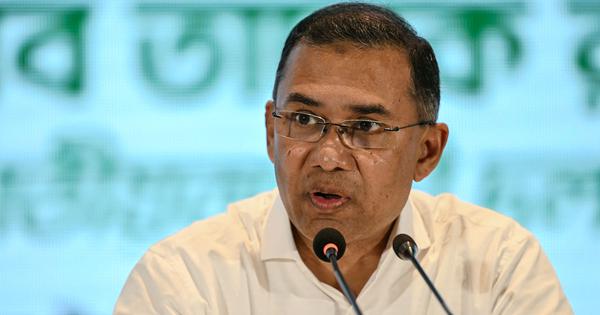
Bangladesh Weighs Joining Mecca Pact Amid Non-Alignment Concerns

Bangladesh Weighs Joining Saudi-Pakistan-Turkiye Economic and Defence Framework

Sharma and Malik share halfway lead at Telangana Golconda Masters

India Replaces Sri Lanka as 2027 Women’s Champions Trophy Host
Centre Assures JDU Bihar’s Interests In Farakka Treaty Decision
India’s Record Wheat Harvest Opens $1.5 Billion Export Window

West Bengal CM Crushes Nearly 2 Lakh Seized Syrup Bottles