

1 week ago
How Coastal Families Found Many Uses for Coconut Palms

For generations, coastal families in India have tried to use every part of the coconut palm.
Young coconuts provide refreshing water, while mature coconuts provide food and oil.
The husk around the fruit contains coir, a strong fibre used to make ropes, mats and brushes.
The soft material left after removing the fibre can help plants grow because it holds water.
Hard shells can become bowls, fuel, charcoal or industrial materials.
Palm leaves can be woven into baskets or used for roofs.
Old trunks can be turned into furniture and parts of buildings.
Leaves and other leftovers can also become manure for the soil.
The coconut shows how something called waste can become useful when people have the knowledge and skill to reuse it.

Indian coastal communities use coconut fruit, husk, shell, leaves and wood in many ways.
Coconut kernels are used in food, coconut milk, copra, oil, soaps, cosmetics and hair products.
Husks provide coir fibre for ropes, mats, brushes, brooms, mattresses and erosion-control textiles.
Shells can become containers, fuel, charcoal, shell powder and activated carbon for purification.
Leaves, old trunks and garden residues support thatching, furniture, farm structures, manure and livelihoods.
- Who
- Coastal communities in India, including rural artisans and coconut-growing families.
- What
- Generations have developed food, household, agricultural and industrial uses for nearly every part of the coconut palm.
- Where
- India's coastal regions, particularly the Kerala coast, as well as coconut-growing villages and backwater areas.
- When
- Across generations and through traditional practices that continue alongside newer uses.
- Why
- To make the most of available materials, support livelihoods, reduce waste and return some organic residues to the soil.
Key facts
- Traditional name
- The coconut palm is known as 'Kalpavriksha', meaning the tree of abundance.
- Fruit uses
- Tender coconuts provide water; mature kernels are used in curries, chutneys, sweets, coconut milk, copra and oil.
- Coir
- The husk contains coir fibre, which is made into yarn, ropes, mats, brushes, brooms and mattresses.
- Coir pith
- The spongy material left after fibre extraction is used as a soil conditioner and growing medium.
- Shell products
- Coconut shells can become containers, fuel, charcoal, shell powder and activated carbon.
- Leaves and wood
- Leaves are used for thatching and woven goods, while old trunks can become furniture, rafters, beams and farm structures.
- Livelihoods
- The coir industry has historically supported lakhs of rural artisans, especially in India's southern coastal states.
Sources
Related news
World Coconut Day Celebrates Tree of Life’s Global Significance

Mahua Tree Offers Flowers, Rotis, Laddoos, Jam And Oil

India Leads Global Coconut Production With 31.24 Percent

Palvancha enterprise blends organic farming, forest produce processing

Kerala launches coir product campaign to revive traditional industry

World Coconut Day: Tamil Nadu Leads India’s Top Coconut Producers

Supreme Court Allows Oil India Fresh Plea On Drilling
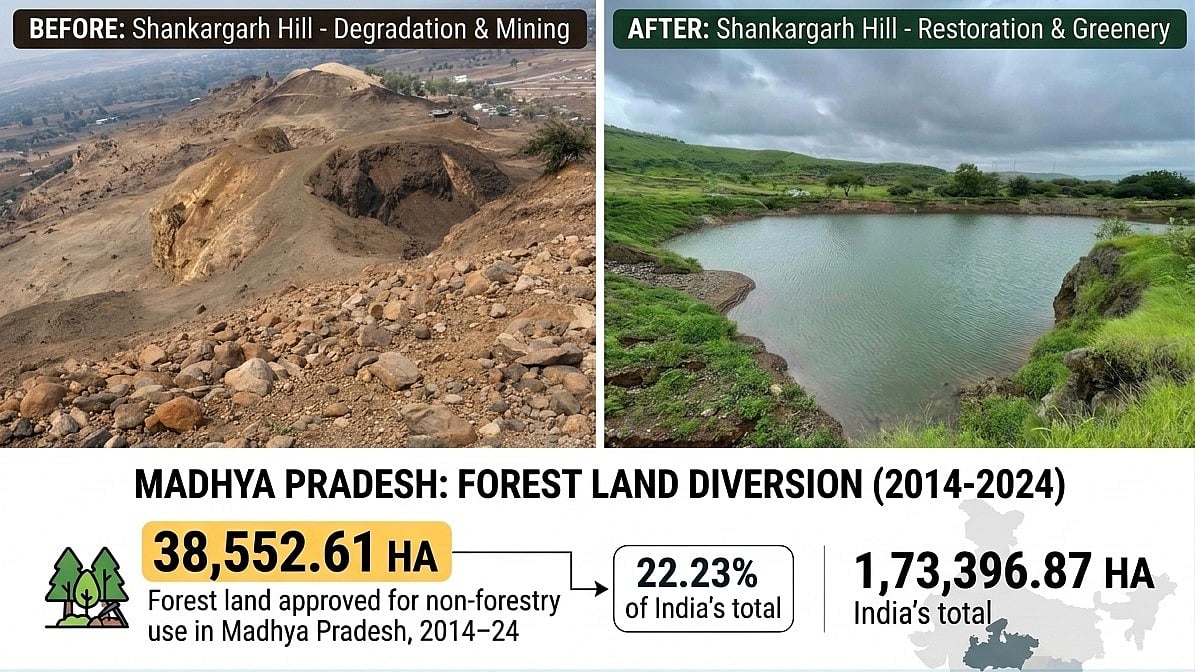
Madhya Pradesh Leads India in Forest Diversion Over Decade

Parliamentary Panel To Review Pune Noise And Light Pollution

Mumbai Coastal Road North Targets December 2028 Completion

India urges community-led rangeland restoration at UNCCD CoP17
