1 month ago
Europe Embraces India's Eco-Friendly Sal Leaf Plates
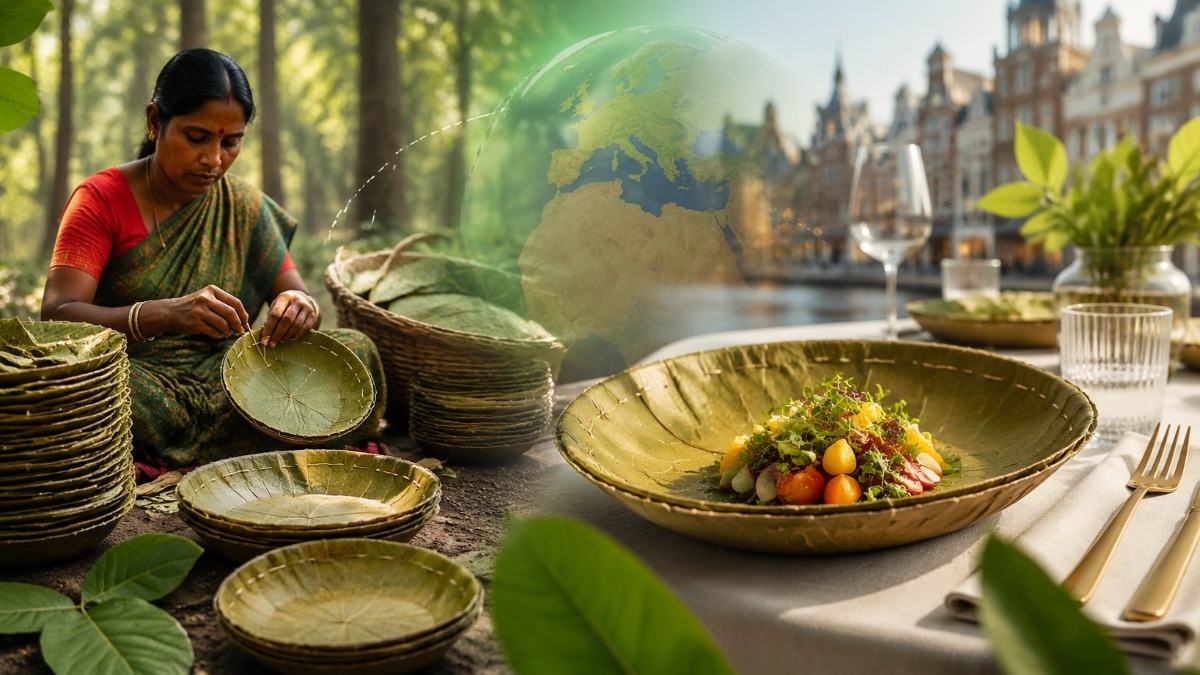
Europe is using plates made from sal leaves, which are traditional in India.
These plates are good for the environment because they break down naturally and don't need chemicals.
They are made by tribal women in India, who stitch the leaves together.
This helps reduce plastic waste and gives the women more money.
The plates are sold in places like Etsy and are used in restaurants and hotels.
They are strong, water-resistant, and safe to use.
This tradition from India is now helping the world fight plastic pollution.

Sal leaf plates are biodegradable and compostable, making them an eco-friendly alternative to plastic.
Tribal women in Jharkhand, Odisha, and Chhattisgarh handcraft these plates, providing them with additional income.
The plates are sold in European marketplaces like Etsy and are used in restaurants and hotels.
Each plate is unique due to the natural variations in leaf shapes and textures.
The demand for these plates helps reduce plastic waste in India and supports tribal livelihoods.
- Who
- Tribal communities in Jharkhand, Odisha, and Chhattisgarh
- What
- Production and export of sal leaf plates to Europe
- Where
- India (production) and Europe (consumption)
- When
- Ongoing, with recent increases in demand
- Why
- To provide an eco-friendly alternative to single-use plastic and support tribal livelihoods
Environmental Benefits
Economic Opportunities
Sustainability
Environmental Benefits
Sal leaf plates are biodegradable, compostable, and do not require chemical processing, making them an eco-friendly alternative to plastic.
Economic Opportunities
The production of sal leaf plates provides additional income for tribal women in India, improving their economic status.
Key facts
- Material
- Sal and siali leaves
- Durability
- Sturdy and water-resistant
- Decomposition Time
- 28 days
- Production Regions
- Jharkhand, Odisha, Chhattisgarh
- Marketplaces
- Etsy, Tapari
- Price
- €31.96 (approx. Rs 3,500) per pack
- Production Capacity
- 2,000 plates per day with machines
- Plastic Waste in India
- 9.4 million tonnes annually
Sources
Related news

UK and Ukraine Open Battlefield AI Partnership Amid War

Manslaughter Killers Barred From Early Release After Intervention

Telangana Schools Begin Disability Screening, Green Ratings Across State

Four Killed in Lightning Strikes Across Jharkhand

Shingrix Linked to Lower Heart Attack and Stroke Risk

WhatsApp Adds Stronger Passwords, Passkeys and Unknown-Caller Context

Childless Odisha Couple Dies After Sorcerer’s Alleged Medicine

Majhi Blames Conspiracy Over Missing Naidu Report

Medical College Named After Laxmanananda Saraswati

Odisha Renames Medical College After Slain VHP Leader