1 week ago
WhatsApp Adds Stronger Passwords, Passkeys and Unknown-Caller Context

WhatsApp is adding new tools to help protect people’s accounts.
Users can choose a longer password instead of a six-digit security PIN.
The password must have at least one letter, one number and eight characters.
People can also add more than one passkey to the same account.
A passkey lets someone sign in with Face ID, a fingerprint or a phone’s screen lock.
This makes it harder for scammers to steal login information through phishing.
Android users may also see more information about calls from unknown numbers.
WhatsApp says the changes are meant to make account takeovers and scam calls harder.

WhatsApp will let users choose an alphanumeric password instead of its six-digit two-step verification PIN.
The password must contain at least one letter, one number and eight or more characters, with special characters supported.
Users can add multiple passkeys to one account across Android and iOS devices.
Passkeys use device protections such as Face ID, fingerprints or screen locks instead of passwords or SMS codes.
Android users may see an unknown caller’s country and any WhatsApp groups they share before answering.
- Who
- WhatsApp and its users are involved; the platform announced the updates.
- What
- WhatsApp is adding an optional longer password for two-step verification, multiple passkeys and more information about unknown callers.
- Where
- The password feature applies to WhatsApp accounts; multiple passkeys are available on Android and iOS, while caller information is described for Android.
- When
- The updates were announced on Tuesday; the articles do not specify a calendar date.
- Why
- WhatsApp says the measures are intended to address increasingly sophisticated phishing, hacking, account-takeover attempts and scams.
Potential Security Benefits
Limitations and Concerns
Password protection
Potential Security Benefits
A longer password with letters, numbers and special characters may be harder to guess than a predictable six-digit PIN.
Limitations and Concerns
The added protection is reduced if users choose weak or commonly used passwords.
Passkeys
Potential Security Benefits
Passkeys reduce reliance on passwords, SMS codes and authentication codes that can be targeted through phishing; attackers would generally need physical access to the device storing the passkey.
Limitations and Concerns
Passkeys depend on the security features of the user’s device, such as its screen lock, fingerprint reader or Face ID.
Unknown-call information
Potential Security Benefits
Showing a caller’s country and shared groups gives users additional context for identifying suspicious calls, including callers who falsely claim to belong to a group.
Limitations and Concerns
The information is context for evaluating a call and does not by itself establish that an unknown caller is trustworthy.
Key facts
- Two-step verification
- Users can choose a password instead of the existing six-digit PIN.
- Password requirements
- The password must contain at least one letter, one number and eight or more characters; special characters are supported.
- Multiple passkeys
- Users can add more than one passkey to a single WhatsApp account, including when using both iOS and Android devices.
- Passkey authentication
- Passkeys use built-in device security such as Face ID, fingerprints or screen locks, rather than passwords or SMS codes.
- Passkey history
- WhatsApp introduced passkey support in 2024 and says more than 1 billion people have set up a passkey.
- Unknown-call context
- Android users may see an unknown caller’s country and whether they share WhatsApp groups with the caller.
- Related platform changes
- The articles also mention WhatsApp usernames and a Plus subscription with features including profile customization, super reactions and story insights.
Sources


Related news

WhatsApp announces AI tool to detect scammers on platform

WhatsApp Begins Android Beta Testing of Scam Alert Feature

Fake Parcel Call Allegedly Hijacks BMC Chief’s WhatsApp

ChatGPT May Add Locks for More Private Conversations

Tamil Nadu Cybercrime Probe Targets Deepfake Impersonating CM Vijay

Adilabad Police Arrest Suspect in Rs 5.3 Crore Instagram Fraud

Man loses ₹3.81 lakh in alleged Kerala lottery scam
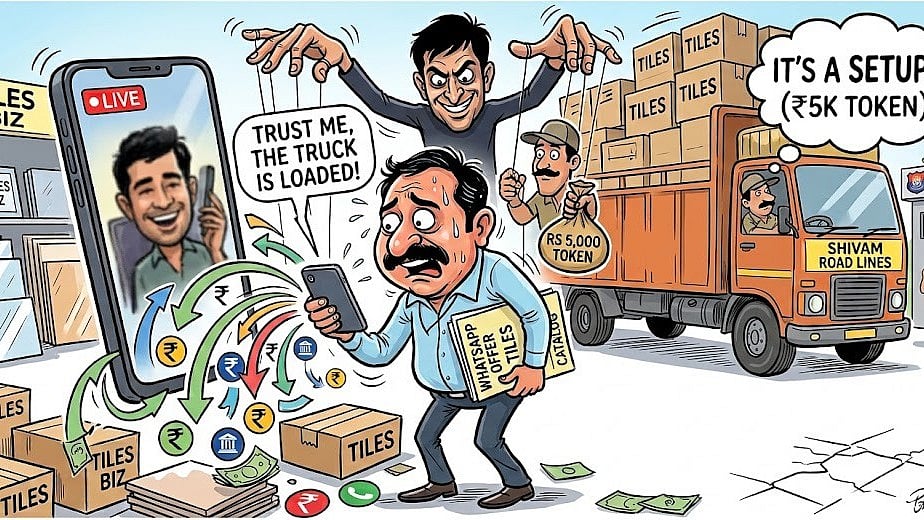
Indore Tile Trader Loses ₹2.5 Lakh in WhatsApp Scam

Chennai Metro Reports 1.04 Crore Passenger Journeys in August