2 weeks ago
Faiz Ahmad Faiz's Poetry Becomes India's Favourite Anthem of Dissent
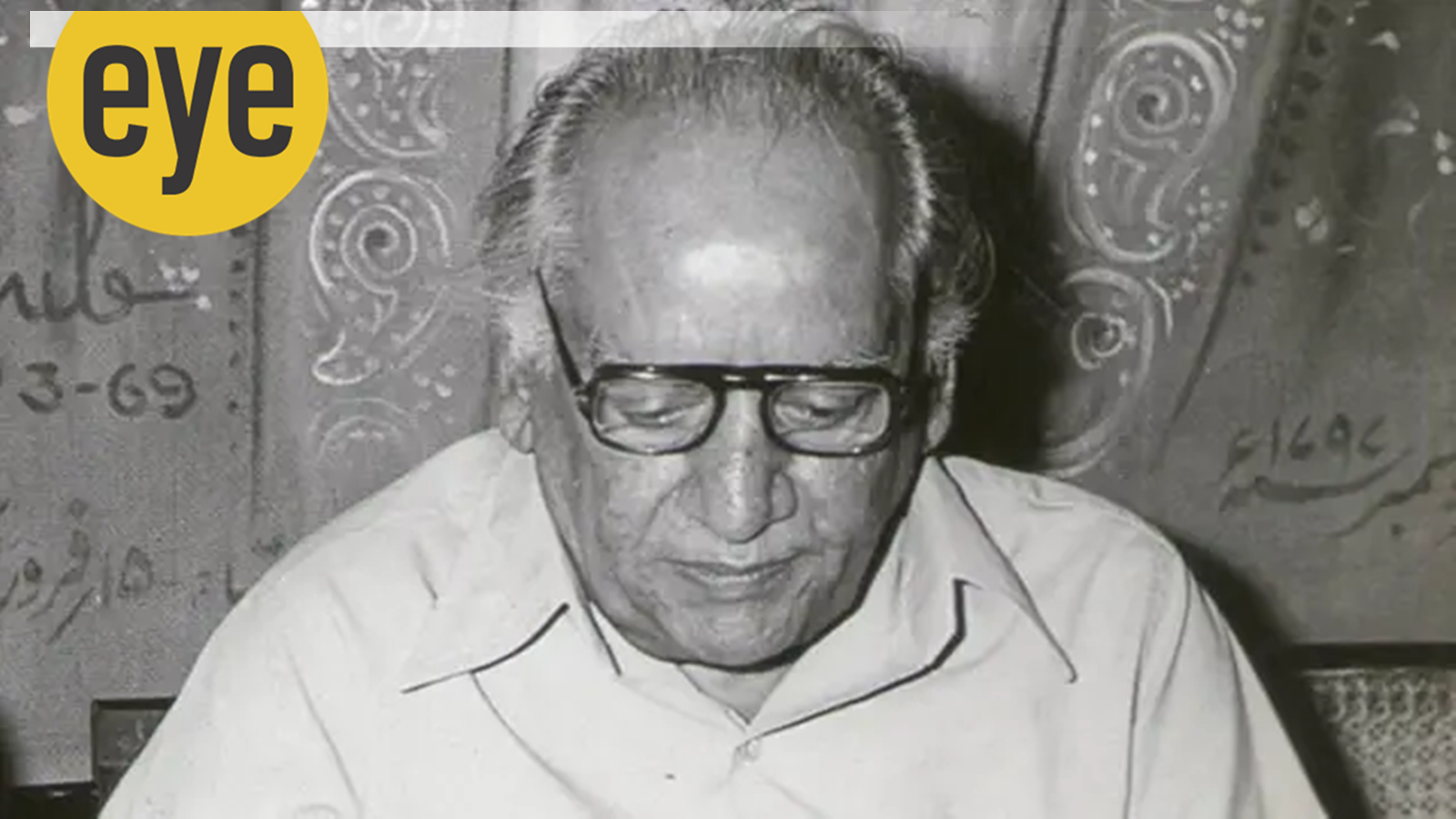
There is a poet named Faiz Ahmad Faiz who wrote very beautiful poems in Urdu.
He lived from 1911 to 1984, and he died more than forty years ago.
Even though he is gone, people in India still use his words when they want to protest.
Supreme Court of India judges, factory workers, teachers, and students all use his poems during demonstrations.
His poems like 'Hum Dekhenge' and 'Bol ke lab azaad hain tere' have become famous protest anthems.
Some people in India do not trust Urdu or the neighbouring country Faiz came from, yet they still love his words.
Even people who cannot understand Urdu say his poems make them feel the message of resistance and solidarity.
He last visited India in the early 1980s, before many young people today were even born.
Today his face and words appear on mugs, coasters, and tote bags, plus memes and Instagram-style posters.
The article wonders why Faiz, above all other great poets, is the one Indians choose when they want to speak out.

Faiz Ahmad Faiz (1911-1984), an Urdu poet, has become the default voice of protest in India, used by Supreme Court of India judges, factory workers, teachers, and students.
His poems 'Hum Dekhenge', 'Mujhse Pehli Si Mohabbat Mere Mehboob Na Maang', and 'Bol ke lab azaad hain tere' serve as chosen anthems of resistance at demonstrations.
Despite writing in Urdu with imagery drawn from an Islamic framework and hailing from a much-reviled neighbouring country, his words resonate across towns and cities in India.
He is enjoying a second coming in India through more Devanagari and Roman transliterations, memes, Instagram-worthy posters, mugs, coasters, and tote bags.
The article asks why Faiz outranks other popular Urdu poets such as Habib Jalib, Ahmad Faraz, and Jaun Elia as India's default protest poet.
- Who
- Faiz Ahmad Faiz, the Urdu poet (1911-1984), and the protesters in India who use his poetry — Supreme Court of India judges, factory workers, teachers, and students.
- What
- Faiz's poetry has become India's favourite anthem of dissent, still resonating decades after his death.
- Where
- India.
- When
- Faiz died in 1984 and last visited India in the early 1980s; his contemporary popularity is the subject of the article.
- Why
- His words instantly evoke resistance, protest, and solidarity, transcending time, language, and circumstance.
Key facts
- Poet
- Faiz Ahmad Faiz
- Lifespan
- 1911-1984
- Poetic language
- Urdu
- Last visit to India
- Early 1980s
- Signature protest poems
- Hum Dekhenge; Mujhse Pehli Si Mohabbat Mere Mehboob Na Maang; Nisaar Main Teri Galiyon Pe Ai Watan Ke Jahan; Bol ke lab azaad hain tere
- Poetic forms
- Ghazal and nazm
- Other Urdu poets mentioned
- Habib Jalib, Ahmad Faraz, Jaun Elia
- Resurgence markers
- Devanagari and Roman transliterations, memes, posters, mugs, coasters, tote bags
Sources
Related news

Poet Abrar Ahmed Kashif Urges Society to Hear Gen Z
Why Irshad Kamil’s Songs Continue to Feel Like Home

Gulzar’s Punjabi Heritage Shapes His Poetry and Film Lyrics

Why Young India Turns to Ambedkar's Words on Equality
Delhi Discussion Reclaims Kazi Nazrul Islam’s Syncretic Legacy
Gandhi, Nehru, Jinnah And Faiz On India's Independence Day
Languages of Freedom Book Review Explores India's Political Thought
Protest at Jantar Mantar for fairer system
Protesters Use Classic Poetry in 2026 Student Uprising