6 days ago
Delhi Discussion Reclaims Kazi Nazrul Islam’s Syncretic Legacy
Kazi Nazrul Islam was a famous poet from Bengal who was called the Rebel Poet.
He wrote about freedom, fairness and people living together peacefully.
He wrote songs about both Hindu and Muslim religious traditions.
He even wrote songs about the goddess Kali and songs for Eid.
Some speakers said people have forgotten this broad and inclusive part of his work.
They believe this happened partly because people focused too much on whether he was Hindu or Muslim.
Nazrul wanted people to rise above religious divisions and unfairness.
A discussion in Delhi tried to remind people why his ideas still matter today.

A Delhi discussion sought to restore attention to revolutionary poet Kazi Nazrul Islam.
Panelists said Nazrul’s syncretic writing and political legacy have been overshadowed by his religious identity.
Nazrul combined Hindu and Muslim devotional traditions, writing both Shyama Sangeet and Eid songs.
His work challenged British rule, communalism, social inequality and orthodox religious authority.
The event connected Nazrul’s calls for equality and liberation with contemporary youth protests.
- Who
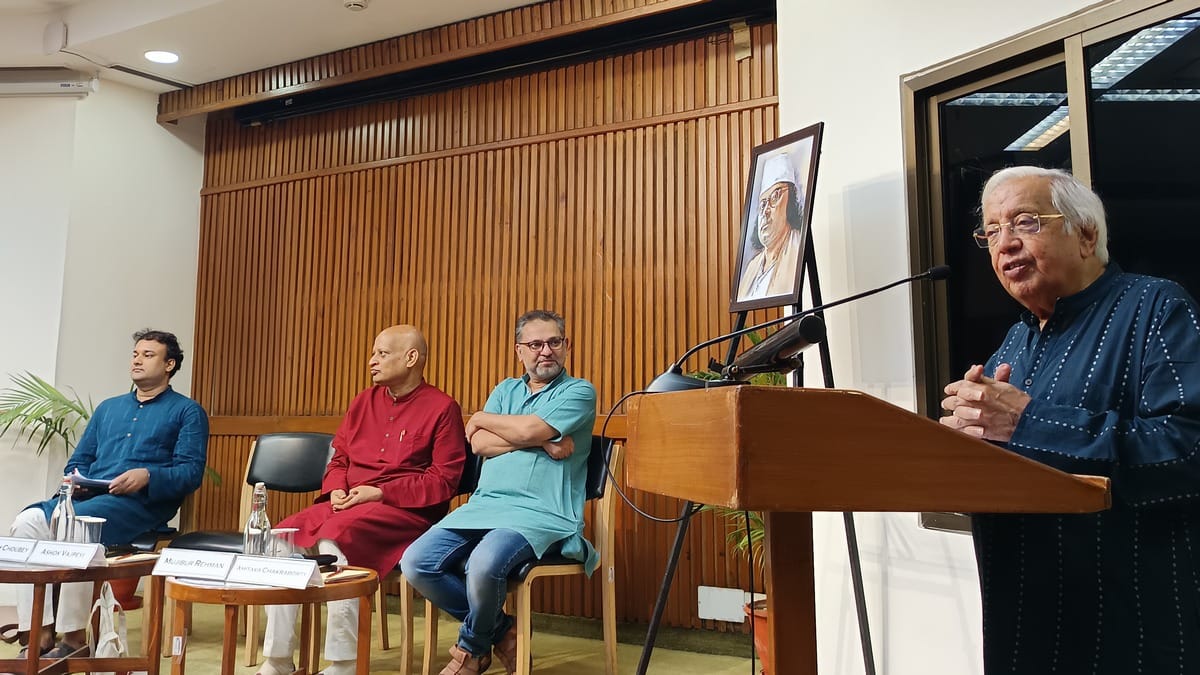
- Political scientist and author Mujibur Rahman, the Raza Foundation, and panelists Ashok Vajpeyi, Gautam Choubey and Amitava Chakraborty discussed Kazi Nazrul Islam.
- What
- A discussion examined Nazrul’s life, literary contributions, political ideas and syncretic religious traditions.
- Where
- The discussion was held at the India International Centre in New Delhi.
- When
- The event took place in Delhi last week, ahead of Nazrul’s death anniversary on 29 August.
- Why
- It was organised to address what Rahman and the panelists described as Nazrul’s neglect in Bengal’s intellectual and cultural consciousness.
Syncretic Literary Legacy
Religious Identity Framing
Why Nazrul was neglected
Syncretic Literary Legacy
Panelists argued that Nazrul’s universalist politics, syncretic writing and role in the freedom movement were overshadowed because he was viewed mainly through his religious identity.
Religious Identity Framing
The article notes that some Muslim publications questioned whether Nazrul was a true Muslim, while some Hindu audiences did not take his religious writing seriously.
Nazrul’s identity
Syncretic Literary Legacy
Nazrul presented himself as someone above Hindu-Muslim divisions and wrote for equality, shared humanity and an undivided India.
Religious Identity Framing
Post-Liberation War Bangladesh recast him as a Muslim poet and national figure, although researcher Nazmul Nayem Biswas argued that Nazrul did not believe in borders and did not practise Islam during his lifetime.
Relevance today
Syncretic Literary Legacy
Ashok Vajpeyi and Amitava Chakraborty linked Nazrul’s calls for liberation and resistance to contemporary Gen Z protests.
Religious Identity Framing
The article records this connection as the panelists’ interpretation rather than as an uncontested assessment of today’s protests.
Key facts
- Born
- 1899, in Churulia, Bengal
- Known as
- Bidrohi Kobi, or Rebel Poet
- Recognition
- Recognised as the national poet of Bangladesh
- Cultural contribution
- Wrote both Shyama Sangeet and Eid songs and helped introduce Farsi and Arabic influences into Bengali music
- Literary innovation
- Credited by the panelists with being the first to write ghazals in Bengali
- Political themes
- Opposed British rule, religious intolerance, social inequality and communal divisions
- Death anniversary
- 29 August
Quotes

Kazi Nazrul Islam
Revolutionary Bengali poet whose 1941 speech was quoted in the article
“Apparent neglect is the fate of syncretic figures in our history. His politics and his syncretic writings are completely forgotten and neglected. Nobody knows about them. We have to do something for this syncretic tradition of our country”
 theprint.in
“Why is it that? How is it that he (Nazrul) has disappeared from the Bengal intellectual consciousness? If you are discussing pluralism and multiculturalism, this is a name that should definitely figure”
theprint.in
Sources
Related news

Salim Challenges BJP’s Narrow Nationalism Over Jadavpur Graffiti
Bangladesh Revives 1947 History While Ignoring Partition's Human Cost
Why Tagore and Bose Matter in Troubled Times
Neha Bora takes mic, demands NTA scrapping, invokes Tagore, Khudiram
Taslima Nasrin returns to Kolkata after 19-year exile

Sharma and Malik share halfway lead at Telangana Golconda Masters
India Replaces Sri Lanka as 2027 Women’s Champions Trophy Host
Centre Assures JDU Bihar’s Interests In Farakka Treaty Decision

India’s Record Wheat Harvest Opens $1.5 Billion Export Window

West Bengal CM Crushes Nearly 2 Lakh Seized Syrup Bottles