3 weeks ago
Monsoon slows Delhi landfill cleanup, threatens biomining deadlines
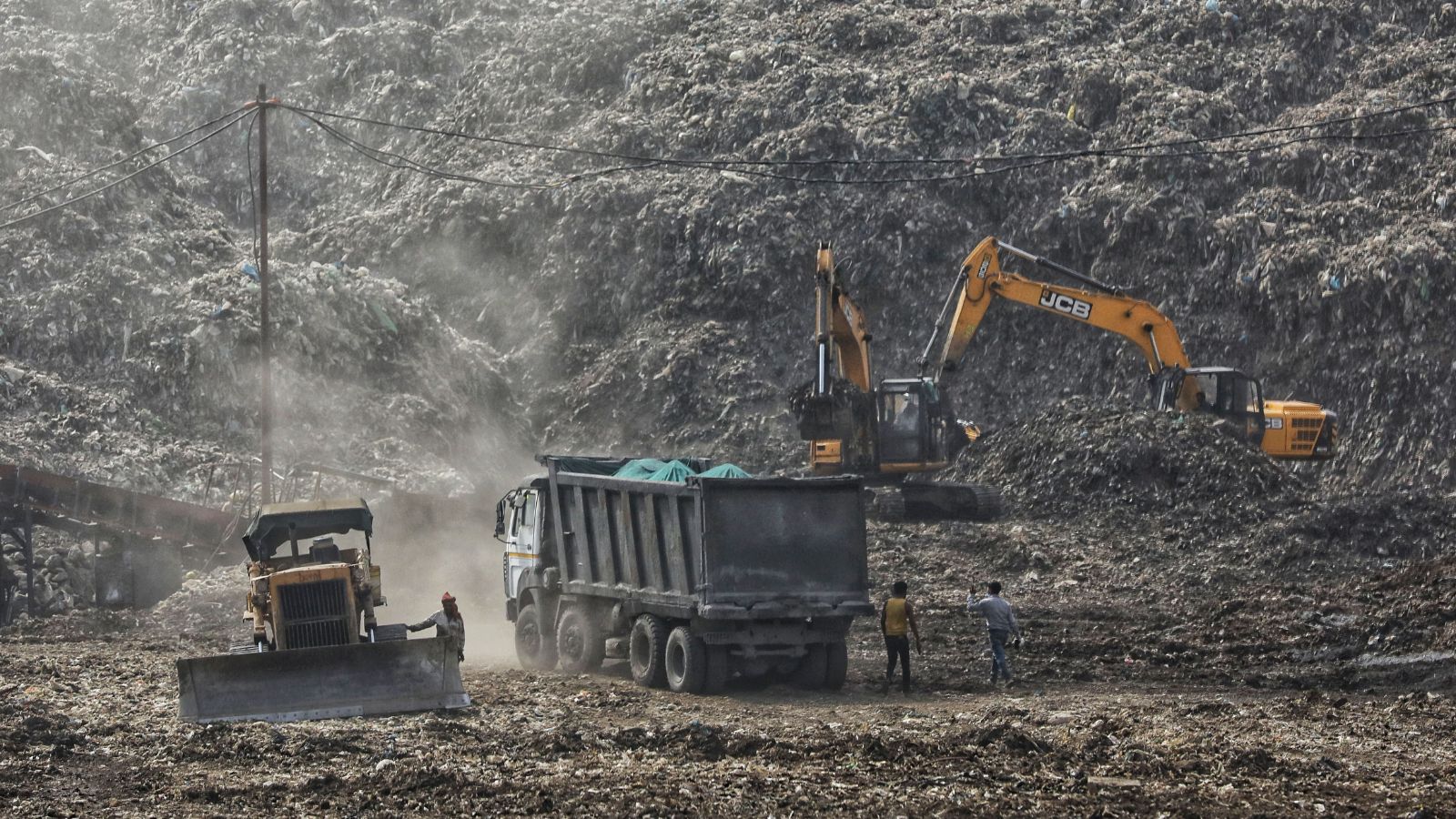
Delhi is a very big city in India that has been piling up its garbage for decades in three giant dumps called landfills.
One of these dumps, Ghazipur, has grown into a mountain about 65 metres tall.
To clean up the old garbage, the city uses machines called trommels — big rotating drums with holes that sort the rubbish.
But heavy monsoon rain recently fell on Delhi, making the old garbage very wet.
Wet garbage sticks together and gets stuck inside the machines, so workers must stop and clean them again and again.
Because of this, each day the machines can process much less old garbage than before the rain.
For example, at the Okhla dump, daily processing fell from thousands of tonnes to only about 650 tonnes.
Meanwhile, fresh garbage keeps arriving every day, so the piles stay big while cleanup moves slowly.
The city wants to clear two of the dumps by December, and the rain could make that deadline very hard to meet.
Companies hired to do the cleanup may be fined if they miss their deadlines.

Monsoon rain has sharply slowed biomining at Delhi's three largest landfills — Okhla, Bhalswa and Ghazipur — threatening cleanup deadlines.
Okhla's daily output fell from a 6,000-9,000 tonnes-per-day average to about 650 TPD between August 3 and 11.
Bhalswa processing dropped to roughly 1,700 TPD last week, down from a 6,000-11,500 TPD average, while Ghazipur lifted only about 1,400 TPD against a 7,000 TPD daily goal.
Rain-saturated waste clumps together and clogs the trommels — large rotating cylindrical screens — forcing repeated cleaning and slowing the separation process.
MCD estimated nearly 100 lakh tonnes of legacy waste remained across the sites as of June and aims to eliminate Okhla and Bhalswa by December.
- Who
- The Municipal Corporation of Delhi (MCD), Urban Development Minister Ashish Sood, and contracted firms running biomining at Delhi's Okhla, Bhalswa and Ghazipur landfills.
- What
- Monsoon rain slowed biomining operations, cutting daily legacy-waste processing sharply at Delhi's three largest landfills and threatening cleanup deadlines.
- Where
- Delhi, India — at the Okhla, Bhalswa and Ghazipur landfill sites.
- When
- Early August, with data reported for August 3-11 following heavy monsoon rainfall.
- Why
- Rain-saturated waste clogs the trommels used in biomining, slowing the separation process and sharply reducing daily output.
Enforce Cleanup Deadlines
Account for Monsoon Delays
Landfill biomining targets during monsoon
Enforce Cleanup Deadlines
MCD has set firm deadlines, including clearing Okhla and Bhalswa by December, and directed contractors to ramp biomining capacity from 7,000 TPD to 12,000 TPD by July 31. Firms were advised to hit targets before the monsoon, and penalties will be imposed if second-phase deadlines are missed.
Account for Monsoon Delays
Officials acknowledge the biomining process slows considerably during the monsoon because wet waste clogs the trommels and requires repeated cleaning, making output targets very difficult to meet regardless of contractor effort.
Key facts
- Affected landfills
- Okhla, Bhalswa and Ghazipur in Delhi
- Okhla daily output (Aug 3-11)
- About 650 TPD, down from a 6,000-9,000 TPD average; about 2,800 TPD of fresh waste still arriving daily
- Bhalswa daily output (last week)
- About 1,700 TPD, down from a 6,000-11,500 TPD average; about 4,300 TPD of fresh waste dumped daily
- Ghazipur output vs target
- About 1,400 TPD lifted over nine days against a 7,000 TPD daily biomining goal; 2,400 TPD of fresh waste deposited daily
- Remaining legacy waste (as of June)
- Nearly 100 lakh tonnes across all three sites: Ghazipur ~69 lakh, Bhalswa ~18 lakh, Okhla ~12 lakh
- Land reclaimed
- Okhla ~30 of 62 acres; Bhalswa ~25 of 70 acres; Ghazipur ~20 acres
- Cleanup targets
- Okhla and Bhalswa to be eliminated by December; capacity ramp to 12,000 TPD by July 31 to meet the December 2027 deadline
- New Okhla fresh waste plant
- 1,400 TPD capacity, completion scheduled by October
Quotes
Another MCD official
Municipal Corporation of Delhi official describing biomining process
“Biomining is done by using trommels which are large, elevated rotating drums equipped with perforated screens. As excavated legacy waste is fed into the elevated end of the cylinder, the drum slowly rotates, causing the material to tumble and eventually separate.”
 indianexpress.com
“Heavy rainfall has made the waste wet. This wet waste gets clogged in the trommels and affects the separation process. The machines have to be cleaned multiple times, making it difficult to meet the output target.”
indianexpress.com
Sources
Related news

Delhi Mayor Orders More Machinery to Clear Bhalswa Landfill
Delhi Reclaims 100 Acres After Removing Legacy Landfill Waste
DDA approves land-use change for MCD's Ghazipur waste-to-energy plant

Kurnool Commissioner Orders Faster Bio-Mining at Gargayapuram Dump Yard

Chennai GCC Sets September 1 Waste Segregation Deadline
NGT Seeks Fresh Data on Waste at Delhi's Singhola Site
Delhi Approves Free Rooftop Solar Panels for 2.3 Lakh Homes

Delhi Revises Solar Policy With Free Rooftop Systems
Delhi Schoolgirl Dies After Alleged Sun Punishment; Teacher Transferred

India Pledges Every Possible Help as Nepal Faces Flash Floods

Delhi Government Pursues New IGDTUW Campus in Narela Education Hub