1 week ago
Government Accuses Opposition of Deliberately Disrupting India’s Parliament
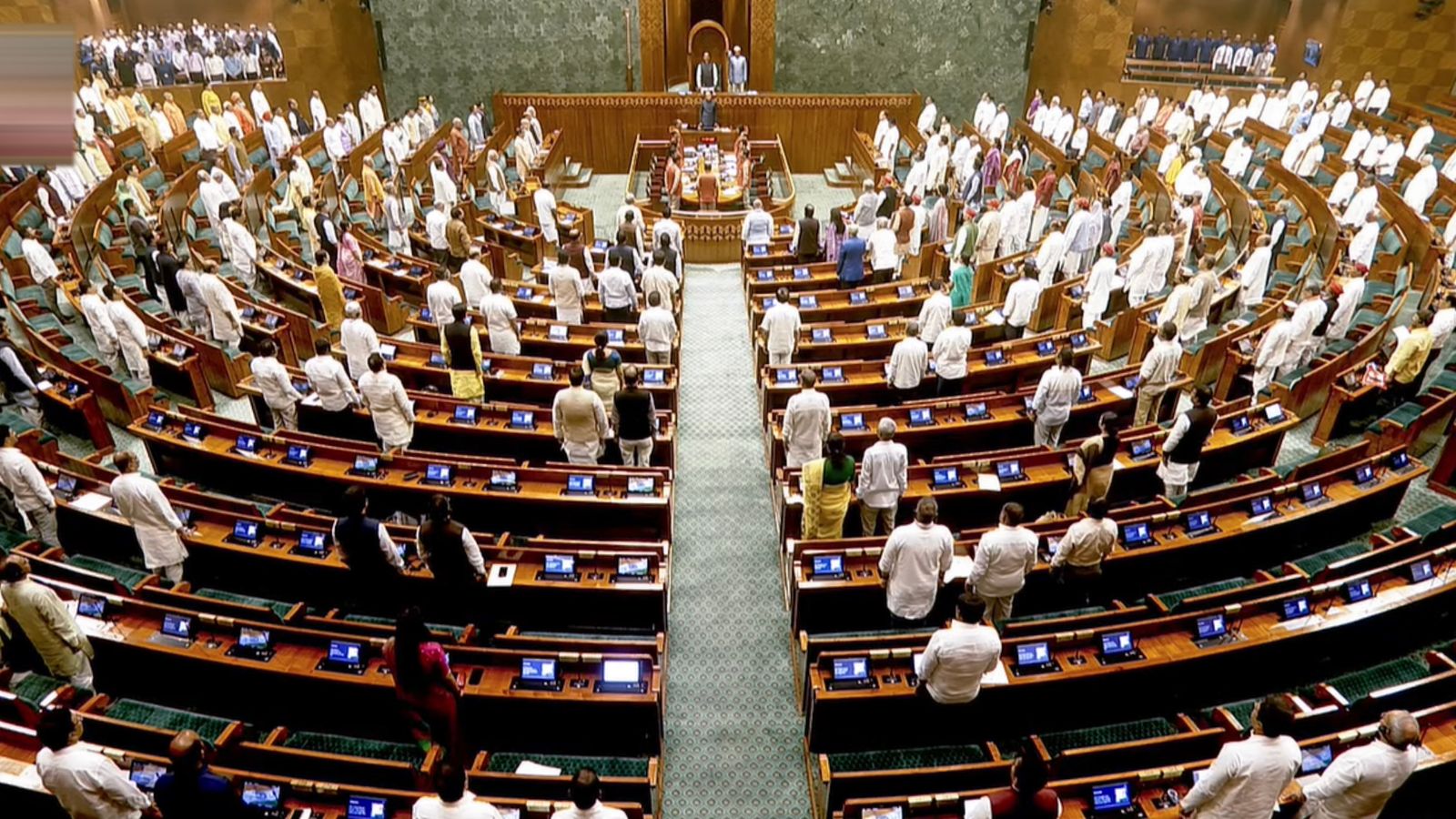
The article says India’s Opposition parties are stopping Parliament from working properly.
It points to shouting, protests, and repeated adjournments.
Because of this, the two Houses worked for much less time than planned.
The article says the Opposition then used those low numbers to criticize the government.
Home Minister Amit Shah offered a long debate about the Jantar Mantar protests.
Rahul Gandhi rejected the offer, saying he did not want a lecture.
The article also says the government sent one bill to a committee and allowed long debates on another.
It presents talks with Sonam Wangchuk as another example of the government listening to concerns.
The writer concludes that disagreements should be settled through debate and voting rather than disruption.

The article argues that Opposition disruptions caused Parliament’s low functioning rates during the Monsoon Session.
It says the Lok Sabha worked for 15% and the Rajya Sabha for 33% of scheduled time.
Amit Shah offered a 24-hour debate on the Jantar Mantar protests, but Rahul Gandhi rejected it as a “lecture.”
The government says it addressed concerns through a Joint Parliamentary Committee and extended debates on legislation.
The article cites government engagement with Sonam Wangchuk as evidence of consultation and democratic accountability.
- Who
- The Union government, Opposition parties, Rahul Gandhi, Amit Shah, Narendra Modi, and Sonam Wangchuk are central to the article.
- What
- The article argues that Opposition disruptions are obstructing Parliament and rejects claims that the government refuses debate or consultation.
- Where
- India’s Parliament, the Jantar Mantar protests, and discussions involving officials and Wangchuk.
- When
- During the Monsoon Session and the period surrounding Sonam Wangchuk’s 26-day hunger strike; exact dates are not provided.
- Why
- The article says Opposition parties are disrupting proceedings over political demands and then using the resulting lost time to accuse the government of undermining democracy.
Opposition and Critics’ Position
Government and Article’s Position
Parliamentary functioning
Opposition and Critics’ Position
Critics cite the limited time worked by the Lok Sabha and Rajya Sabha as evidence that Parliament is not functioning properly.
Government and Article’s Position
The article says repeated Opposition disruptions and adjournments caused the loss of working time, which the Opposition then used to criticize the government.
Availability of debate
Opposition and Critics’ Position
The Opposition argues that the government is not adequately listening and, according to the article, Rahul Gandhi said the government had “destroyed our democracy.”
Government and Article’s Position
The article says Amit Shah offered a debate lasting up to 24 hours, but Rahul Gandhi rejected it as a “lecture,” undermining claims that debate was being denied.
Consultation on legislation
Opposition and Critics’ Position
Some Opposition parties opposed the Foreign Contribution (Regulation) Amendment Bill even after its referral to a Joint Parliamentary Committee and demanded its withdrawal.
Government and Article’s Position
The government says referral to a committee and extended parliamentary debates show that it has engaged with concerns rather than simply forcing legislation through.
Key facts
- Lok Sabha functioning
- The Lok Sabha functioned for 15% of its scheduled time during the Monsoon Session.
- Rajya Sabha functioning
- The Rajya Sabha functioned for 33% of its scheduled time.
- Question Hour
- Question Hour operated for about 1% of its allotted time in the Lok Sabha and 12% in the Rajya Sabha.
- Debate offer
- Amit Shah offered to begin a debate on the Jantar Mantar protests at 3 p.m. and continue it until 3 p.m. the following day.
- Rahul Gandhi’s attendance
- The article says Rahul Gandhi had 51% attendance during the 17th Lok Sabha.
- Public Examinations Bill debate
- The Lok Sabha debated the bill for nearly 11 hours, while the Rajya Sabha discussed it for more than six-and-a-half hours.
- Sonam Wangchuk’s hunger strike
- The article says Wangchuk ended his 26-day fast after discussions and written assurances.
Sources
Related news
Parliament Disruption Deepens Clash Between Government and Opposition
Indian Parliament's Monsoon Session Ends Amid Disruptions, Low Productivity
Congress Opposition Under Rahul Gandhi Turns Obstruction, Democracy Pays Price
Editorial Urges Government, Opposition to Let Parliament Function Amid Logjam
Parliament's 2026 Monsoon Session inefficiency cost about Rs 130 crore
Rijiju blames Congress for disruptions as Monsoon Session ends
Goyal Defends India’s 7.8% GDP Growth Amid Data Debate

Manipur Census Deferment Welcomed as Step Toward Public Aspirations
UPSC Key Covers SCO, Electoral Rolls, Economy, Defence and Climate

West Bengal CM Crushes Nearly 2 Lakh Seized Syrup Bottles

Modi Highlights India’s Growing Avocado Market and Farmer Gains