0 months ago
Buddhist Excavation Near Bengaluru Faces Land Acquisition Hurdle
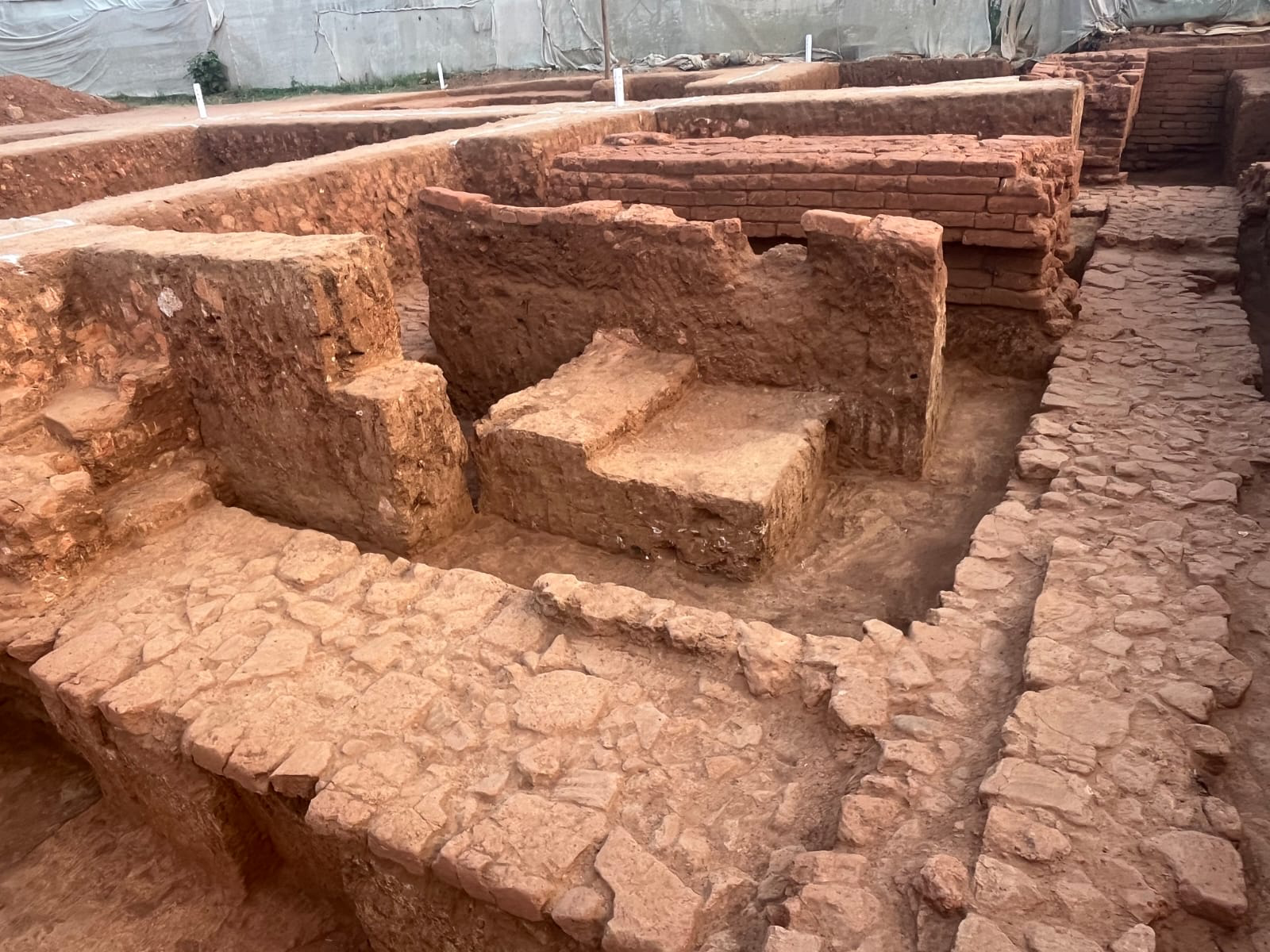
Archaeologists found a very old Buddhist place at Rajaghatta, a village near the city of Bengaluru in India.
The bricks there are from the first and second century, making them about 1,800 to 1,900 years old.
A farmer owns part of the land where the discovery was made.
He says he will give up his land only if the government pays him the full market price.
The government wants to dig more to uncover a hidden worship hall called a Chaityalaya.
To do that, officials need about four more acres of land next to the site.
Buying that land takes a very long time.
A Buddhist group called the Maha Bodhi Society wants everyone to visit the site right away as an open-air exhibition.
The archaeology department instead wants to cover the site with sheets so rain and people do not damage the fragile ruins.
Everyone agrees that the old Buddhist site is special and should be protected.

A Buddhist site at Rajaghatta in Doddaballapur, Bengaluru Rural district, is caught in a land acquisition dispute.
A farmer is demanding the existing market price before parting with his 16 guntas of land where the excavation took place.
The Department of Archaeology, Museums and Heritage needs about 4 acres adjacent to the site to expose a hidden Chaityalaya, a Buddhist place of worship.
The Maha Bodhi Society opposes temporarily covering the excavated site and demands it be made an open-site exhibition.
The third excavation, which ran from January to May, unearthed bricks dating back to the 1st and 2nd century.
Land values at Rajaghatta are high due to its proximity to Kempegowda International Airport and Bengaluru city.
- Who
- The Department of Archaeology, Museums and Heritage, the Maha Bodhi Society, and a local farmer demanding market price for his land.
- What
- A Buddhist excavation site hit a land acquisition hurdle as officials need more land to expose a hidden Chaityalaya but a farmer wants market-rate compensation.
- Where
- Rajaghatta, Doddaballapur, in Bengaluru Rural district, near Devanahalli and Bengaluru city, India.
- When
- The third excavation began in January and ended in May; a land acquisition proposal was sent around the time of the commissioner's statement on Wednesday.
- Why
- To preserve the fragile 1st-2nd century Buddhist relics and carry out further excavation, while the farmer demands current market value and the Maha Bodhi Society wants an open-site exhibition.
Maha Bodhi Society (Open-Site Advocates)
Department of Archaeology, Museums and Heritage
Handling the excavated site
Maha Bodhi Society (Open-Site Advocates)
The site should be kept open and developed as an open-site exhibition immediately; covering it temporarily is opposed.
Department of Archaeology, Museums and Heritage
The fragile exposed structures should be covered with sheets temporarily to prevent damage from rains and local people until land acquisition is completed.
Land acquisition and compensation
Maha Bodhi Society (Open-Site Advocates)
The farmer insists on receiving the existing market price for his 16 guntas of land before parting with it.
Department of Archaeology, Museums and Heritage
Officials have sent a proposal to begin land acquisition but note the process would be a lengthy one.
Key facts
- Heritage site
- Buddhist site with bricks dating to the 1st and 2nd century
- Location
- Rajaghatta, Doddaballapur, Bengaluru Rural district
- Farmer's land
- 16 guntas, for which market price is demanded
- Additional land needed
- About 4 acres adjacent to the excavated site
- Hidden structure
- Chaityalaya, a place of Buddhist worship
- Excavation history
- First excavated twice about two decades ago; third excavation from January to May
- Key demand
- Maha Bodhi Society wants an open-site exhibition
- Land value factor
- Proximity to Kempegowda International Airport and Bengaluru city
- Official in charge
- Commissioner A. Devaraju, Department of Archaeology, Museums and Heritage
Quotes
A. Devaraju
Commissioner, Department of Archaeology, Museums and Heritage
“We decided to cover the exposed site with sheets to prevent damages by rains and local people since the structures excavated are fragile.”
 deccanchronicle.com
“Land acquisition would be a lengthy process.”
deccanchronicle.com
Sources
Related news
Farmers Urge Karnataka CM Shivakumar to Begin Bidadi Land Acquisition

Hyderabad Raidurg heritage land auction faces BRS halt demand
Archaeologists Resume Excavations at Kashmir’s Ancient Buddhist Ruins

Bidadi farmers meet Shivakumar, ready to give land for GBIT
Varanasi's Rajghat Heritage Faces Challenges From Rapid Development

IAS Officer’s Disclosures Put Alleged KPSC Scam Middleman Under Scanner

Residents Report Serious Security Lapses at Karanja Dam
Six Arrested Over Alleged Blackbuck Poaching in Bidar Grassland

Bidar ATM murder suspects arrested in Bihar after 19-month hunt
Karnataka Police Arrest Two Suspects in Bidar Bank Robbery