

3 days ago
Archaeologists Resume Excavations at Kashmir’s Ancient Buddhist Ruins
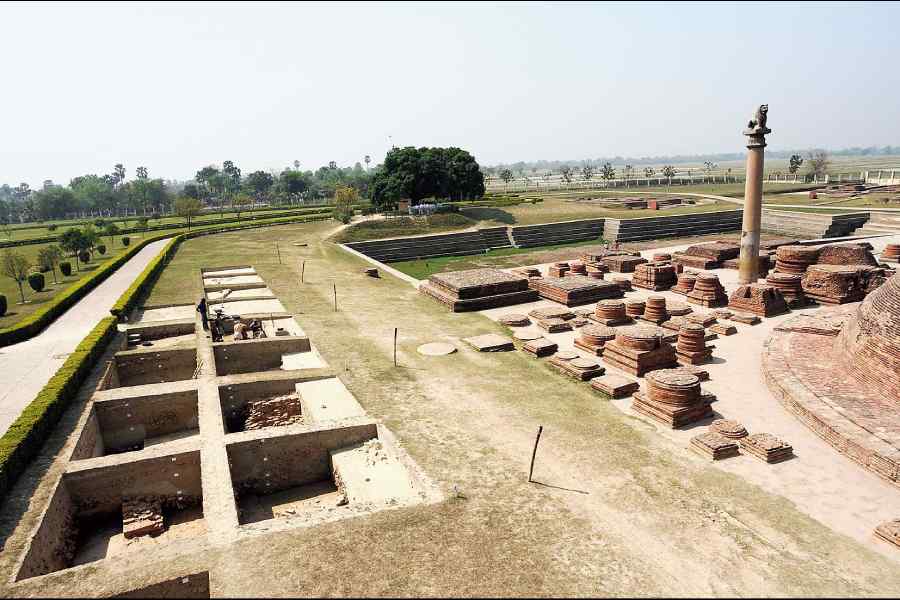
Archaeologists are digging at an ancient site called Zehanpora in Kashmir.
They think the site is almost 2,000 years old.
It may contain large Buddhist stupas and other buildings.
The ruins were hidden under mounds that people had noticed for years.
A photograph in a French museum helped researchers understand what the mounds might be.
The first digging phase took place in November but stopped because winter arrived.
The new phase will last about 100 days.
Researchers say fully studying the site could take up to five years and may reveal important parts of Kashmir’s history.

Archaeologists began a second excavation phase at the nearly 2,000-year-old Zehanpora ruins in Baramulla district.
The site is believed to contain one of Kashmir’s oldest and largest Buddhist archaeological complexes.
The current excavation phase is scheduled to last 100 days, while complete excavation could take five years.
Three large mounds and substantial underground walls suggest Zehanpora was an important site, not a small settlement.
The ruins were identified after archaeologist Mohammad Ajmal Shah connected the mounds to an old photograph found in a French museum.
- Who
- Archaeologists, including Mohammad Ajmal Shah, with support from Jammu and Kashmir Chief Secretary Atal Dullo, are conducting the excavation.
- What
- A second phase of archaeological excavation has begun at the nearly 2,000-year-old Zehanpora Buddhist ruins.
- Where
- The site is at Zehanpora in Baramulla district, Kashmir, along an ancient route toward Taxila.
- When
- The second phase began on Saturday and is planned to continue for 100 days; full excavation may take five years.
- Why
- Researchers aim to uncover and document a major part of Kashmir’s Buddhist and cultural heritage.
Key facts
- Site
- Zehanpora ruins
- Estimated age
- Nearly 2,000 years
- Location
- Baramulla district, Kashmir
- Current excavation phase
- Planned for 100 days
- Estimated full excavation
- Up to five years
- Key remains
- Three large mounds and walls running beneath them
- Discovery clue
- An old photograph found in a French museum showed the mounds as more prominent stupas
Quotes
Mohammad Ajmal Shah
Archaeologist who identified the significance of the Zehanpora mounds
“What was found (during the first phase) was surprising and interesting. It is certain that a very big cultural treasure will be unearthed and added to history. The place will be a major tourist attraction.”
 telegraphindia.com
“For years, people had been seeing some tall mounds there. A scientific study of these mounds was initiated. It turned out that these mounds were the remains of a large structure built by humans.”
telegraphindia.com
Sources
Related news
Five Lesser-Known Buddhist Gems Across North India’s Heritage
Buddhist Excavation Near Bengaluru Faces Land Acquisition Hurdle
Ujjain May Sit on 2,200-Year-Old Stupa Bigger Than Sanchi

Amarnath Yatra resumes after suspension; darshan count exceeds 4.70 lakh
10,000-Year-Old Rock Art and Caves Found at Indrapalanagaram
