1 hr ago
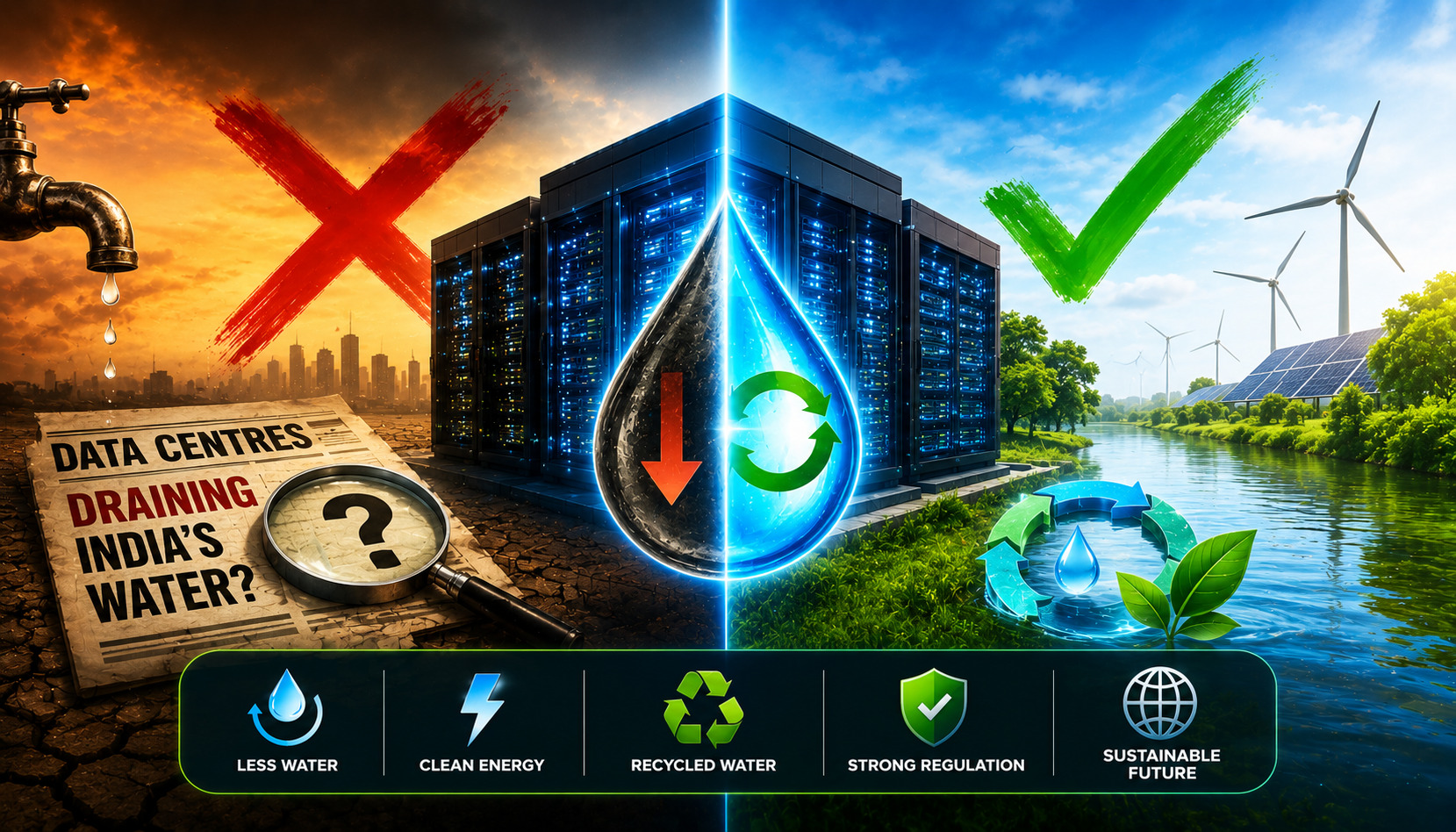
India Urged to Assess AI Data Centres’ Environmental Costs

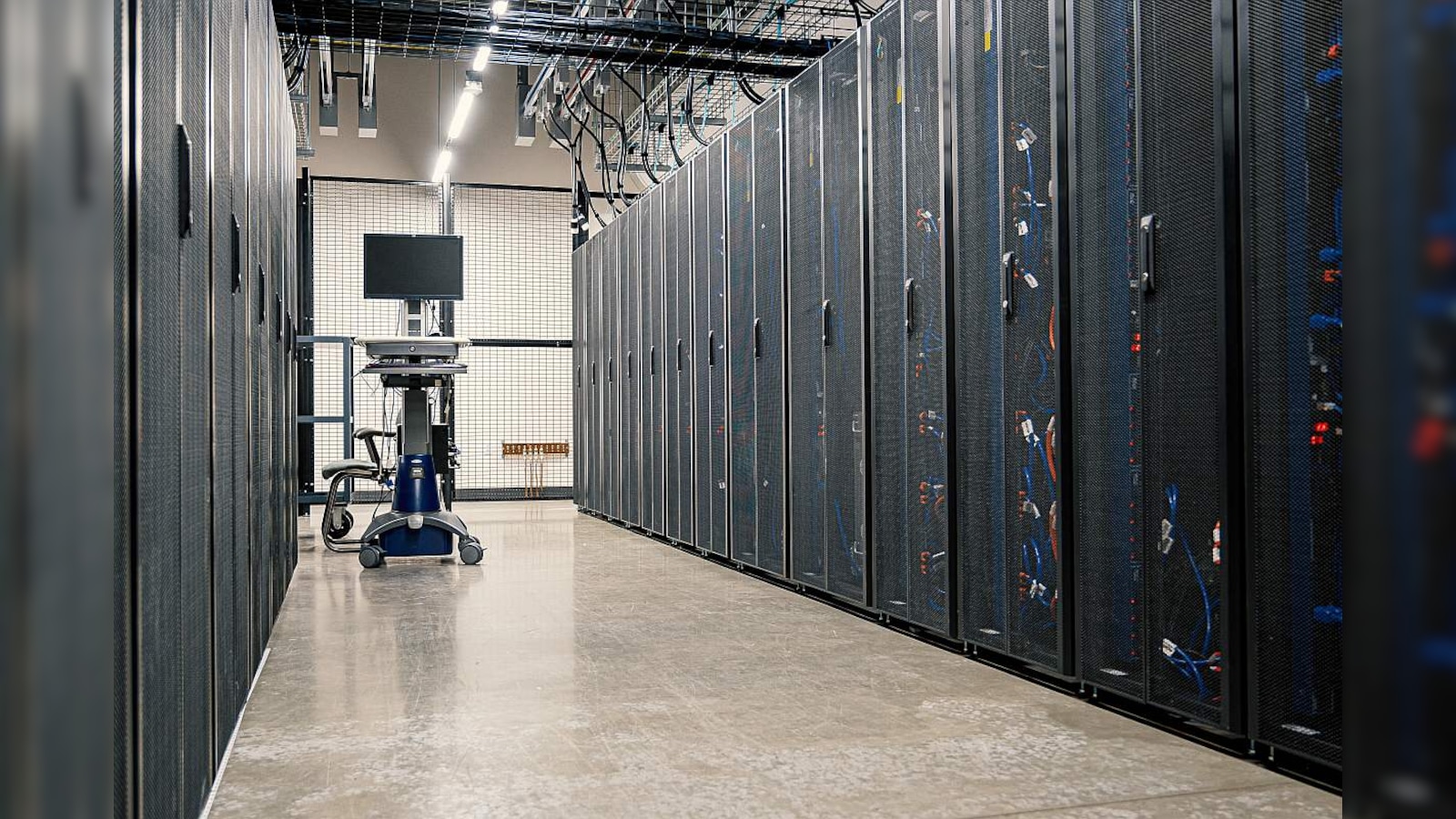
AI services may seem invisible, but they run on large buildings filled with computers.
These data centres need land, electricity and cooling systems.
Some cooling systems also use a lot of water.
India is building more data centres to support its AI plans.
More than half of its data centres are reportedly in areas that already face water stress.
Residents and officials have raised concerns about water supplies near projects in Thane and Greater Noida.
Companies involved in those projects said they used recycled, treated or non-drinking water and described their cooling systems differently from the allegations.
The article says India should check the environmental effects of new data centres before approving them.

India’s data-centre capacity grew from about 375 MW in 2020 to about 1,500 MW in 2025.
The government expects data-centre electricity consumption to reach 13.56 GW by 2031-32.
More than half of India’s data centres are reportedly located in water-stressed areas.
Concerns have emerged over water use and groundwater risks near projects in Thane and Greater Noida.
The article proposes facility-level disclosures, carrying-capacity assessments and resource-sensitivity mapping.
- Who
- The Indian government, data-centre companies, local officials, residents and environmental policy advocates.
- What
- India is expanding AI data-centre infrastructure while facing concerns about its water and electricity use.
- Where
- India, particularly water-stressed areas and states including Maharashtra, Tamil Nadu, Karnataka, Telangana and Uttar Pradesh; examples include Thane and Greater Noida.
- When
- Data-centre capacity rose from approximately 375 MW in 2020 to 1,500 MW in 2025, with electricity demand projected through 2031-32.
- Why
- To ensure that AI and digital infrastructure expansion does not worsen water shortages, groundwater risks or other environmental pressures.
Digital Expansion and Company Assurances
Environmental Assessment and Safeguards
Water use at data centres
Digital Expansion and Company Assurances
Data-centre projects and companies cited in the article said they would use recycled, treated non-potable or reclaimed water, and companies disputed some allegations about cooling-water use.
Environmental Assessment and Safeguards
Officials, residents and the article’s author warned that large facilities could intensify water shortages, threaten aquifers or create wastewater-management risks.
Approving new facilities
Digital Expansion and Company Assurances
India’s rising data-centre capacity and AI compute plans support continued infrastructure development.
Environmental Assessment and Safeguards
The article argues that authorities should assess the combined water and electricity use of existing and planned facilities before approving large projects in stressed areas.
Location and cooling technology
Digital Expansion and Company Assurances
States compete to attract data centres, and advanced cooling systems can support facility development.
Environmental Assessment and Safeguards
The article says facilities should be directed toward water-resilient, grid-capable and climate-resilient areas, with incentives for efficient locations and technologies.
Key facts
- Data-centre capacity
- Approximately 375 MW in 2020 and 1,500 MW in 2025
- Projected electricity use
- 13.56 GW by 2031-32
- AI compute framework
- More than 38,000 GPUs have been onboarded
- Water-stressed locations
- Over 50% of India’s data centres are reportedly in water-stressed areas
- Concentration of facilities
- 75% are located in Maharashtra, Tamil Nadu, Karnataka, Telangana and Uttar Pradesh
- Thane water shortfall
- A hyper-scale project has an estimated shortfall of around 30 million litres per day
- Proposed policy tools
- Facility-level disclosures, computational carrying-capacity assessments and resource-sensitivity mapping
Sources
Related news

India’s AI Data-Centre Boom Raises Hidden Water Concerns
AI Expansion Puts Jamnagar and Thane Under Water Stress

Lokesh Defends Vizag Data Centres Amid Water Concerns
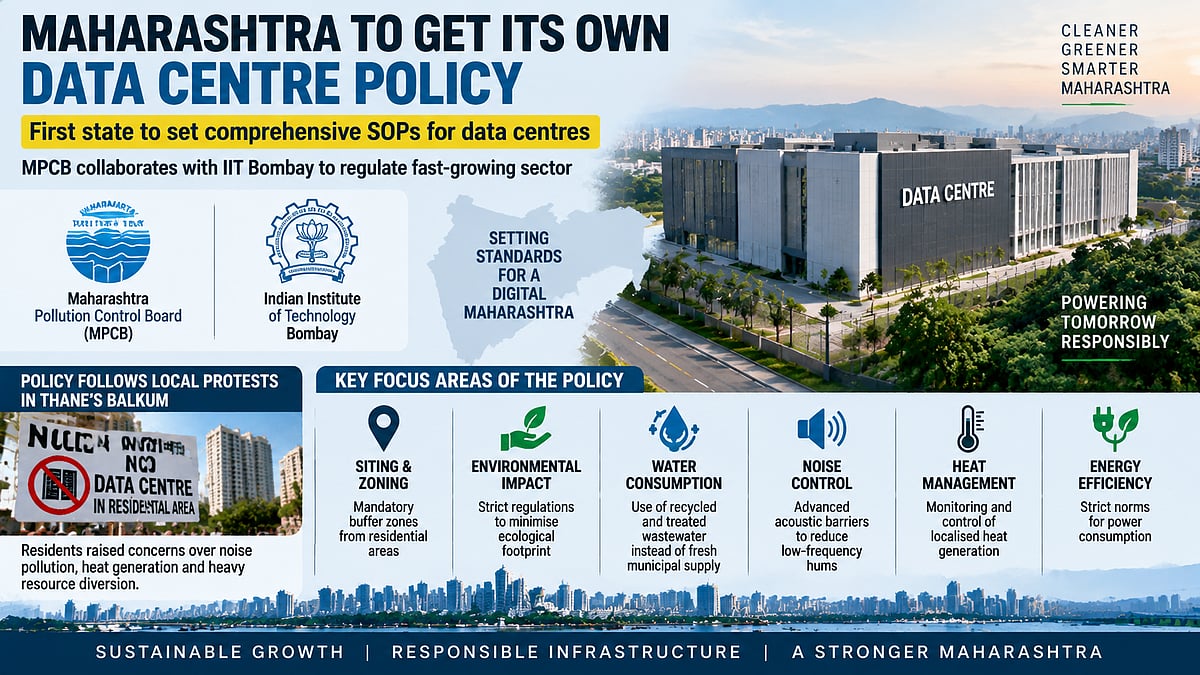
Maharashtra Plans Data Centre Policy Addressing Environmental and Resource Concerns
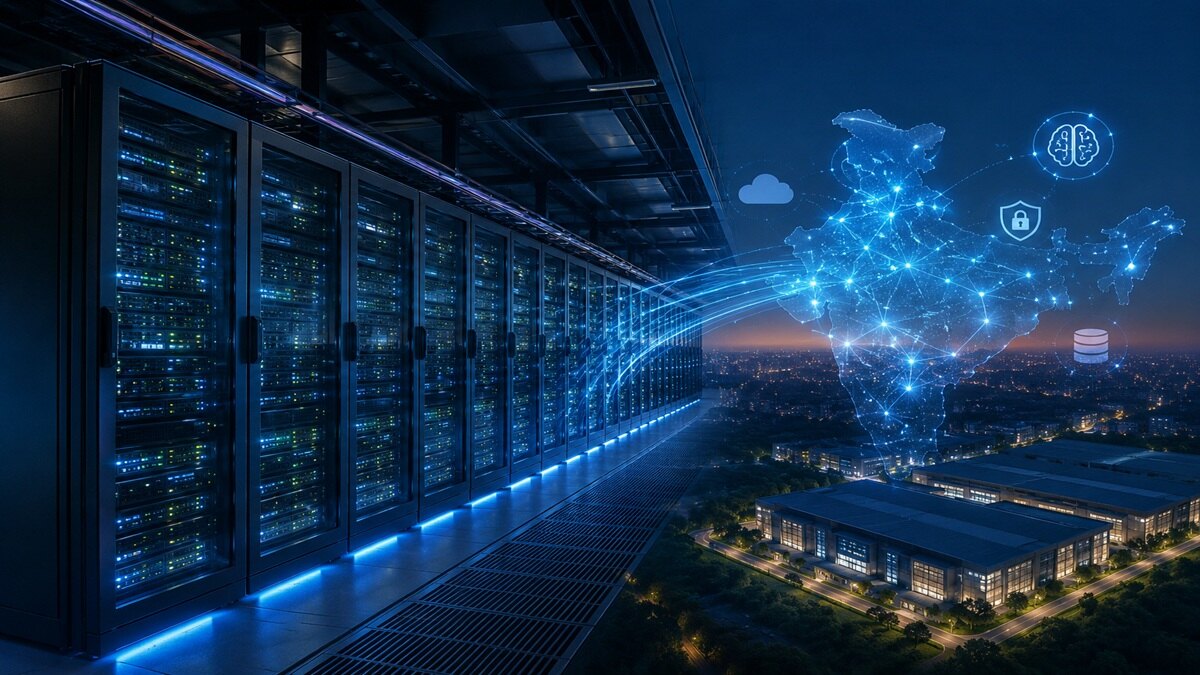
India’s Data Centre Capacity Could Triple by 2030
India's Data Centre Boom Reshapes Real Estate Amid AI Demand
Why Nepal’s Deadly Floods Were So Difficult To Predict

Indian Restaurants Turn History, Memory And Heritage Into Shared Meals

Delhi's New EV Policy to Phase Out Petrol Vehicle Registrations

FCRA Amendment Bill 2026 Tightens India's Foreign Funding Rules