3 hrs ago
India’s AI Data-Centre Boom Raises Hidden Water Concerns

India is building many new data centres to support artificial intelligence and other digital services.
These buildings contain powerful computers that produce a lot of heat.
Cooling the computers can require water, either directly or through electricity and chip manufacturing.
Experts estimate that India’s data centres already use a very large amount of water.
People in Thane and Visakhapatnam protested because their cities already face resource pressures.
Amazon says its Indian data centres do not use local water for cooling and that its operations are water positive.
Google says it plans to use advanced air cooling to protect local water resources.
Government officials say newer cooling systems can reduce water and electricity use.
The main question is whether water needs will be fully assessed before new facilities are built.

India’s data-centre capacity grew from about 375 MW in 2020 to around 1,575 MW in 2026.
The Council on Energy, Environment and Water estimates Indian data centres used about 150 billion litres of water in 2025, potentially more than doubling by 2030.
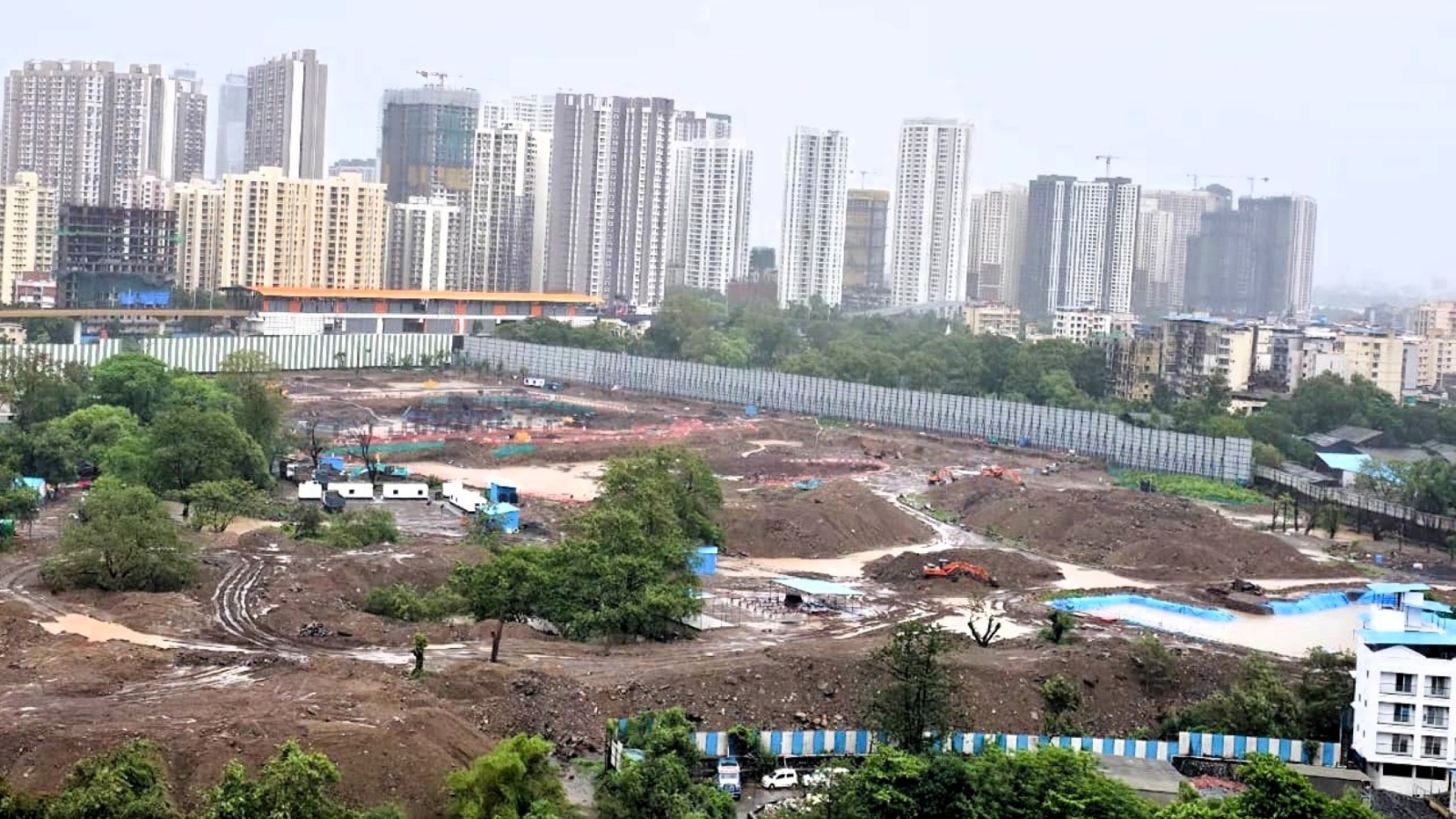
Residents and environmental groups protested proposed Amazon and Google-linked data-centre projects in Thane and Visakhapatnam.
Activists fear the projects could intensify pressure on water, electricity, land, wildlife and other local resources.
Companies and government officials cite air cooling, closed-loop systems and other technologies, while disputing claims that local water supplies will be diverted.
- Who
- Residents, environmental groups, technology companies including Amazon and Google, the Indian government, and data-centre developers.
- What
- India’s expanding data-centre and AI infrastructure is prompting debate over its water consumption and effects on local resources.
- Where
- The concerns focus on Thane in Maharashtra and Visakhapatnam in Andhra Pradesh, as well as India’s broader data-centre hubs.
- When
- The protests and cited assessments took place in 2026, including protests in July and August.
- Why
- High-performance computing requires continuous cooling, while some proposed facilities are located in cities already facing water shortages or other environmental pressures.
Residents and environmental groups
Companies and government officials
Local water use
Residents and environmental groups
Protesters in Thane and Visakhapatnam fear new data centres could increase pressure on already strained water supplies. Thane protesters claimed the proposed facility could require at least 12 million litres daily.
Companies and government officials
Amazon says its Indian data centres do not use local water and power sources, while Google says it will use advanced air cooling to protect local water resources. The state says water intended for rural or residential use will not be diverted.
Environmental impact
Residents and environmental groups
Activists have raised concerns about heat, noise, traffic, tree loss and potential effects on wildlife, including the proximity of the Visakhapatnam project to Kambalakonda Wildlife Sanctuary.
Companies and government officials
Companies and authorities point to environmental compliance and cooling technologies such as direct-to-chip liquid cooling, immersion cooling, adiabatic cooling and closed-loop systems.
Need for regulation
Residents and environmental groups
Residents and environmental groups want clearer information about water demand, environmental approvals, sewage capacity, emergency planning and priority access to resources during shortages.
Companies and government officials
The government says environmental reviews for qualifying large facilities can examine freshwater availability, water balance, greywater generation and recycling, while AI data centres do not automatically require a separate clearance.
Key facts
- India’s data-centre capacity
- About 375 MW in 2020, rising to around 1,575 MW in 2026.
- Estimated Indian water use
- Approximately 150 billion litres annually in 2025, according to the Council on Energy, Environment and Water.
- Projected water growth
- The Council on Energy, Environment and Water says Indian data-centre water use could more than double by 2030.
- Global AI water estimate
- A July 2026 Water Research study estimated global AI water use could reach 4.2–6.6 billion cubic metres annually by 2027.
- Thane proposal
- Residents protested a proposed Amazon data centre covering roughly 53 acres in Balkum.
- Visakhapatnam water supply
- The city reportedly receives about 410 million litres of water daily against a requirement of 480 million litres.
- Environmental clearance
- The environment ministry said AI data centres do not automatically require separate clearance under the 2006 EIA notification, though qualifying large facilities may require clearance.
Quotes
Visakhapatnam environmental groups and residents
Activists and residents protesting Google’s proposed data-centre hub in Visakhapatnam
“We cannot drink DATA”
 thebetterindia.com
Sources
Related news
AI Expansion Puts Jamnagar and Thane Under Water Stress

Lokesh Defends Vizag Data Centres Amid Water Concerns
Thane Residents Resist Amazon Hyperscale Data Centre Over Resource Concerns
India’s Data Centre Capacity Could Triple by 2030
India's data centre capacity surges four-fold to 1,575 MW
India's Data Centre Boom Reshapes Real Estate Amid AI Demand
UMANG Brings UAN Generation and EPFO Services to Smartphones
Meta Restores Kerala Government Facebook Posts After Official Outcry

Instagram Ads Expose India’s Child Abuse Reporting Gaps

NHRC Seeks Reports Over Alleged Meta Child Abuse Ads