1 hr ago
BRICS Delhi Declaration Signals Shifts Across West Asia

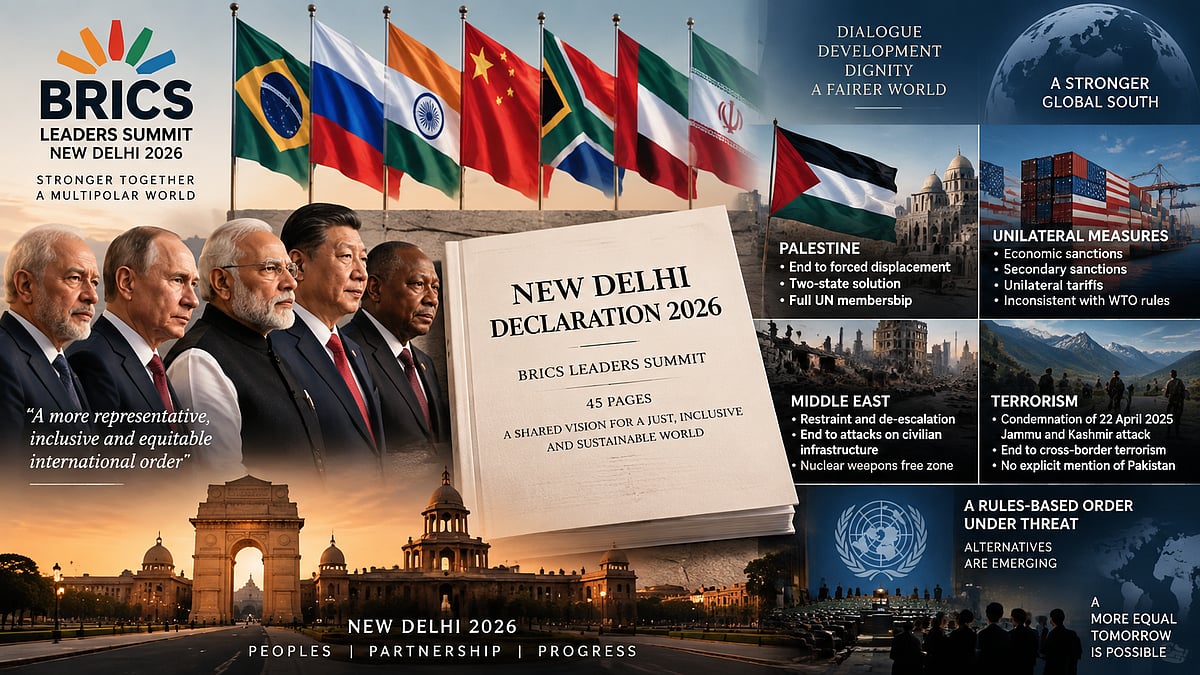
BRICS countries adopted a declaration about several conflicts in West Asia.
It mentioned a United Nations plan for Gaza that the United States supported.
The declaration also repeated that Palestinians should have their own country based on borders from 1967, with East Jerusalem as its capital.
Israel does not accept this requirement.
China, Russia, and Iran appeared willing to use the Gaza plan if it still supports Palestinian statehood.
The declaration did not mention the war involving Yemen and the Houthis.
This was different from an earlier BRICS statement that discussed Yemen and travel through the Bab-el-Mandeb Strait.
The article says Saudi Arabia and the United Arab Emirates may be trying to work with Iran despite disagreements.
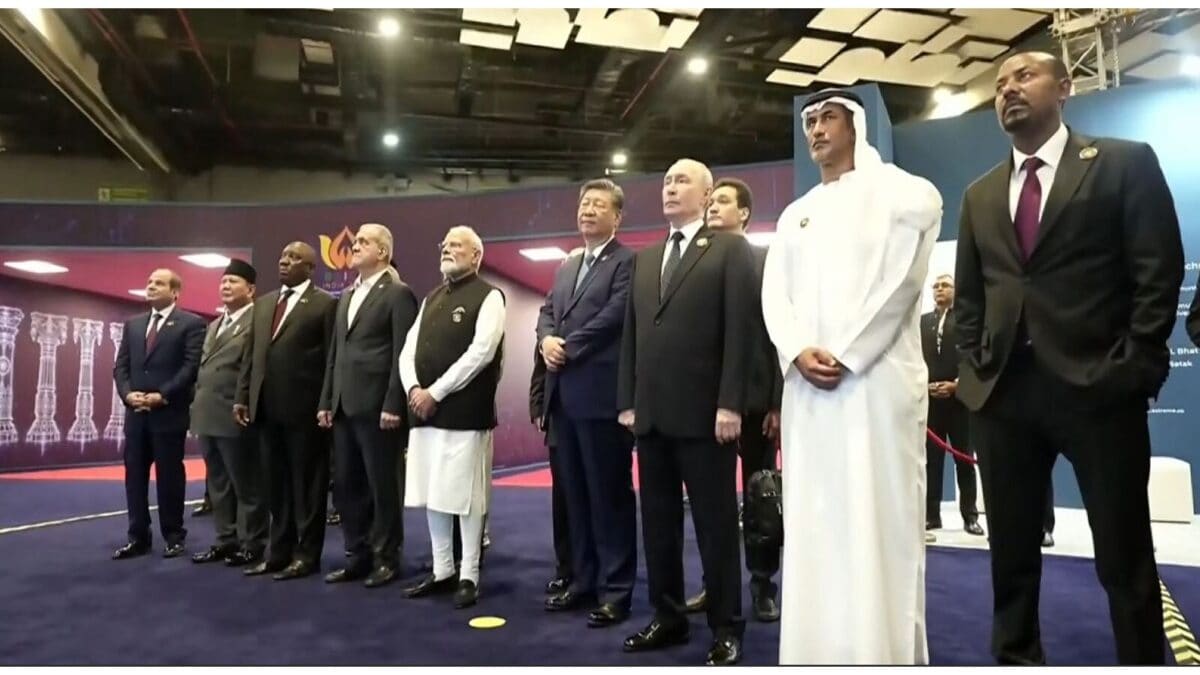
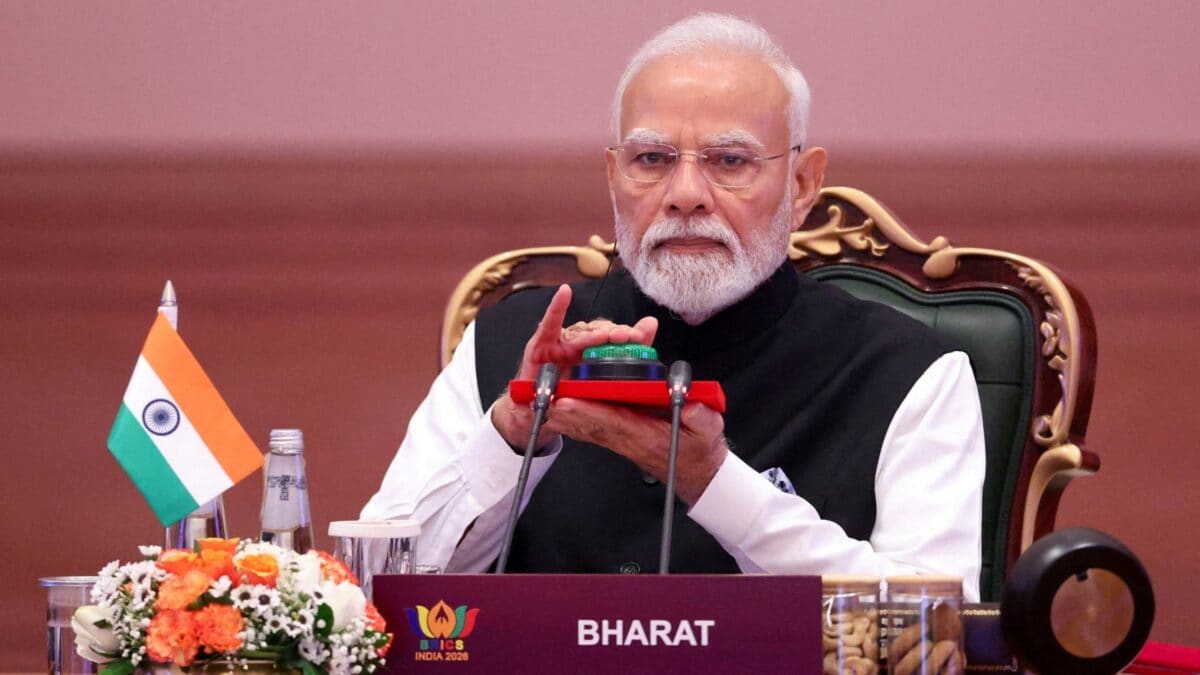
India’s leadership helped the BRICS members reach agreement.

The 2026 New Delhi Declaration mentions United Nations Security Council Resolution 2803 while reaffirming a Palestinian state within the 1967 borders.
The declaration links the Gaza peace plan to Palestinian statehood, despite Israel’s continued rejection of the 1967-border requirement.
China, Russia, and Iran appear to have accepted Resolution 2803 as a possible Gaza roadmap if Palestinian statehood conditions are preserved.
The declaration omits the Yemen conflict and Bab-el-Mandeb navigation, unlike the BRICS Foreign Ministers’ Chair’s Statement issued in May.
Saudi Arabia and the United Arab Emirates’ support for the declaration is presented as evidence of greater willingness to engage Iran for regional stability.
- Who
- BRICS members, including India, China, Russia, Iran, Saudi Arabia, and the United Arab Emirates, adopted the declaration.
- What
- The declaration addressed Palestine, Gaza, Iran, Israel, Lebanon, and regional security while omitting the Yemen conflict.
- Where
- It was adopted in New Delhi and concerns conflicts across West Asia, including Gaza, Iran, Yemen, and Lebanon.
- When
- The declaration was adopted in 2026; the article compares it with a BRICS Foreign Ministers’ statement issued in May.
- Why
- The declaration sought consensus on regional conflicts and reflected efforts to balance support for a Gaza peace plan with demands for Palestinian statehood.
Palestinian-Statehood Position
Israeli-American Position
Borders and East Jerusalem
Palestinian-Statehood Position
The declaration reaffirms the Arab Peace Initiative and calls for a Palestinian state within the 1967 borders, with East Jerusalem as its capital.
Israeli-American Position
Israel rejects the 1967-border requirement, while Resolution 2803 and the Trump Gaza plan omit that obligation and the reference to East Jerusalem as Palestine’s capital.
Gaza Peace Plan
Palestinian-Statehood Position
China, Russia, Iran, and Arab states are presented as accepting the Gaza plan as a possible roadmap only if it remains linked to Palestinian statehood and the 1967 borders.
Israeli-American Position
The Trump-backed plan, endorsed by Resolution 2803, does not require Israel to return to the 1967 borders or support a Palestinian state with East Jerusalem as its capital.
Yemen and Regional Engagement
Palestinian-Statehood Position
The article interprets the omission of Yemen and Bab-el-Mandeb from the declaration as favoring Iran and reflecting a Saudi concession.
Israeli-American Position
Saudi Arabia faces continued Houthi attacks and a blockade affecting its shipping, while the earlier BRICS statement had supported a United Nations-led Yemeni peace process and freedom of navigation.
Key facts
- Declaration
- 2026 New Delhi Declaration
- Total paragraphs
- 140
- West Asia paragraphs
- 11
- Key resolution
- United Nations Security Council Resolution 2803
- Palestinian-state position
- A sovereign Palestinian state within internationally recognized 1967 borders, with East Jerusalem as its capital
- Yemen reference
- The declaration omitted the Yemen conflict and Bab-el-Mandeb navigation, unlike the May Chair’s Statement
- Additional legal issue
- The declaration endorsed South Africa’s case against Israel at the International Court of Justice
Quotes
Masoud Pezeshkian and the Crown Prince of Abu Dhabi
Iranian President and Abu Dhabi crown prince who met on the sidelines of the BRICS summit
“agreed to put the past behind us and look to the future”
 indianexpress.com
Sources
Related news

BRICS New Delhi Declaration Sharpens Pressure on Israel
BRICS New Delhi Declaration Signals Global South Challenge Western Order
India Secures Unanimous BRICS Declaration After Overnight Diplomacy

BRICS Reaches New Delhi Consensus Despite Iran-UAE Divisions
BRICS Declaration Criticizes Sanctions, Names Israel, Preserves India’s Balancing Act

BRICS Adopts New Delhi Declaration Despite West Asia Divisions

EU Urges United States to Reverse Palestinian Visa Denials
US Again Denies Palestinian President Visa for UN Meeting

Rubio Announces U.S. Visa Curbs for Some South African Nationals