

43 mins ago
BRICS New Delhi Declaration Signals Global South Challenge Western Order
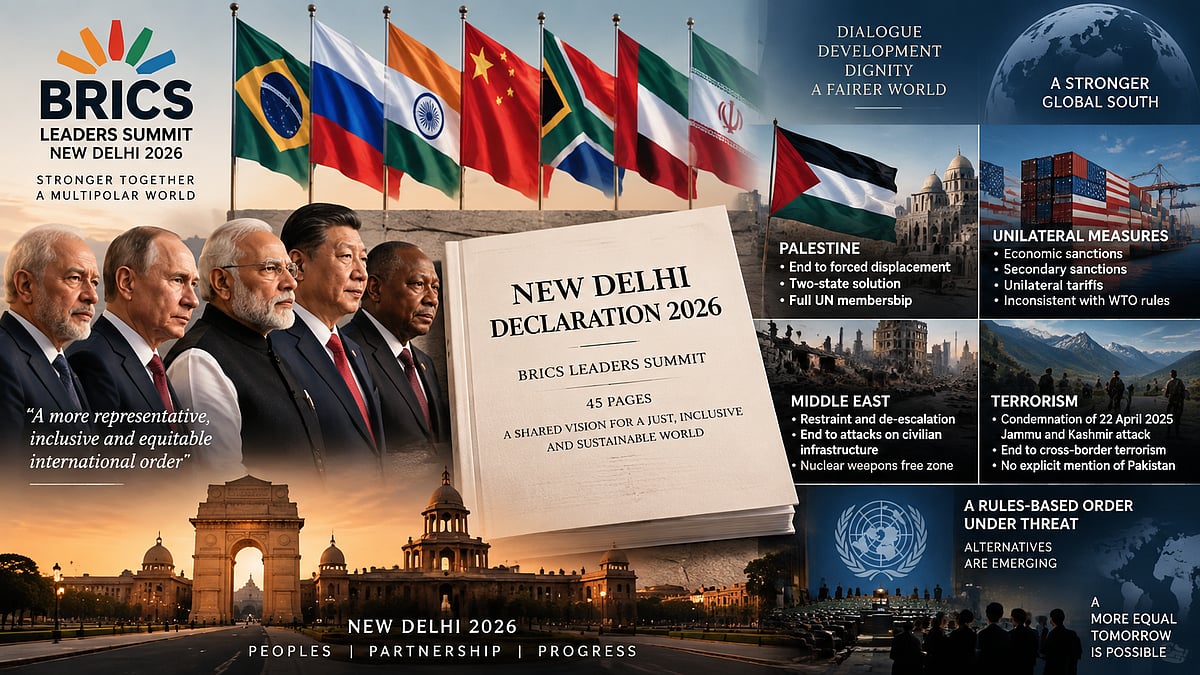
BRICS countries agreed on a long document about world problems.
The document criticized sanctions and trade rules that can hurt countries, but it did not directly name the United States.
It strongly supported Palestinians and called for a Palestinian state alongside Israel.
It also supported Palestine becoming a full member of the United Nations.
The declaration did not mention the war in Ukraine.
It also avoided mentioning some Chinese projects, likely because BRICS members have different interests.
On Middle East tensions, the countries used careful language asking everyone to avoid making the situation worse.
Some commentators think this careful wording makes BRICS weak, while others see it as a sign that countries outside the West are building alternatives.

The 45-page New Delhi Declaration was adopted at the BRICS Leaders Summit and is the group’s longest declaration.
The document criticized unilateral sanctions, tariffs and other trade measures without naming the United States.
BRICS endorsed Palestinian statehood based on 1967 borders, a two-state solution and Palestine’s full United Nations membership.
The declaration omitted references to the Ukraine war, China’s Belt and Road Initiative, and the New Development Bank.
It used neutral language on Middle East tensions and condemned terrorism, including the April 22, 2025 attack in Jammu and Kashmir.
- Who
- BRICS member countries and their leaders.
- What
- They adopted the 45-page New Delhi Declaration, addressing sanctions, trade, Palestine, Middle East tensions, terrorism and other international issues.
- Where
- New Delhi, with related diplomacy taking place on the sidelines of the summit.
- When
- The declaration was adopted over the weekend at the 2026 BRICS Leaders Summit; the article also refers to meetings on September 12 and an upcoming United Nations debate from September 22 to 28.
- Why
- To express shared positions on global conflicts and economic rules while accommodating significant differences among BRICS members.
Supporters of the Declaration
Critics of the Declaration
BRICS influence
Supporters of the Declaration
The declaration shows that Global South countries are increasingly willing to challenge Western economic and political dominance and create alternatives to the existing order.
Critics of the Declaration
Its cautious and generalized wording may make BRICS ineffective or irrelevant in addressing the world’s many civil conflicts.
Careful wording
Supporters of the Declaration
Neutral language allows members with conflicting interests, including India, China, Iran and Gulf countries, to reach a common document.
Critics of the Declaration
Avoiding direct references to countries and major disputes can weaken the declaration’s clarity and impact.
Palestine and international policy
Supporters of the Declaration
The strong support for Palestinian statehood, the 1967 borders and full United Nations membership gives the Global South’s position formal collective backing.
Critics of the Declaration
The declaration’s positions on Palestine and other issues may be seen as statements without corresponding enforcement power.
Key facts
- Declaration length
- 45 pages, described as the longest BRICS declaration.
- Palestinian position
- Supports a two-state solution, a Palestinian state based on the 1967 borders, and Palestine’s full United Nations membership.
- Sanctions and trade
- Criticizes unilateral coercive measures, economic and secondary sanctions, and unilateral tariff and non-tariff measures.
- Ukraine
- The declaration did not mention Ukraine or the Ukraine war.
- Middle East
- Calls for maximum restraint and an end to attacks on civilian infrastructure and safeguarded peaceful nuclear facilities.
- Jammu and Kashmir
- Condemns the terrorist attack there on April 22, 2025, without explicitly naming Pakistan.
- United Nations debate
- The article says the high-level debate was scheduled for September 22-28 in New York.
Sources
Related news

BRICS Adopts New Delhi Declaration Despite West Asia Divisions
BRICS Declaration Criticizes Sanctions, Names Israel, Preserves India’s Balancing Act
BRICS Declaration Avoids Names While Signaling Positions on Crises
BRICS New Delhi Declaration Sharpens Pressure on Israel
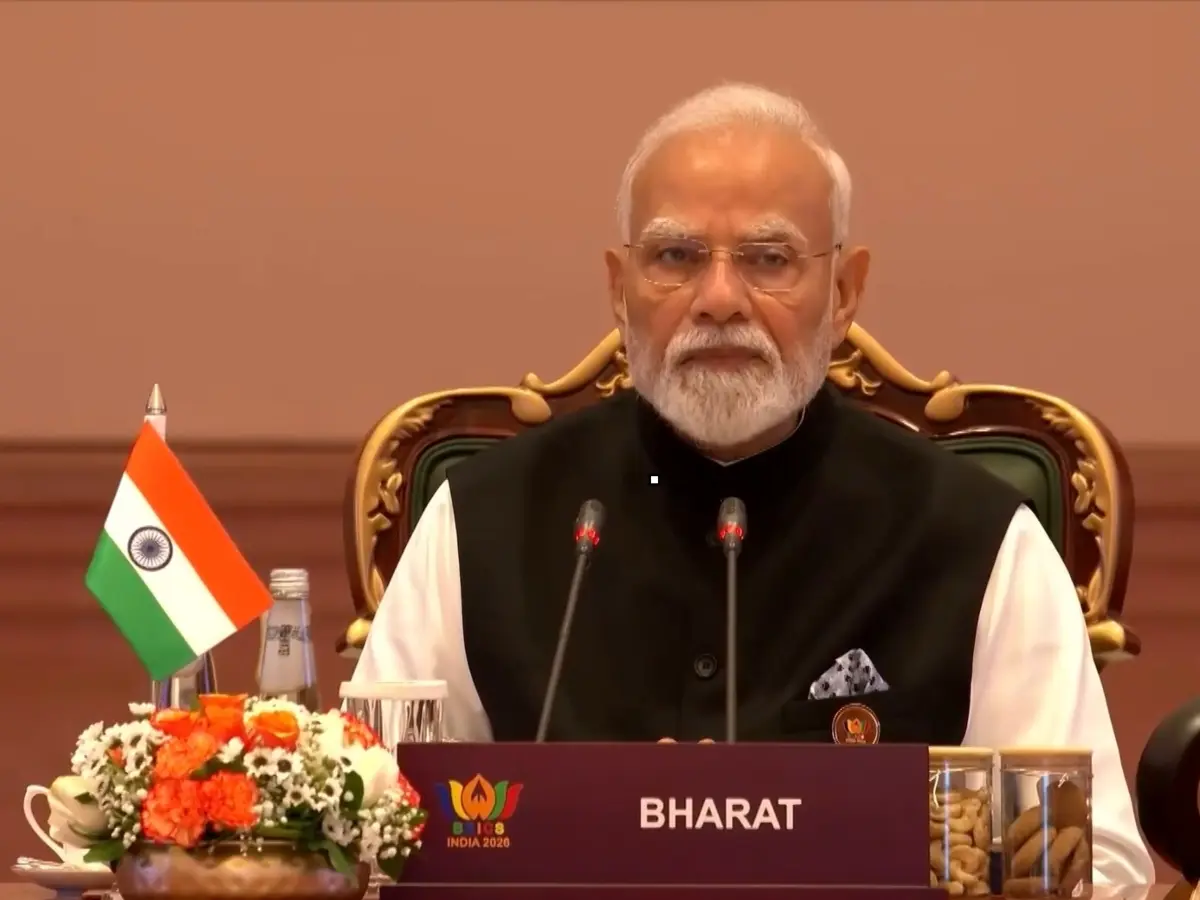
BRICS Unanimously Adopts New Delhi Declaration 2026 at 18th Summit
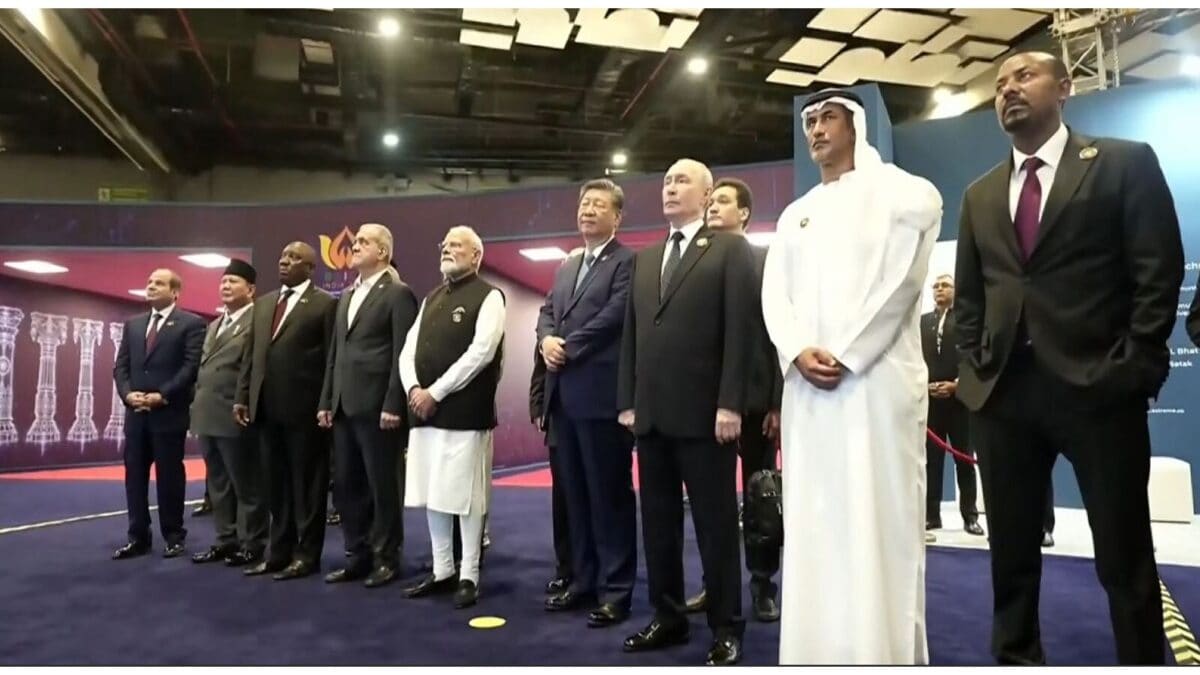
India Secures Unanimous BRICS Declaration After Overnight Diplomacy
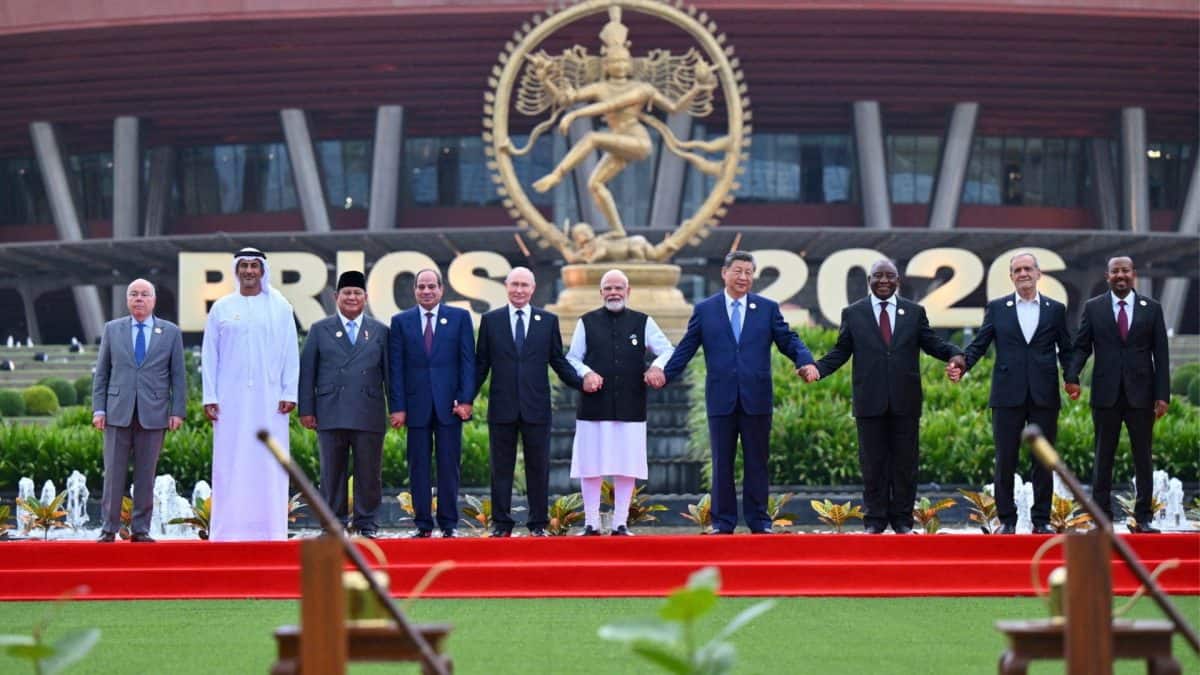
BRICS Summit Rebukes Trump and Expands India’s Strategic Space

Fuel Prices Hold Steady as Saudi Pipeline Closure Lifts Crude

Iran-Gulf Meeting Postponed as Attacks Disrupt Oil Routes
