

5 hrs ago
Goa’s Porvorim Flyover Faces Accidents Amid Design Flaws
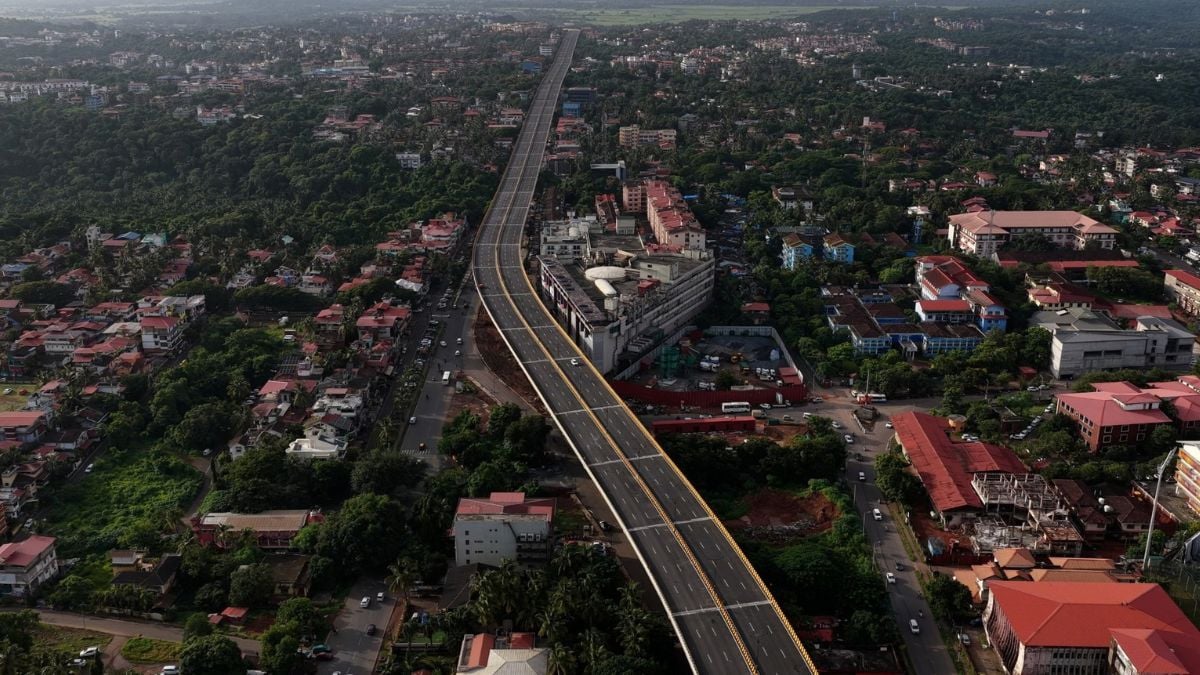
Goa opened a large flyover to help cars travel more easily between parts of the state.
Soon after it opened, a crash killed two people near one of its exits.
The government then stopped scooters from using the flyover.
More crashes, speeding cases and traffic jams followed.
Rain also caused water to collect on the new road.
Some experts say the road does not have enough space for cars to merge safely.
Government officials say careless and fast driving helped cause the crashes.
A team from IIM Nagpur has been asked to help find solutions.

The Rs 641-crore, 5.15-kilometre Porvorim flyover was opened to traffic on 11 September.
A crash at its sole Porvorim exit killed a scooter rider and a car passenger within 24 hours.
The corridor recorded four major accidents and 580 overspeeding cases in its first two weeks.
Critics cite inadequate ramps, signage, land acquisition and lane-merging problems as design failures.
The government blamed rash driving while bringing in a technical team from IIM Nagpur to study the crisis.
- Who
- The Goa government, road-safety experts, local politicians, drivers and residents are involved.
- What
- The newly opened Porvorim elevated corridor has faced fatal crashes, traffic disruption, waterlogging and criticism over its design.
- Where
- On the Porvorim elevated corridor on National Highway 66 in Goa, particularly near its Porvorim exit and its connection toward Panaji.
- When
- It was announced open on 11 September; the first fatal crash occurred within 24 hours, and problems continued during its first two weeks.
- Why
- The reported problems involve limited land, inadequate ramps and merging space, insufficient signage and channelisation, overspeeding, and alleged rash driving.
Critics and safety advocates
Government officials
Cause of the crashes
Critics and safety advocates
Road-safety advocates and experts attribute the danger to inadequate entry and exit design, poor signage, limited ramps and insufficient merging space.
Government officials
Public Works Department Minister Digambar Kamat and local minister Rohan Khaunte emphasized rash driving, speeding and lane discipline as major causes.
Project responsibility
Critics and safety advocates
Critics argue that the state proceeded despite warnings from the traffic department and without adequately consulting road-safety stakeholders; some say the project primarily benefited builders.
Government officials
Government representatives have defended the project’s construction process and are seeking technical assistance from IIM Nagpur to address the problems.
Road geometry
Critics and safety advocates
Urban planner Tahir Noronha said six lanes are forced into Atal Setu’s four lanes within 300 metres, with less merging space than Indian Roads Congress guidance recommends.
Government officials
The government’s reported response has focused on studying traffic conditions and improving the corridor rather than publicly accepting that the design itself caused the accidents.
Key facts
- Project cost
- Rs 641 crore
- Flyover length
- 5.15 kilometres
- Road capacity
- Six lanes
- Reported road-safety history
- 238 accidents, including 22 deaths, on the Porvorim stretch between 2022 and 2024
- Early problems
- Four major accidents and 580 overspeeding cases were reported within the first two weeks
- Vehicle restriction
- Two-wheelers were banned after the fatal crash
- Technical response
- A team from IIM Nagpur was brought in to help assess the crisis
Quotes
Ganpat Sidhaye
Retired engineer and former head of Goa PwD’s National Highways division
“The contractor has been working with severe constraints. But has anyone examined the contractor’s scope of work? Have traffic safety audits been carried out? The whole project has only benefited builders. When there is no land available, who can make a bridge?”
 theprint.in
“Here, traffic is neither achieving the speed of the highway nor getting enough time to peacefully merge.”
theprint.in
Sources
Related news

Gadkari Inaugurates Goa Elevated Corridor and Zuari Bridge
Bhiwandi Flyover Potholes Prompt Proposed ₹9 Crore Repairs
Thane Flyover Shut After Cracks Surface Just One Year Later
Mumbai Bikers Skid on Super-Smooth Mrinaltai Gore Flyover

Gadkari to Skip Mumbai-Goa Highway Inauguration After Long Delay
Naresh Jadhav Urges Flyover or Bypass at Gudihathnoor

Raigad Sets Emergency Network for Ganeshotsav Rush Along Mumbai-Goa Highway
Maharashtra Waives Highway Tolls for Ganeshotsav 2026 Travellers
Ganeshotsav Exodus Brings Thane Routes Toward Mumbai-Goa Highway To Standstill
