3 days ago
US-Canada Trade War Hinges on Sovereignty, Tariffs, Leverage

The United States and Canada are arguing about how they trade with each other.
Donald Trump says Canada has benefited unfairly from access to the US market.
Mark Carney says Canada must protect its workers, economy and independence.
The two countries disagreed about tariffs on cars, metals, farm goods and other products.
The United States says tariffs can protect American industries.
Canada says tariffs can hurt Canadian workers and businesses.
Canada plans to respond with tariffs on some American products.
Canada also buys and sells important goods with many US states, so both countries could feel economic pain.
The disagreement has also made Canada want to build stronger trade relationships with countries besides the United States.

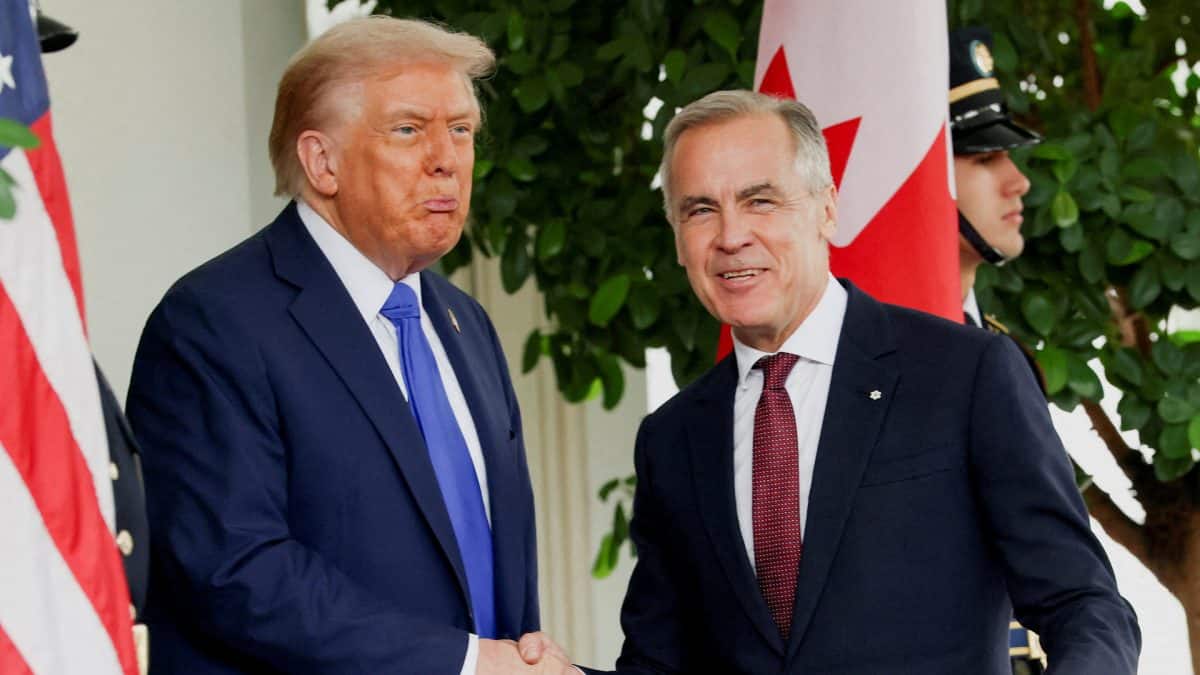
Donald Trump says Canada has taken advantage of the United States, while Mark Carney says Canada is defending its sovereignty.
Washington views tariffs as protection for American workers, while Ottawa says trade disruptions threaten Canadian jobs and businesses.
Negotiations broke down after Canada rejected US demands and sought lower auto, steel and aluminium tariffs.
Canada plans targeted counter-tariffs of 15%, 25% and 50% on $27.6 billion of US imports starting September 8.
The dispute has exposed both US leverage over Canadian exports and Canada’s ability to retaliate through trade, energy and targeted measures.
- Who
- The governments of the United States and Canada, led by Donald Trump and Mark Carney.
- What
- A trade dispute involving tariffs, market access, automobiles, metals, agriculture, energy and Canada’s trade agreements with other countries.
- Where
- Between the United States and Canada in North America.
- When
- Negotiations collapsed after weeks of talks; Canada plans to impose new counter-tariffs on September 8.
- Why
- The countries disagree over whether Canada has benefited unfairly from trade, whether tariffs protect workers, what concessions are required, and how much influence the United States should have over Canada’s trade policy.
Washington’s position
Ottawa’s position
Nature of the relationship
Washington’s position
Donald Trump says Canada has taken advantage of the United States for decades and that the US holds the stronger position.
Ottawa’s position
Mark Carney says Canada must protect its sovereignty and cannot accept being treated as a subsidiary of the United States.
Role of tariffs
Washington’s position
The US presents tariffs as protection for American workers and industries, particularly agriculture, automobiles, steel and aluminium.
Ottawa’s position
Canada says tariffs and trade disruptions threaten Canadian workers, farmers, fishers, families and businesses, making counter-tariffs necessary.
Required concessions
Washington’s position
US officials wanted Canada to reduce retaliatory tariffs and address what Washington viewed as barriers to agriculture, energy and digital trade.
Ottawa’s position
Canada sought more favorable treatment for automobiles, electric vehicles and metal-based products, along with greater certainty that a deal would not be overturned.
Leverage and retaliation
Washington’s position
Trump argues that the US can obtain Canadian goods elsewhere and that Canada needs access to the American market more than the US needs Canadian products.
Ottawa’s position
Canada says its role as a major US supplier and customer gives it tools for targeted retaliation, though measures involving energy or critical minerals could also harm Canada.
Economic integration
Washington’s position
Washington views Canada’s dependence on the US market as a source of leverage and emphasizes the benefits of existing integration.
Ottawa’s position
Ottawa sees dependence on the United States as a vulnerability and wants to diversify Canada’s trade relationships.
Key facts
- Canada’s US export dependence
- About 70% of Canada’s exported goods go to the United States.
- Planned Canadian counter-tariffs
- Rates of 15%, 25% and 50% on $27.6 billion of US imports.
- Products targeted
- Steel, dairy, appliances, agricultural equipment, pulp and paper, and electronics.
- US state exposure
- Canada is the top customer for 26 US states and among the top three export destinations for 45 of the 50 states.
- Canadian energy exports
- Canada supplies 99% of US natural gas imports, 85% of electricity imports and 60% of crude oil imports.
- Natural gas consumption context
- Canadian natural gas represented about 8% of total US natural gas consumption in 2025.
- US alcohol exports to Canada
- US wine exports to Canada fell 78% year over year after provincial alcohol bans; spirits exports fell by more than 70%.
Quotes

Donald Trump
President of the United States, commenting after trade talks with Canada collapsed
“The great Keystone XL Pipeline, long ago killed by Sleepy Joe Biden, may be awoken from the grave!”
 livemint.com
Sources
Related news

Canada-US Trade Talks Collapse as Tariffs Deepen Economic Rift
Trump Escalates Trade Confrontation as Canada Vows Tariff Retaliation

US-Canada Trade Collapse Offers India a Cautionary Lesson
Canada Plans Retaliatory Tariffs as Trump Escalates Trade War
Trump Escalates US-Canada Trade War With 50% Tariffs

Carney Walks Away From Unacceptable U.S. Trade Terms

Carney Accuses US of Negotiation Chaos Amid Trade War
Carney Tells Trump to Stop Memes as Trade Fight Escalates
Trump’s Canada Tariff War Strains Deeply Integrated North American Trade
Canada Tariff Dispute Raises Wider Worry for New Delhi

UPSC Weekly Current Affairs: Environment, Diplomacy, Defence and Economy