1 week ago
Fresh Ujjain Excavation Tests Claims About Ashoka-Era Stupas
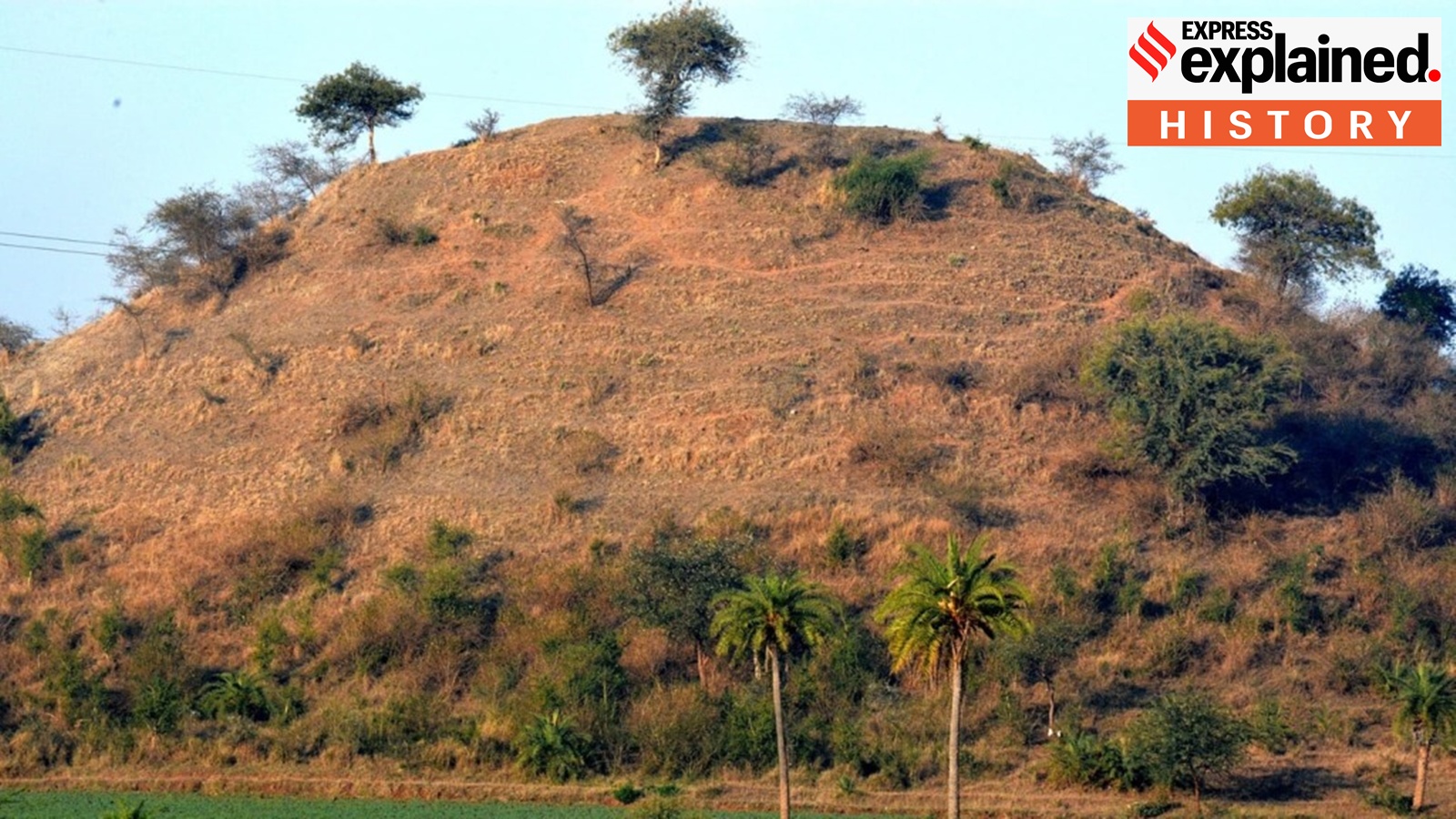
Ujjain was an important city where Ashoka worked as a young royal official.
Two large mounds near the city are believed by some people to be ancient Buddhist stupas.
An excavation in 1938 and 1939 found large bricks and old coins.
These discoveries led archaeologists to connect the mounds to Ashoka’s Mauryan period.
However, some scholars say the old excavation report is not enough to prove this.
Local stories connect one mound to Devi, who was associated with Ashoka, and another to a prison described as a hell.
The Madhya Pradesh government is now funding new research at the site.
Scholars hope the work will study the whole area, not just the large mound.

The Madhya Pradesh government has begun restoring Buddhist monuments associated with Ashoka, starting at Vaishya Tekri.
A 1938–39 excavation found large bricks and punch-marked coins, leading archaeologists to assign the mounds to the Mauryan period.
Historian Himanshu Prabha Ray says the old findings require renewed investigation and warns against drawing firm conclusions too soon.
Historical traditions link Vaishya Tekri with Devi, while Kumhar Tekri is associated with Ashoka’s alleged hellish prison.
Scholars want excavations to examine the wider cultural landscape, including smaller stupas, other structures and monastic activity.
- Who
- The Madhya Pradesh government, archaeologists and historians, including Himanshu Prabha Ray, Peter Skilling, Romila Thapar and Nayanjot Lahiri.
- What
- A fresh excavation and restoration effort is examining Buddhist monuments and the possible Ashoka-era stupas at Vaishya Tekri and nearby Kumhar Tekri.
- Where
- At Vaishya Tekri and Kumhar Tekri near Ujjain, in Madhya Pradesh, India.
- When
- The earlier excavation took place in 1938–39; the new excavation has now begun. Xuanzang described the site in the seventh century.
- Why
- To investigate the mounds’ dates, historical associations and wider cultural landscape, while assessing claims linking them to Ashoka and early Buddhism.
Cautious Archaeological Interpretation
Historical and Traditional Interpretation
Dating and identification of the mounds
Cautious Archaeological Interpretation
Himanshu Prabha Ray says the 1938–39 report is old and influenced by earlier interpretations, so further excavation is needed before firmly identifying the structures as Mauryan or Ashokan.
Historical and Traditional Interpretation
The discovery of large bricks and punch-marked coins, along with the mounds’ size and historical accounts, has led archaeologists and historians to associate them with the Mauryan period.
Ashoka’s physical presence at the site
Cautious Archaeological Interpretation
Ray notes that no known Ashokan pillars have been found in Ujjain, particularly around the stupas, and says the excavations reveal little about the city’s political structure during Ashoka’s time.
Historical and Traditional Interpretation
Peter Skilling considers it plausible that Ashoka erected pillars or engraved edicts at an important centre such as Ujjain, while Ashoka’s appointment there is supported by his edicts and other historical evidence.
Meaning of the two mounds
Cautious Archaeological Interpretation
A broader excavation is needed to determine how the site developed and what structures and communities were present around the stupas.
Historical and Traditional Interpretation
Local Sri Lankan traditions connect Vaishya Tekri with Devi, while Xuanzang’s account and earlier excavations associate Kumhar Tekri with Ashoka’s hellish prison and a third-century BCE burial-cum-cremation ground.
Key facts
- Vaishya Tekri
- The larger mound is described as about 350 feet wide at its base and 100 feet high.
- Earlier excavation
- The Department of Archaeology of the erstwhile Gwalior State excavated the site in 1938–39.
- Earlier finds
- Large bricks and punch-marked coins were reported from the excavation.
- Kumhar Tekri
- The nearby smaller mound has been associated in travellers’ accounts with a hellish prison attributed to Ashoka.
- Ujjain’s historical role
- Ujjain was the capital of Avanti and an important commercial centre connected to western ports and Pataliputra.
- Ashoka’s connection
- Historical accounts and Ashoka’s edicts support his appointment as a prince or viceroy at Ujjain.
- Scholarly recommendation
- Researchers have urged the government to examine smaller stupas, surrounding structures, cemeteries and evidence of monastic communities.
Quotes
Himanshu Prabha Ray
Academic scholar in Indian archaeology
“I think we are jumping the gun. We need to investigate further beyond the 1938-39 excavation.”
 indianexpress.com
Peter Skilling
Professor of archaeology at the University of California, Berkeley
“The largest stupa, popularly called Vaisya Tekri, is about 350 feet at its base and 100 feet high.”
indianexpress.com
Sources
Related news
Ujjain May Sit on 2,200-Year-Old Stupa Bigger Than Sanchi
12th Century Jain Inscription Reveals Lost Vijay Parshvanath Temple Evidence

Ujjain Records 44mm Rain, Season Tally Reaches 23 Inches
Ancient Shiva Temples and Champa Bavdi Await Restoration
Five Lesser-Known Buddhist Gems Across North India’s Heritage
Education is India's most powerful tool against child marriage

Romila Thapar's Memoir: Gardening Life and History
Assam to Rewrite History Textbooks

Historically Tempered Launches Video Series on Ancient Indian Diets