

3 weeks ago
NASA Extends Voyager 2 Mission, Invites ISRO to Moon Base
This week's science news is full of big discoveries.
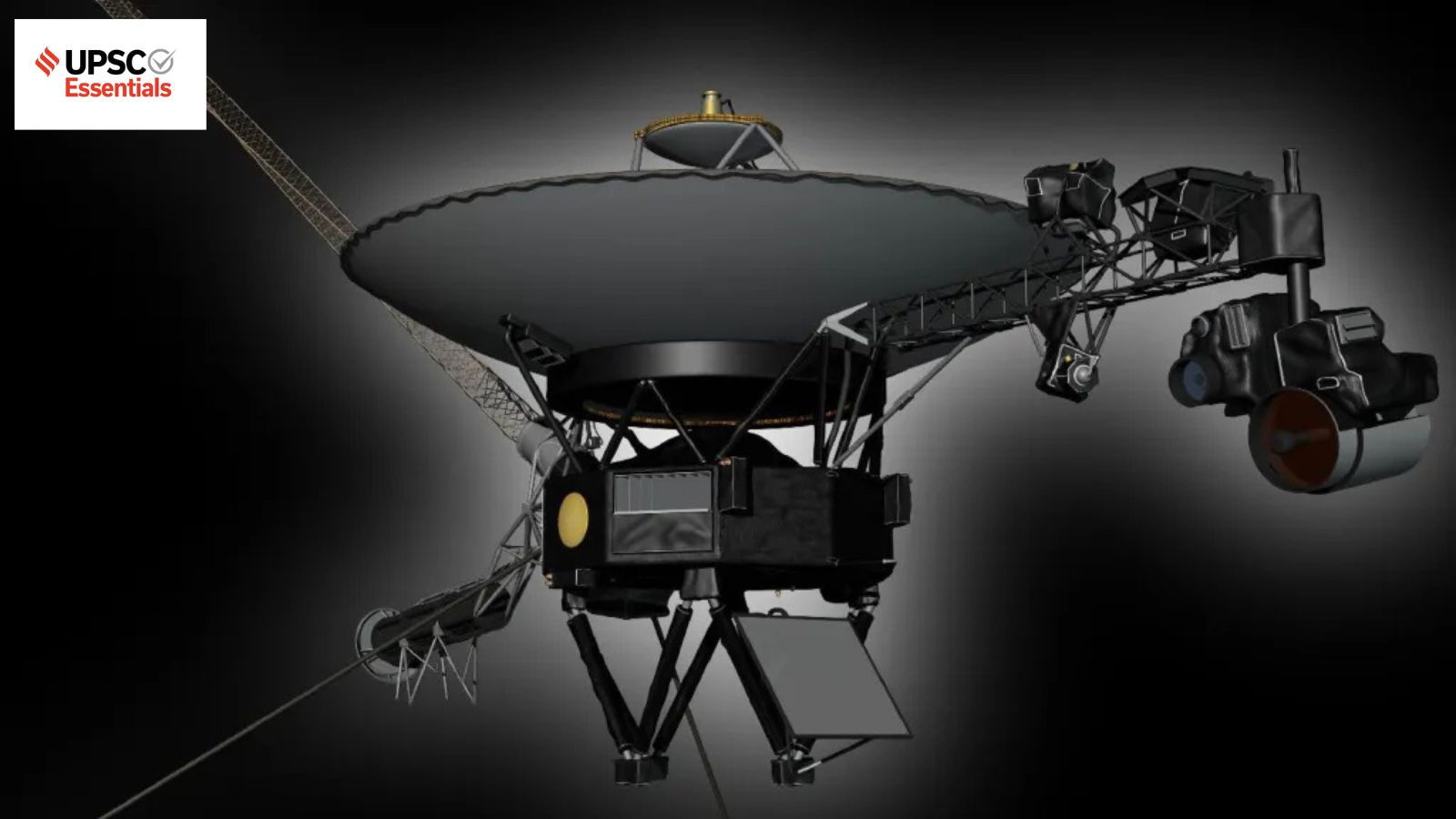
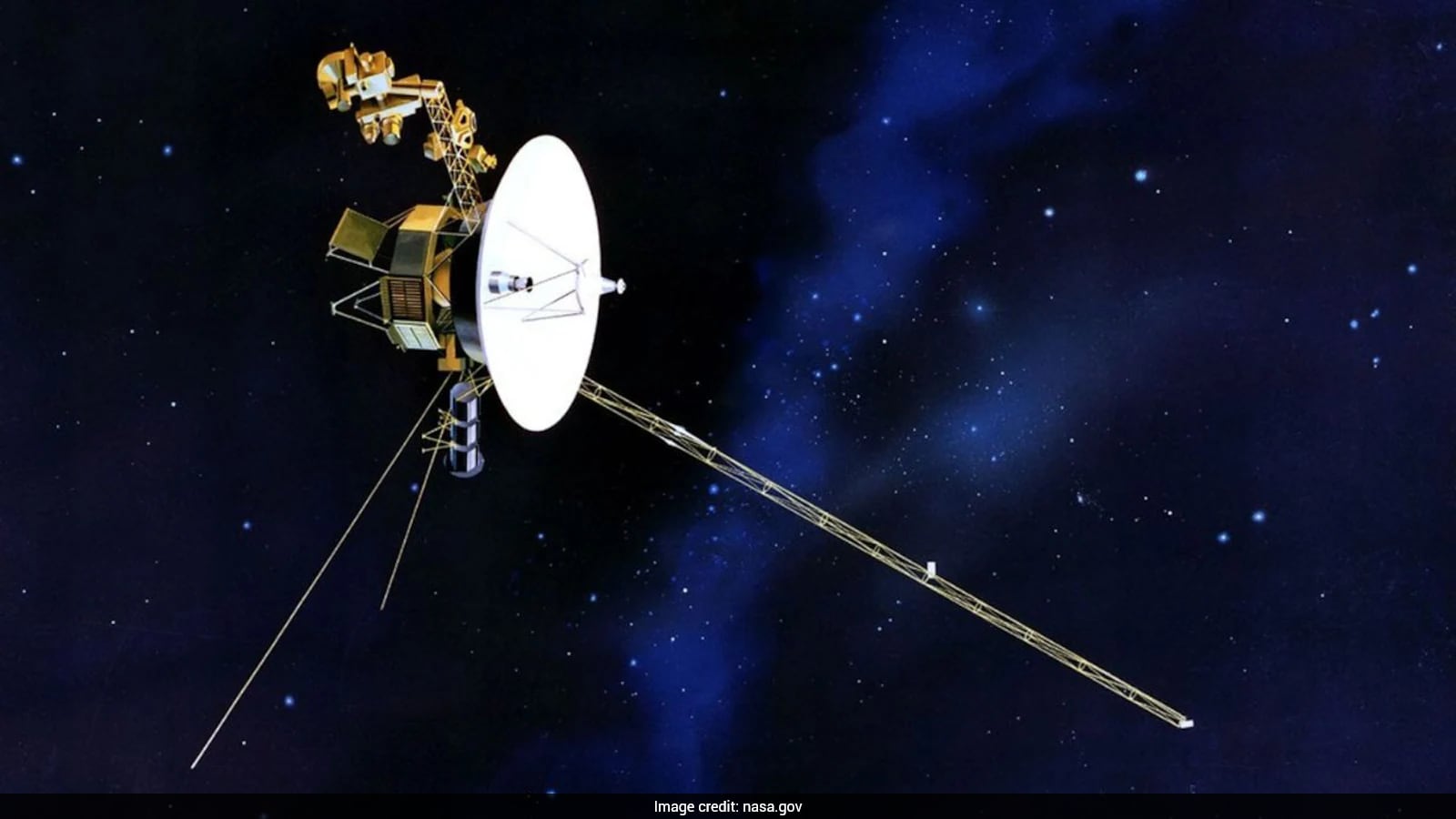
Almost 50 years ago, NASA sent two spacecraft called Voyager 1 and Voyager 2 into space, and they are still working today.
They are the farthest objects humans have ever made.
Voyager 2 is so far away that engineers had to invent a clever 'Big Bang' power trick so it can keep doing science for at least one more year.
Scientists also used artificial intelligence, or AI, to create 16 brand-new viruses that are completely safe for people because they only attack bacteria.
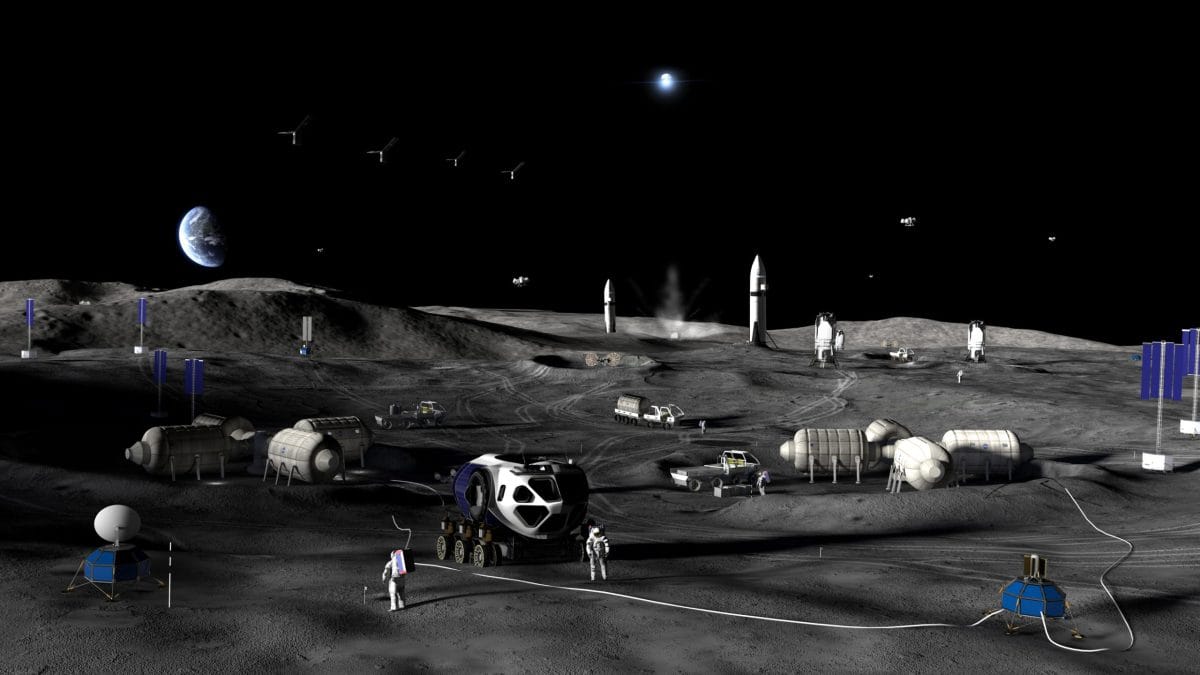
NASA has asked India's space agency, ISRO, to help build the Moon Base, a place where astronauts will live and work near the Moon's South Pole.
On August 12, people in parts of Europe can see a rare total solar eclipse, when the Moon completely hides the Sun.
And in Bengaluru, scientists found a smart way to turn old milk packets into benches instead of throwing them away.
Science helps us explore space and take care of our planet!

NASA engineers applied a 'Big Bang' power-saving fix to Voyager 2, extending its deep-space mission by at least another year.
Researchers used generative AI to design 16 entirely new bacteriophages from scratch, as reported in the journal Science.
NASA has invited ISRO to join its Moon Base programme, humanity's first lunar outpost planned near the Moon's South Pole.
Europe is witnessing its first total solar eclipse in 27 years on August 12 along a narrow path of totality.
Bengaluru's Indian Institute of Science found a way to recycle milk packets into benches using vitrimers.
- Who
- NASA and its Jet Propulsion Laboratory engineers, ISRO, researchers at Bengaluru's Indian Institute of Science, and international scientists.
- What
- A power-saving upgrade to Voyager 2, AI-designed bacteriophages, NASA's invitation to ISRO for the Moon Base programme, a total solar eclipse over Europe, and a new method to recycle milk packets.
- Where
- Interstellar space, Bengaluru in India, and the eclipse's path of totality across northern Russia, Greenland, western Iceland, northern Spain and northeast Portugal.
- When
- August 2026, including the total solar eclipse on August 12 and the India-US Civil Space Joint Working Group meeting on August 5-6.
- Why
- To extend the Voyager mission, advance lunar exploration and synthetic biology, and convert plastic milk packet waste into useful products.
Key facts
- Voyager 2 distance from Earth
- 21.35 billion km (13 billion miles)
- Voyager 2 launch year
- 1977
- RTG power loss
- About 4 watts per year
- AI-designed viruses
- 16 entirely new bacteriophages, per a study in the journal Science
- Moon Base location
- Near the Moon's South Pole
- NASA-ISRO meeting
- Ninth India-US Civil Space Joint Working Group, Bengaluru, August 5-6
- Total solar eclipse
- August 12, 2026 - Europe's first in 27 years
- Milk packet recycling
- Polyethylene combined with recycled polypropylene using vitrimers (IISc)
Quotes

Nasa engineers
NASA engineering team responsible for Voyager 2 upgrades
“Nasa engineers have successfully implemented a new power‑saving upgrade on Voyager 2, extending the iconic spacecraft’s science mission by at least another year”
 indianexpress.com
Sources
Related news
NASA Keeps Voyager 2 Alive With 'Big Bang' Power Swap
NASA Invites ISRO to Join Moon Base Programme

NASA Finds Earth Microbes Could Survive Near Moon’s South Pole

India Plans Gaganyaan, Venus Mission and Broader Space Expansion

NASA invites ISRO to join its ambitious Moon Base programme

NASA Invites ISRO to Join Moon Base under Artemis Accords
Ikea cuts European prices as cost pressures weaken demand

Europe's Bond Selloff Deepens as Middle East Tensions Lift Oil

China’s Rapid Car Development Faces Growing Safety Scrutiny
CNG Prices Rise Rs 2 per Kilogram in Pune
China Challenges US Leadership in Escalating Global AI Contest
