3 weeks ago
How Christian Thinkers Debated Gender Beyond the Binary
Surekha Davies’s book studies how people in the ancient Roman world and medieval Europe thought about gender.
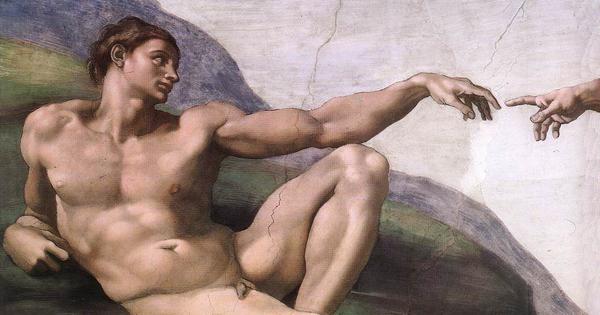
Some readers of the Bible believed Adam may once have combined male and female qualities.
Others believed God created separate male and female humans from the beginning.
Some thinkers said people became sexual only after humanity sinned.
They also wondered whether everyone would become sexless after resurrection.
These ideas affected rules about marriage, inheritance, priesthood, and sexual behavior.
Many authorities eventually treated being male or female as the normal human condition.
However, scholars in Christian, Jewish, Greek, and Muslim traditions continued to disagree.
The book also shows that these ideas shaped how intersex people were treated.

Christian scholars from about 200 to 1400 CE debated whether humanity began as an androgynous whole or as distinctly male and female.
Interpretations of Adam and Eve influenced ideas about marriage, women’s subordination, law, political authority, and the boundaries of humanity.
Some theologians, including Gregory of Nyssa, said sex and sexuality emerged after the Fall and would disappear after resurrection.
Augustine and later medieval thinkers increasingly defended a male-female binary, often classifying intersex bodies as flawed or requiring assignment to one sex.
Islamic, Jewish, Greek, and Christian scholarship produced competing views, while medieval authorities sometimes tried to alter or regulate nonbinary bodies and behavior.
- Who
- Christian scholars, theologians, jurists, physicians, and rulers, alongside Jewish, Greek, and Muslim thinkers discussed by Surekha Davies.
- What
- The book examines historical debates about primal androgyny, nonbinary and intersex bodies, gender, sexuality, and the definition of humanity.
- Where
- The late Roman Empire, medieval Europe, and connected scholarly centers in the Islamicate world, including Baghdad and cities in medieval Spain.
- When
- Approximately 200–1400 CE, with some arguments drawing on earlier Greek and Jewish traditions.
- Why
- Interpretations of human creation and resurrection influenced laws and social ideas about marriage, gender roles, sexual behavior, authority, and who counted as fully human.
Nonbinary and Androgynous Interpretations
Binary and Sexed Interpretations
Humanity’s origin
Nonbinary and Androgynous Interpretations
Some traditions described the first human as combining male and female qualities, predating or transcending the division into two sexes.
Binary and Sexed Interpretations
Augustine and other influential thinkers argued that humans were embodied and sexually differentiated from the beginning.
Meaning of bodily variation
Nonbinary and Androgynous Interpretations
Gregory of Nyssa and some other traditions treated sex and sexuality as temporary imperfections that could disappear after resurrection; some Islamic writings also described intersex categories without calling them monstrous.
Binary and Sexed Interpretations
Aristotle, Augustine, and later medieval thinkers often treated bodies with male and female traits as abnormal, redundant, or ultimately assignable to male or female.
Social and legal order
Nonbinary and Androgynous Interpretations
Alternative readings of Adam and Eve could challenge the idea that male authority, monogamous marriage, and gender hierarchy were inevitable.
Binary and Sexed Interpretations
Binary interpretations supported rules limiting recognized sexual activity to heterosexual marriage and assigning different legal powers and roles to men and women.
Key facts
- Book
- Humans: A Monstrous History by Surekha Davies
- Period examined
- Approximately 200–1400 CE
- Central biblical figure
- Adam, whose creation was interpreted by some thinkers as originally androgynous
- Major theological question
- Whether humanity began as one male-female whole or as separate male and female individuals
- Resurrection question
- Some thinkers debated whether perfected bodies would be sexless or retain sex
- Binary legal effects
- Sex assignment affected marriage, inheritance, trial testimony, choosing heirs, and priesthood
- Scholarly traditions
- Greek, Jewish, Christian, and Muslim traditions developed differing and sometimes contradictory accounts
Sources
Related news
Anthropic Consults Religious Scholars About AI Morality and Consciousness

D.H. Lawrence Framed Sexuality as Sacred Human Experience
East of Eden Reconsiders Cathy Ames as Monster or Misunderstood
Chief Minister’s Jadavpur March Sparks Debate Over Saffron Power

Experts Challenge British-Interpolation Claims About Manusmriti Bias