45 mins ago
Chief Minister’s Jadavpur March Sparks Debate Over Saffron Power

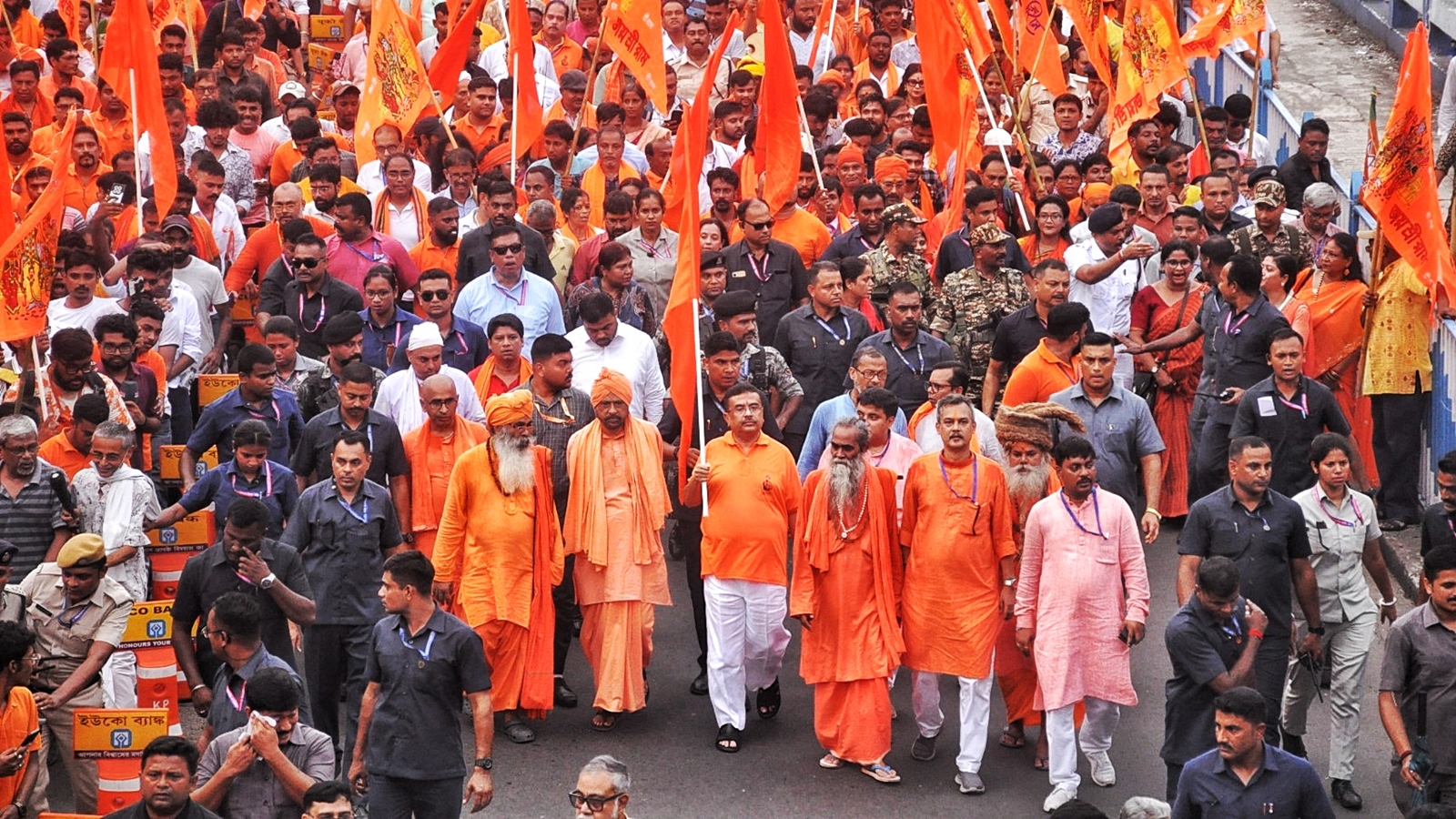
On September 9, Bengal’s Chief Minister went to Jadavpur University with a crowd.
The visit was presented as a warning about students’ reported behavior, including smoking ganja and using free speech.
Some men in the group wore only saffron cloth.
Some people thought they were Naga sadhus, religious ascetics who traditionally give up ordinary possessions.
The article says these ascetics have a long history connected to spiritual and philosophical questions.
It also says saffron symbols can be used for political purposes, even though ascetics were traditionally associated with standing apart from power.
The writer connects these figures to ancient Indian thinkers called gymnosophists, or naked philosophers.
The main question is whether the men represented religious culture, political theater, or both.

On September 9, Bengal’s Chief Minister marched with a crowd to Jadavpur University over students’ reported conduct, including smoking ganja and exercising free speech.
The gathering included long-haired, bearded men dressed in saffron strips, presented as symbols of “saffron pride.”
The appearance followed an earlier university episode in which the Nandalal Bose-designed emblem was seriously damaged and described as “saffron hooliganism.”
Some observers viewed the men as Naga sadhus and part of India’s religious culture, while the article argues that their presence also carried political meaning.
The article links Naga sadhus to a long tradition of naked philosophers and ascetics associated with challenging worldly power, fixed opinions, and conventional ideas of the self.
- Who
- Bengal’s Chief Minister, a crowd accompanying the Chief Minister, Jadavpur University students, and men identified by some observers as Naga sadhus.
- What
- The Chief Minister marched to Jadavpur University to object to students’ reported conduct, while saffron-clad ascetics became a subject of political and cultural debate.
- Where
- Jadavpur University in Bengal, particularly near its gates.
- When
- September 9; the article does not specify the year.
- Why
- The march was described as a warning about reported student behavior and as a possible assertion of “saffron pride” following an earlier university controversy.
Cultural and Religious Interpretation
Political Appropriation Interpretation
Meaning of the saffron-clad men
Cultural and Religious Interpretation
They may have been Naga sadhus, ascetics associated with Shiva, renunciation, and a longstanding religious tradition.
Political Appropriation Interpretation
Their presence near the university gates may have been organized to project “saffron pride” and give political symbolism to the march.
How the public should view Naga sadhus
Cultural and Religious Interpretation
Treating them as ridiculous or outrageous can reflect a narrow view of religious and cultural diversity.
Political Appropriation Interpretation
Focusing only on their religious identity can obscure the contradiction between ascetic traditions that stand apart from worldly power and their use in a political gathering.
Meaning of the tradition
Cultural and Religious Interpretation
The naked-philosopher tradition represents spiritual inquiry, calm, and freedom from fixed opinions and conventional social roles.
Political Appropriation Interpretation
The article argues that saffron and ascetic imagery have been appropriated by political power, contrary to the tradition’s historical opposition to worldly pride.
Key facts
- Date
- September 9; no year is specified.
- Location
- Jadavpur University, Bengal.
- Reported student conduct
- Smoking ganja and engaging in free speech, according to the article’s description.
- Saffron-clad group
- Long-haired, bearded men wearing strips of saffron accompanied the Chief Minister’s group.
- Earlier controversy
- The Nandalal Bose-designed university emblem was seriously damaged in a previous episode.
- Phrase used for earlier episode
- “Gerua goondami,” translated as “saffron hooliganism.”
- Historical reference
- The article traces the lineage of naked philosophers to gymnosophists encountered during Alexander’s incursion into India.
Quotes

Diogenes of Sinope
Ancient Greek Cynic philosopher described as a near-naked ascetic who rejected worldly power.
“The things themselves are equally indifferent, and unstable, and indeterminate, and therefore neither our senses nor our opinions are either true or false. For this reason then we must not trust them, but be without opinions, and without bias, and without wavering, saying of every single thing that it no more is than is not, or both is and is not, or neither is nor is not.”
 indianexpress.com
“Please stand aside: you are blocking the sun.”
indianexpress.com
Sources
Related news

Why Vedic Sages Might Be Called Intellectual Naxals Today
Suvendu Adhikari vows to uproot ‘Free Kashmir’ slogans at Jadavpur

Suvendu Adhikari's Saffron Samman Yatra Targets Bengal's Nationalist Debate

Suvendu Adhikari Warns Jadavpur Students Over ‘Threat Culture’