1 hr ago
Which Common Food Rules Are Actually True for Health?
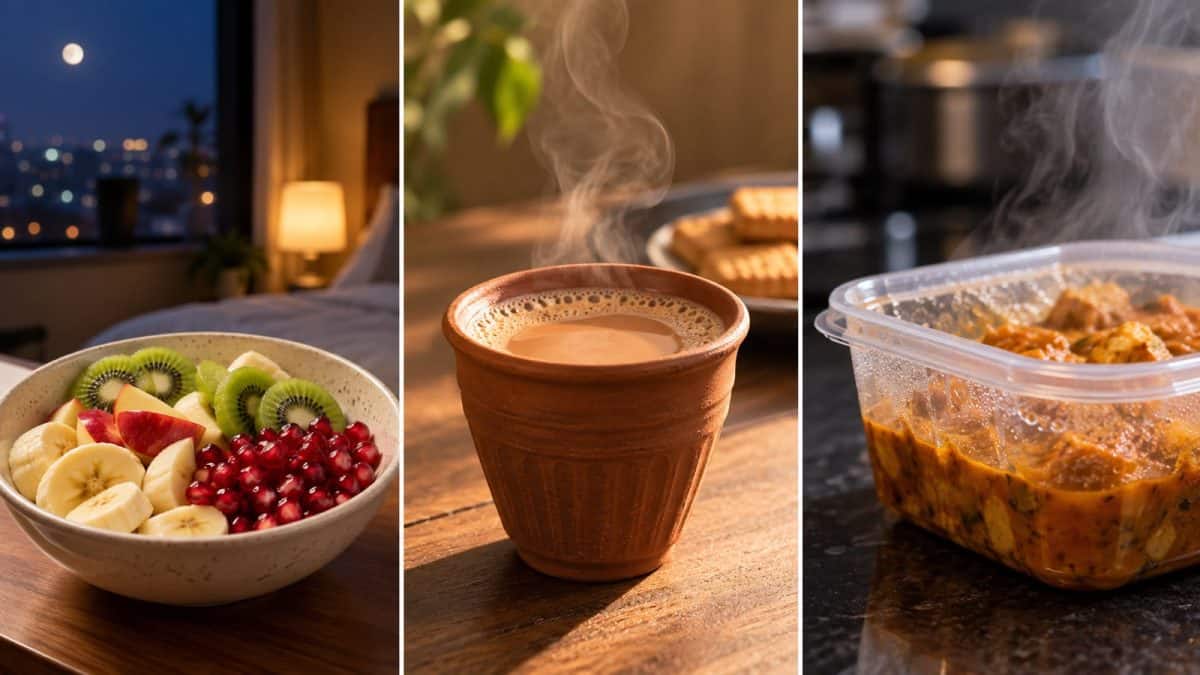
Eating fruit after sunset is usually not harmful for healthy people.
Fruit does not lose its nutrition or automatically turn into fat at night.
However, eating very large meals late may be harder for the body to process.
People with diabetes, acidity or sleep problems should be careful with late-night eating.
Tea can make it harder for the body to absorb some iron from food.
This matters more for people who already have low iron or anaemia.
It is better to wait one or two hours after meals before drinking tea or coffee.
Hot food should not be reheated in damaged or unsuitable plastic containers.
Glass, ceramic and stainless steel are safer choices for very hot food.
The main lesson is to use sensible portions and avoid rigid food rules.

Eating whole fruit at night is generally safe for healthy people, though large late-night portions may affect metabolism or sleep.
Tea and coffee can reduce absorption of non-haem iron when consumed with meals, especially affecting people vulnerable to iron deficiency.
Experts recommend spacing tea or coffee one to two hours away from meals and adding vitamin C-rich foods to improve iron uptake.
Heat can increase chemical migration from unsuitable, damaged, oily or acidic-contact plastics into food.
Glass, ceramic or stainless steel are safer choices for piping hot food, while single-use takeaway containers should not be reheated.
- Who
- Clinical nutrition expert Charu Dua and people seeking guidance about common dietary practices.
- What
- The article examines whether eating fruit at night, drinking tea after meals and placing hot food in plastic are harmful.
- Where
- The discussion is framed around Indian households and the Indian nutritional context.
- When
- The guidance applies to daily eating and food-storage practices; no specific publication date is provided.
- Why
- To distinguish evidence-based precautions from oversimplified food myths and help people make informed choices.
Key facts
- Fruit at night
- Whole fruit is generally safe for healthy people at night, but large late-night portions may affect glucose regulation, acidity or sleep.
- Tea and iron
- Tea polyphenols and tannins can reduce absorption of non-haem iron when consumed with meals.
- Recommended gap
- Tea or coffee should be spaced at least one to two hours away from meals, especially for people at risk of iron deficiency.
- Vitamin C
- Lemon, amla, guava and capsicum can help improve iron absorption.
- Plastic and heat
- Heat may increase chemical migration from unsuitable or damaged plastic, particularly with hot, oily or acidic food.
- Safer containers
- Glass, ceramic and stainless steel are preferred for piping hot food; only clearly labelled microwave-safe plastic should be used for reheating.
- Overall conclusion
- The article ranks tea consumed with meals as the most direct nutritional concern, while calling the nighttime-fruit restriction an oversimplification.
Quotes
Charu Dua
Head of Clinical Nutrition at Amrita Hospital, Faridabad
“Tea contains polyphenols and tannins which can bind with non-haem iron and reduce its absorption.”
 firstpost.com
“Whenever possible, transfer piping hot food to glass, ceramic or stainless steel dishes.”
firstpost.com
Sources
Related news

Doctor Explains Health Risks of Eating Dinner After 9 PM
Clock-Based Eating May Matter More Than Fasting Duration

Dr Manthena Urges Natural Living, Yoga and Disciplined Eating

Sonam Bajwa Explains Delayed Breakfast After Nighttime Carbs

Deepshikha Nagpal Shares Parathas, Early Dinner Diet Routine

Anahat Singh Defends Her Six-Piece Bedtime Chocolate Ritual
Panel Urges Biannual Kidney Tests to Detect Silent Disease
Why Bigg Boss Contestants React Differently Under Constant Surveillance
Foamy Urine: When It May Signal Kidney Problems
Hygiene Hypothesis Links Microbial Diversity, Immunity And Allergic Disease