

1 hr ago
Why Bigg Boss Contestants React Differently Under Constant Surveillance
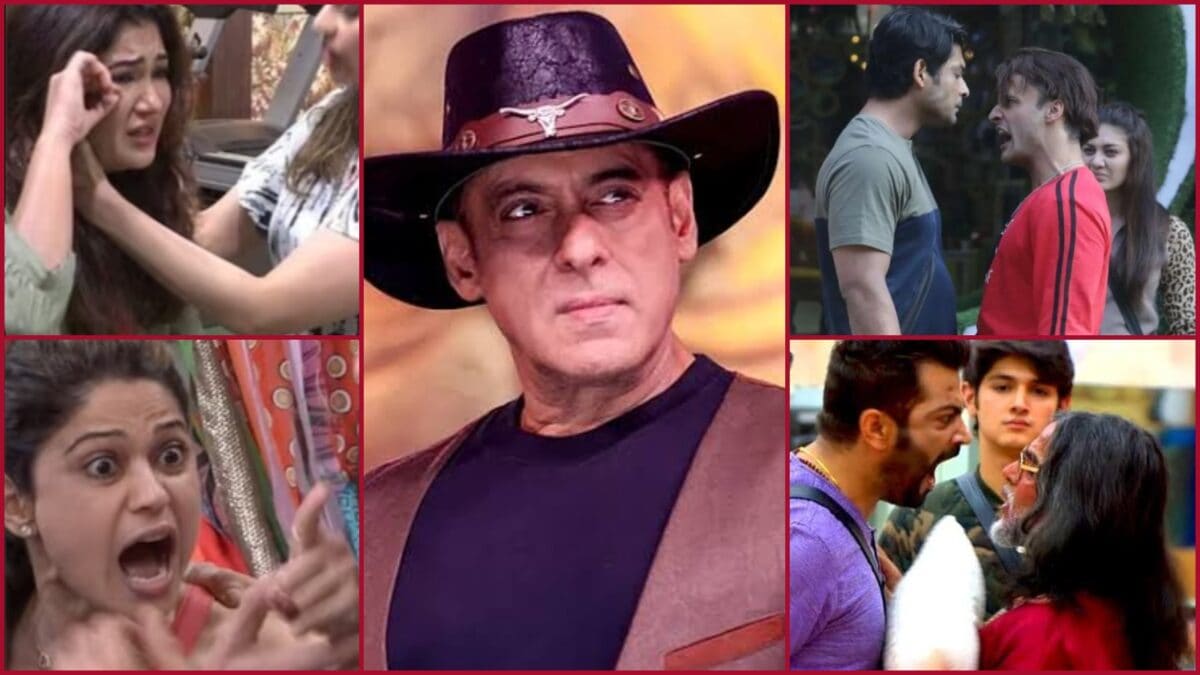
Bigg Boss contestants live with strangers while cameras and microphones record much of what they do.
They have little privacy and cannot easily leave after an argument.
This can make normal problems feel much bigger.
Stress and poor sleep may make people react more quickly or emotionally.
Contestants may also worry about how viewers will judge them.
Groups and alliances can make disagreements spread through the whole house.
Some people become louder, while others become quiet or withdrawn.
Their behaviour inside the house may not show their complete personality outside it.
Viewers should not assume that strong emotions automatically mean someone has a mental-health disorder.

Continuous cameras, limited privacy and competition can increase contestants’ self-consciousness and stress.
The lack of private space may keep conflicts active and limit opportunities for emotional recovery.
Group alliances can quickly create divisions, making minor disagreements escalate into broader “us versus them” conflicts.
Stress, disrupted sleep and uncertainty may reduce emotional regulation, though personality and past experiences also influence reactions.
Viewers should not diagnose contestants from televised behaviour because diagnosis requires a proper clinical assessment.
- Who
- Bigg Boss contestants and the psychologists examining behaviour in highly monitored environments, including Dr. Gayatri Bhatia.
- What
- The article explains how constant surveillance, competition, limited privacy, group dynamics and stress can influence contestants’ behaviour and emotional reactions.
- Where
- Inside the Bigg Boss house.
- When
- Why
- The unusual environment can heighten self-consciousness, interpersonal sensitivity, emotional pressure and concern about public judgment.
Key facts
- Main pressures
- Constant observation, competition, limited privacy and emotional uncertainty.
- Potential effects
- Greater self-monitoring, interpersonal sensitivity and difficulty regulating emotions.
- Conflict factor
- Contestants may remain around one another after arguments, allowing negative emotions to continue.
- Group behaviour
- Alliances and divisions can create an “us versus them” dynamic.
- Individual differences
- Personality, previous experiences, coping mechanisms and vulnerability affect responses to stress.
- Clinical caution
- Anger, anxiety, withdrawal or unpredictability on television do not by themselves establish a psychiatric diagnosis.
- Expert quoted
- Dr. Gayatri Bhatia, Senior Consultant, Psychiatry, Amrita Hospital, Faridabad.
Quotes
Dr. Gayatri Bhatia
Senior Consultant, Psychiatry, Amrita Hospital, Faridabad
“The psychological impact of living under 24/7 camera surveillance extends beyond the presence of cameras. Contestants operate within an environment of constant observation, competition, limited privacy and emotional uncertainty. Such conditions may heighten self-consciousness, increase interpersonal sensitivity and influence how individuals regulate their emotions.”
 NDTV
NDTV
“The crucial factor is how contestants perceive and respond to the environment. Healthy coping mechanisms, adequate rest, emotional support and access to qualified mental-health professionals are essential.”
NDTV
Sources
Related news
Why Viewers Get Hooked on Bigg Boss Fights Explained

Bigg Boss Bangla House Revealed Before New Season Begins

Nehal Chudasama Says Bigg Boss 20 Triggered Flashbacks

Tanya Mittal Recalls Edited Media Round Inside Bigg Boss

Navdeep Defends Bigg Boss Telugu Auditions After Uppal Balu Allegations
Salman Khan Calls Qazi Touqeer Bigg Boss 20’s Rockstar

Salman Khan Praises Kanika Mann and Gullu’s Chemistry
Bigg Boss 20 Week 1 Faces First Elimination Uncertainty
Salman Khan Calls Qazi Touqeer Bigg Boss 20’s Rockstar
