1 hr ago
Two Washington moves could threaten the US-India trade deal
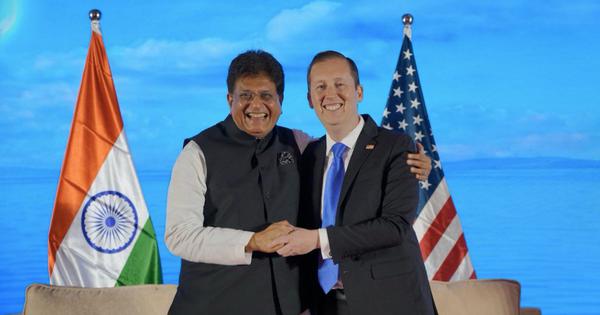
The United States and India are trying to finish a trade agreement.
The US ambassador said the deal was almost complete.
But two new US policies could make the agreement harder to complete.
One policy could punish countries that buy large amounts of Russian oil or gas with very high tariffs.
India buys a large amount of Russian oil, so it could be affected.
Another policy would put high tariffs on generic medicines unless companies make them in the United States.
Indian drug companies sell many medicines to the US and may move more production there to avoid the tariffs.
This could also affect how many medicines are made in India.

US Ambassador Sergio Gor said the US-India trade agreement was nearly finalised, with almost everything settled in principle.
A Senate bill targeting countries buying Russian oil or gas could impose tariffs of up to 100% on Indian goods, though the article also cites a proposed 500% tariff on Russian imports.
The bill passed the Senate 86-11 in early August and is expected to receive House consideration after it reconvenes in early September.
President Donald Trump proposed 100% tariffs on generic medicines from 2028, rising to 200% in 2029 for companies that do not produce in the United States.
Indian pharmaceutical companies have announced more than $19.1 billion in planned US investments, raising questions about domestic production and medicine availability in India.
- Who
- The United States, India, US Ambassador Sergio Gor, President Donald Trump, and US senators including Lindsey Graham.
- What
- Two proposed US tariff measures could increase trade friction and threaten the near-final US-India trade agreement.
- Where
- The measures were initiated in Washington and would affect trade between the United States and India.
- When
- The Senate bill passed 86-11 in early August 2026; House consideration is expected after it reconvenes in early September, while generic-medicine tariffs are proposed for 2028.
- Why
- The Russia-related bill seeks to increase pressure on Russia over its war against Ukraine, while the pharmaceutical tariffs seek to move generic-drug production to the United States.
Indian trade concerns
US policy objectives
Tariffs linked to Russian oil
Indian trade concerns
India could face severe new tariffs because it is a major buyer of Russian crude, potentially undermining the trade agreement and increasing costs for Indian exports.
US policy objectives
The proposed bill is intended to tighten economic pressure on Russia over its continuing war against Ukraine and target countries that facilitate sanctions evasion.
Generic-drug production
Indian trade concerns
Indian pharmaceutical companies could divert production and investment to the United States, creating uncertainty about domestic manufacturing and medicine availability in India.
US policy objectives
The proposed tariffs are designed to encourage generic-drug companies to build plants and equipment in the United States.
Effect on the trade deal
Indian trade concerns
The two initiatives could create another tariff dispute and derail an agreement that Washington and New Delhi have said is close to completion.
US policy objectives
The US administration has continued pursuing tariffs and reshoring policies despite the reported progress toward a bilateral trade agreement.
Key facts
- Trade agreement status
- Sergio Gor said almost everything in the US-India agreement was complete in principle.
- Russia-related bill
- The Lindsey O Graham Sanctioning Russia and Iran Act of 2026 passed the Senate 86-11 in early August.
- Potential India exposure
- India was identified as the second-largest buyer of Russian crude oil in July 2026, with purchases valued at more than $7.3 billion.
- Oil import dependence
- Indian government data cited in the article shows Russian crude’s share of India’s total crude imports rose from 30% to nearly 43% between January and June 2026.
- Pharmaceutical exports
- Pharmaceuticals accounted for about 13% of India’s exports to the United States in 2025-26.
- Generic-medicine proposal
- Trump proposed a 100% tariff on generic medicines from 2028, increasing to 200% in 2029 for companies that do not build production in the United States.
- Planned investment
- Indian companies, including pharmaceutical firms, have announced more than $19.1 billion in planned US production-capacity investments.
Quotes

Donald Trump
US president whose administration proposed the tariffs and cited India’s energy commitments
“Reshore Generic Pharmaceutical Production into America, with a penalty to those Companies that decide not to build Plant and Equipment within the stated period of time given to them”
 scroll.in
“committed to stop directly or indirectly importing Russian Federation oil, has represented that it will purchase United States energy products from the United States”
scroll.in
Sources
Related news
US Senate Sanctions Bill Threatens India's Russian Oil Lifeline
US Senate bill threatens 100% tariffs on Russian crude importers

US Senate passes Russia bill threatening 100% tariffs on India

Senator Paul Warns 100% Tariff on India Is 'Self-Defeating'
US Senate passes 100% tariff bill on Russian oil importers
US Senate Sanctions Bill Could Hit India's Russian Oil Imports
Quad Sherpas Review Security, Technology and Economic Cooperation
India-US Trade Deal Awaits Preferential Tariff Terms From Washington

Goyal to Visit United States for Trade Agreement Talks
Indian Firms Invest $40 Billion in U.S., Supporting Jobs