8 hrs ago
Punjab Women Turn Small Farms Into Fisheries Enterprises
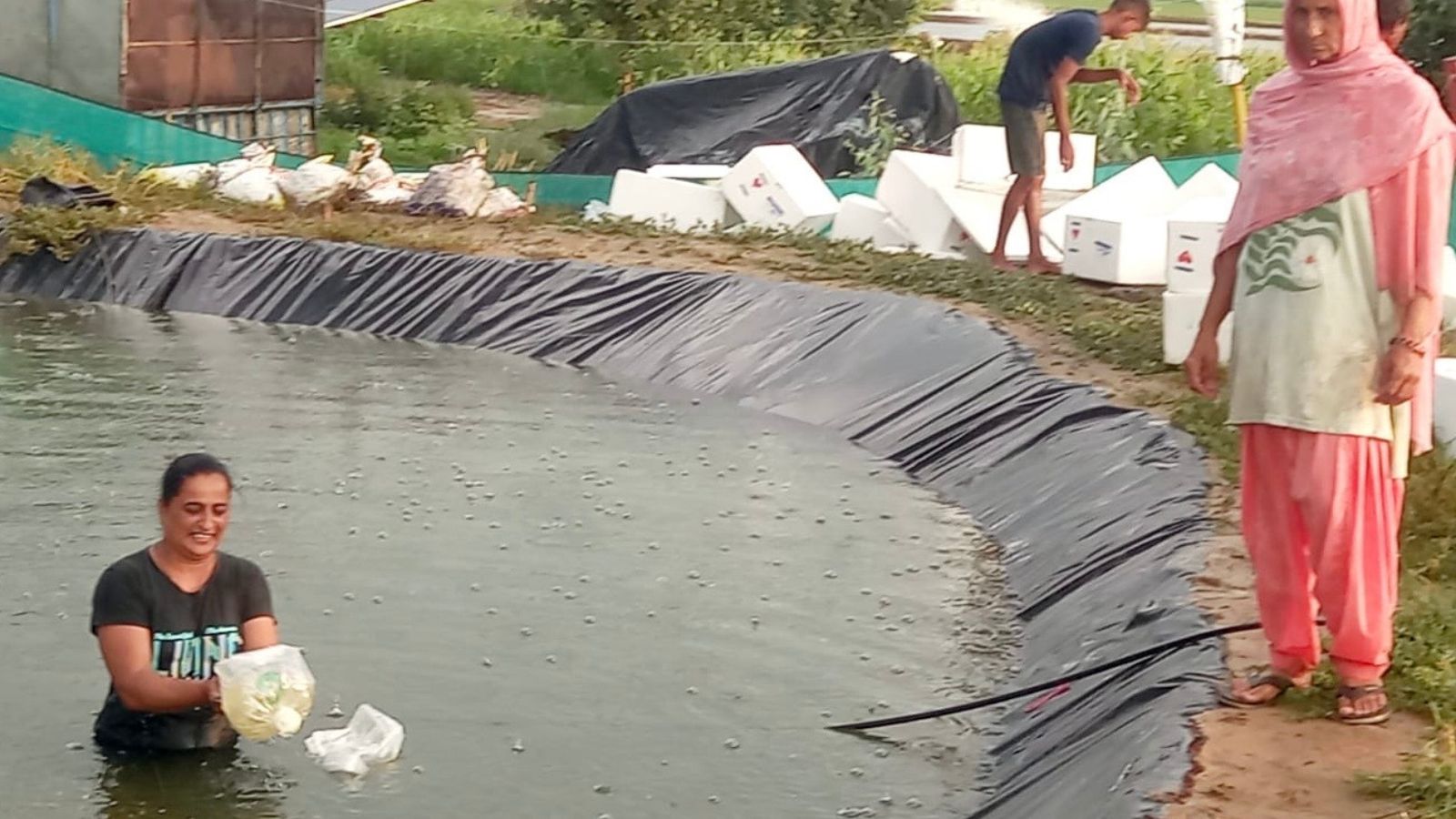
Some women in Punjab are trying new ways to earn from their farms.
Instead of growing only wheat or rice, they are raising fish or shrimp.
Kamal Sahney uses 50 tanks to raise fish seeds on a small plot.
Other women combine fish ponds with vegetables, geese, solar power, or shrimp businesses.
One family has grown its shrimp farm from four acres to about 35 acres.
Government support helped several of the women pay for projects and training.
Some have also created jobs or sell products and transport services.
Their examples show how farming in Punjab can include more than crops.

Kamal Sahney built 50 biofloc tanks on about 1.25 acres, with roughly 60% of the ₹50 lakh project cost subsidized under PMMSY.
Punjab data through September 2026 shows women received ₹1,947.96 lakh of ₹3,667.08 lakh in scheme subsidies, benefiting 239 women.
Women beneficiaries are pursuing fish-seed production, integrated fish farming, shrimp cultivation, and refrigerated transport and marketing.
Rupinder Kaur’s family expanded shrimp farming from four acres in 2021 to about 35 acres; the article reports ₹7–8 lakh annual profit per acre on 13.5 acres.
Punjab has about 45,156 acres under fish farming and produces around 2.11 lakh metric tonnes of fish annually, according to the department.
- Who
- Women farmers and fisheries entrepreneurs in Punjab, including Kamal Sahney, Ahneer Kaur, Rupinder Kaur and Harmanpreet Kaur.
- What
- They are developing fish and shrimp farming, fish-seed production, integrated farms, and fisheries transport and marketing, with support including PMMSY subsidies and training.
- Where
- Punjab, India, including Jalandhar, Muktsar Sahib, Fazilka and Bathinda districts.
- When
- The enterprises began or expanded at different times, including 2021, 2024 and 2025; the article reports scheme data through September 2026.
- Why
- The initiatives offer alternatives to conventional farming, including on small holdings and land affected by salinity or waterlogging; government assistance and training support participation.
Diversifying into aquaculture
Conventional farming challenges
Alternative farm enterprises
Diversifying into aquaculture
Women beneficiaries and fisheries officials describe aquaculture as a way to diversify income, make productive use of small holdings, and farm in saline or waterlogged areas.
Conventional farming challenges
The article says Punjab’s farm economy has long revolved around wheat and paddy, while salinity and waterlogging make conventional agriculture increasingly difficult in some southwestern districts; it does not present an opposing group arguing against aquaculture.
Key facts
- PMMSY launch
- September 10, 2020; the scheme was extended until September 2026.
- Punjab PMMSY subsidy disbursed
- ₹3,667.08 lakh through September 2026, according to the article.
- Women beneficiaries
- 239 women received ₹1,947.96 lakh, or 53% of the total subsidy disbursed.
- Women’s subsidy rate
- 60% of prescribed project cost for specified PMMSY components; the general-category rate for men is 40%.
- Sahney’s biofloc project
- 50 tanks on about 1.25 acres; project cost around ₹50 lakh, with about ₹30 lakh in subsidy.
- Shrimp farming in Punjab
- About 1,120 acres, producing around 2,792.30 tonnes, according to department data cited in the article.
- Punjab fish farming
- About 45,156 acres, including 1,422 acres under PMMSY, producing around 2.11 lakh metric tonnes annually.
Quotes
Rahul Bhandari
Punjab Principal Secretary for Animal Husbandry, Dairy Development and Fisheries.
“The 60 per cent subsidy encouraged me and my husband Karandeep Singh to take up the project. A 15 KW solar system installed with the assistance of another government scheme helped us cut the electricity cost.”
 indianexpress.com
“After training, I began with my family’s four acres in 2021. Now, we have expanded shrimp farming to around 35 acres.”
indianexpress.com
Sources
Related news

Assam Village Turns Annual Floods Into Thriving Fish Farms
Punjab Brothers' Three-Crop Model Ends Six Years of Stubble Burning

Punjab Transfers ₹1,262.54 Crore to Women Under Welfare Scheme

Agri-PV Proposal Seeks to Put Solar Profits in Farmers’ Hands

Singh Assures West Bengal Fisheries Assistance to Reach Top Position

Maharashtra’s Solar Pump Boom Reshapes India’s Farm Irrigation
Telangana Commission Awards Widow Rs 5 Lakh After Drowning Claim
India’s Hilsa Exports to Bangladesh Mark a Trade Reversal

India’s Blue Revolution Targets Sustainable Growth Beyond Coastal Waters
Maharashtra Fast-Tracks Modern Fish Markets In Malegaon, Sangli