2 hrs ago
India's Farmers Could Profit From Agri-PV Solar Expansion
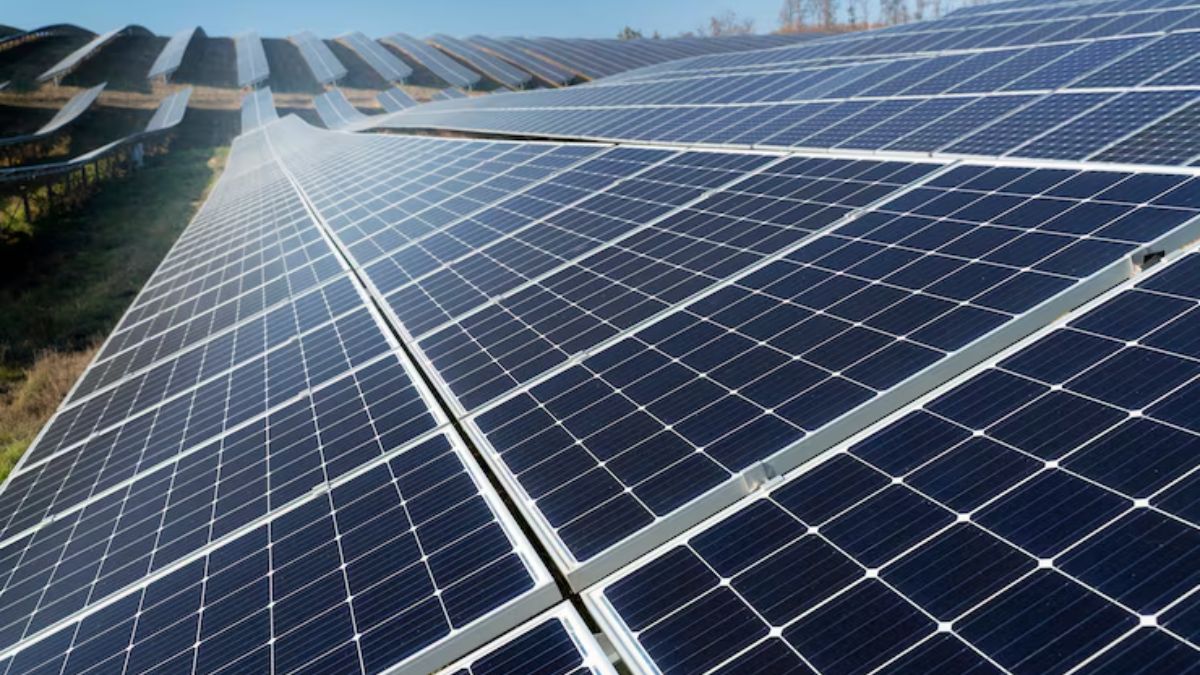
India has built many more solar power projects in the past 12 years.
Most large projects are owned or developed by companies.
The authors say farmers should also be able to own solar plants.
They suggest putting solar panels high above crops so the same land can produce food and electricity.
This approach is called agri-photovoltaics.
They believe it could raise farm incomes and reduce the cost of electricity subsidies.
A pilot project in Rajasthan showed much higher earnings from selling energy and growing suitable crops under the panels.
The authors also say loans, subsidies, storage, and solar cooperatives would be needed to expand the idea.

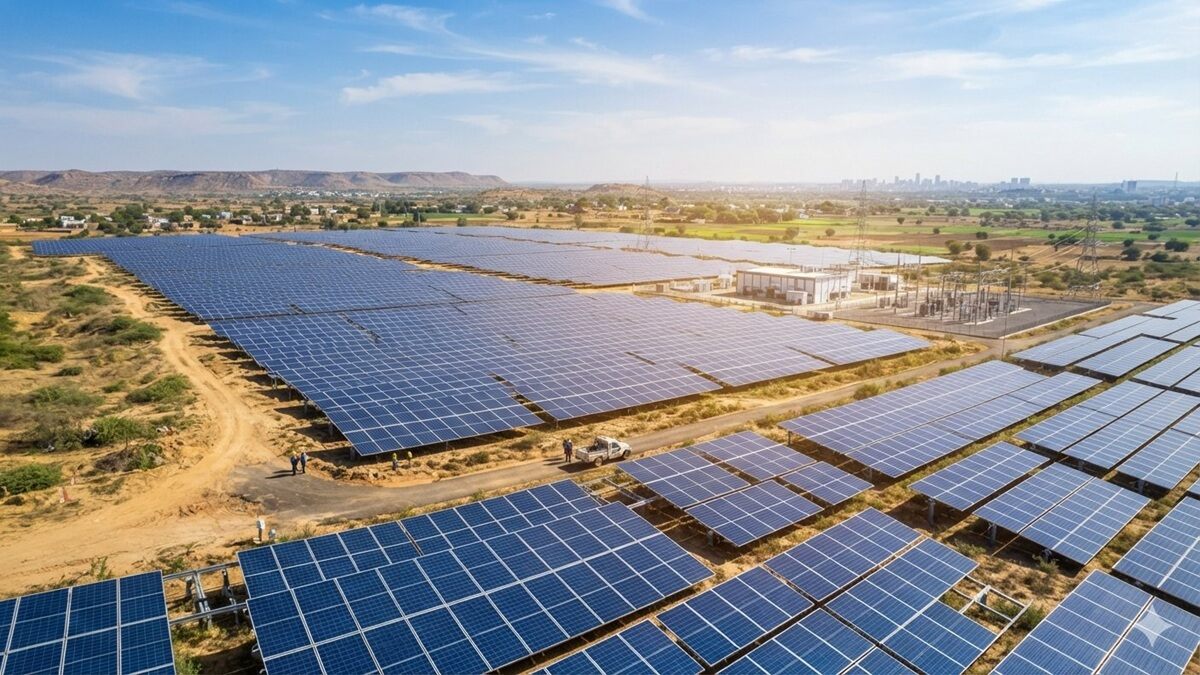
India's installed solar capacity has grown from 2.82 GW to 168.04 GW in about 12 years.
Utility-scale projects account for 74% of capacity, while rooftop systems make up roughly 20%.
The authors propose expanding PM-KUSUM Component A with capital subsidies for farmer-owned solar plants.
Agri-photovoltaic systems would place elevated solar panels over farmland, allowing crops and energy production together.
An ICRIER pilot in Rajasthan reported nearly tenfold higher potential income from solar sales and shade-tolerant horticulture.
- Who
- Indian farmers, farmer producer companies, government agencies, power distributors, and solar developers; the proposal is made by Ashok Gulati and Subhodeep Basu of the Indian Council for Research on International Economic Relations.
- What
- A proposal to expand farmer-owned solar generation through PM-KUSUM Component A and agri-photovoltaic systems.
- Where
- India, including a 600-kW pilot project in Rajasthan and the Khavda Solar Park in the Rann of Kutch.
- When
- India's solar capacity is reported as of last month; the Rajasthan pilot and current policy proposals are discussed in the article.
- Why
- To increase farmers' incomes, reduce electricity subsidy and distribution-company pressures, support rural industrialisation, and produce clean energy.
Key facts
- India's solar capacity
- 168.04 GW by last month, up from 2.82 GW about 12 years earlier.
- Utility-scale share
- Approximately 74% of installed solar capacity.
- Rooftop target
- PM Surya Ghar aims to bring rooftop solar to one crore households.
- Household subsidy
- A 3-kW rooftop system receives Rs 78,000 in central support; in Uttar Pradesh, total support can reach Rs 1.08 lakh.
- Rajasthan pilot
- A 600-kW PM-KUSUM Component A plant was financed with a Rs 1.4-crore State Bank of India loan, Rs 60 lakh from farmers, and Rs 35 lakh in corporate social responsibility funds.
- Agricultural power subsidy
- The article cites an average supply cost of about Rs 8.5 per kWh versus realisation of around Rs 1 per kWh from agricultural consumers.
- Suggested feed-in tariff
- The authors propose a differentiated tariff of Rs 4.5 per kWh for agri-photovoltaic projects.
Sources
Related news
India to Host Global Agrivoltaics Conference in 2026

Solar Projects Give Farmers New Income Beyond Traditional Farming
India’s Solar Capacity Reaches 168 GW, Enters Storage-Led Growth

Uttar Pradesh Expands Rooftop Solar Under PM Surya Ghar Scheme
PM Surya Ghar Delivers ₹502 Crore Subsidies Across Malwa-Nimar

Andhra Pradesh Accelerates PM-KUSUM Feeder-Level Solarisation Projects Statewide

BJP Chief Ministers Rally Behind Election Chief Against Gandhi

PM Modi Recalls Indian Victims of 9/11 Attacks
Maharashtra BJP's Seva Sankalp Yatra Reaches Amravati, Expands Grassroots Outreach

Nitin Nabin Joins Bengal Workers for Mann Ki Baat

Former Kerala Chief Secretary Alleges CEC Sought BJP Candidate