2 weeks ago
SHANTI Act draft rules open India's nuclear power to private firms

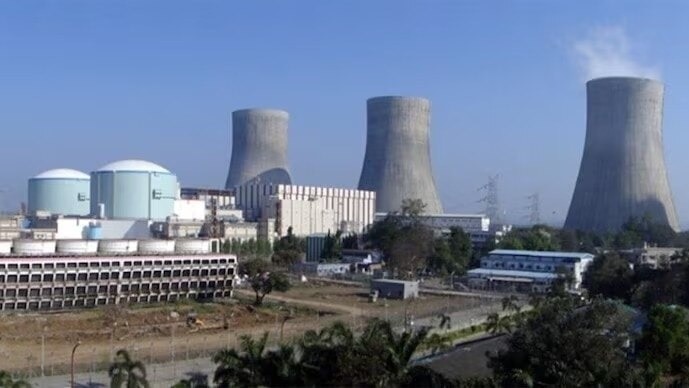
For a very long time, only the government in India could make nuclear power.
Private companies were not allowed to build or run nuclear plants.
Now, the government has written new rules that let private companies help.
These rules come from a new law called the SHANTI Act.
Companies can now build, own, run, and even take apart nuclear plants.
They only need one licence instead of many approvals.
Nuclear power can also be used for more than electricity, like making heat for factories and hydrogen.
The government will still keep control of important things like uranium and thorium mining.
Safety checks will still happen at every step.
Some experts think this will help India build smaller nuclear reactors called SMRs.

The Department of Atomic Energy (DAE) released draft rules under the SHANTI Act, 2026 that open civil nuclear power generation to private companies.
Private firms can now build, own, operate and decommission nuclear plants, a role previously restricted to public sector entities.
A single composite licence covering construction, ownership, operation and decommissioning will replace multiple stage-wise approvals.
The framework extends nuclear use to captive power, industrial process heat and hydrogen production, and allows approved domestic and foreign reactor technologies.
Elara Capital says the rules could accelerate India's Small Modular Reactor plans, with NTPC, Jindal Nuclear, Tata Power, Reliance and Adani Power among potential beneficiaries.
- Who
- The Department of Atomic Energy (DAE), which released the draft rules, and private companies that could now enter nuclear power generation.
- What
- Draft rules under the SHANTI Act, 2026 that allow eligible private firms to build, own, operate and decommission nuclear plants and reactors.
- Where
- India.
- When
- The draft rules were released under the SHANTI Act, 2026; no specific release date is given in the article.
- Why
- To enable private participation in civil nuclear power and potentially accelerate India's Small Modular Reactor (SMR) plans.
Key facts
- Issuing body
- Department of Atomic Energy (DAE)
- Legislation
- Sustainable Harnessing and Advancement of Nuclear Energy for Transforming India (SHANTI) Act, 2026
- Key change
- Private firms can build, own, operate and decommission nuclear plants, previously restricted to PSUs
- Licensing
- Single composite licence covering construction, ownership, operation and decommissioning
- New applications
- Captive power, industrial process heat and hydrogen production
- Government control retained
- Uranium and thorium mining
- Safety approvals
- Stage-wise: site selection, construction, commissioning, operations, decommissioning
- Potential SMR developers
- NTPC, Jindal Nuclear, Tata Power, Reliance, Adani Power
- Potential EPC/equipment players
- L&T, BHEL, Power Mech Projects, MTAR Technologies, Walchandnagar Industries
Quotes
Elara Capital Research Analyst
Brokerage firm analyst assessing nuclear policy impact
“The SHANTI Rules and Regulations could materially accelerate India’s small modular reactor (SMR) opportunity by providing a framework for private participation.”
 financialexpress.com
“The framework's allowance for approved domestic and foreign reactor technologies could facilitate technology partnerships and faster deployment.”
financialexpress.com
Sources
Related news

US Nuclear Industry Prepares Feedback on India’s SHANTI Rules

US, India Discuss Civil Nuclear Partnership Amid SHANTI Act

India's Draft Nuclear Rules Put Five Stocks Under Watch

SHANTI Rules Seek to Boost India’s Nuclear Investment

India Opens Its Nuclear Power Sector to Private Participation
India Inc Flags Tariff, Technology Concerns in Nuclear Rules

Jefferies Sets Target Prices for Indian Industrial Stocks

Indian Rs 1 Trillion Market Cap Club Expands

Edelweiss Large & Mid Cap Fund Bets on Next Cycle
Adani Power Nears Record High on Raipur Expansion Progress

JM Financial Sees 30% Upside in Adani Power Shares