1 week ago
India Inc Flags Tariff, Technology Concerns in Nuclear Rules
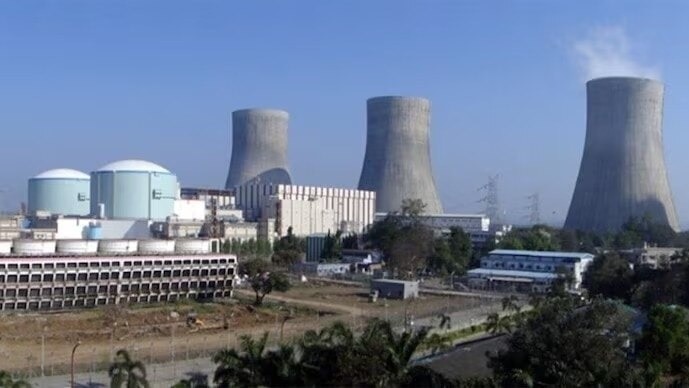
Indian companies want to build more nuclear power plants, including plants used mainly by their own businesses.
They say the proposed rules do not answer several important questions.
These questions include which foreign nuclear technologies can be used and when foreign investors can provide money.
Companies also want clear rules for electricity prices and contracts to sell the power.
Banks may be unwilling to lend money without a firm power purchase agreement.
The draft says foreign designs must already be operating and licensed in their home country.
Some companies worry this could delay the use of newer small reactors.
Businesses also want smaller safety exclusion zones around reactors, but the government has not yet set different distances in the draft.

Industry companies including Jindal Nuclear Power, Adani Group, Tata Power, Reliance, JSW and Hindalco have expressed interest in captive nuclear plants.
Industry representatives seek clearer rules on foreign technology licensing, foreign direct investment, tariffs and power purchase agreements.
The draft requires foreign-origin designs to be operational and licensed in their country of origin before approval in India.
Tariff methodology and standard power purchase agreement guidelines have not yet been specified in the draft rules.
Industry wants reactor exclusion zones reduced from 1 kilometre to 500 metres, while the Department of Atomic Energy says the issue is under consideration.
- Who
- Indian industry players, including Jindal Nuclear Power Private Limited, Adani Group, Tata Power, Reliance, JSW and Hindalco, along with the Department of Atomic Energy.
- What
- Industry has raised concerns about draft SHANTI Act nuclear rules covering technology licensing, FDI, tariffs, PPAs and reactor exclusion zones.
- Where
- India, including proposed nuclear project sites and the broader Indian electricity market.
- When
- The concerns relate to the draft rules currently under consideration; India’s stated nuclear capacity target is for 2047.
- Why
- Industry says greater regulatory clarity is needed to finance, develop and sell power from private and captive nuclear plants.
Industry concerns
Government and draft-rule position
Foreign technology licensing
Industry concerns
Industry says indigenous and foreign technology need clearer definitions and argues that the operational requirement could delay the use of newer small modular reactor designs.
Government and draft-rule position
The draft requires foreign-origin designs to be operational and licensed in their country of origin, supported by certification documents and the original developer’s concurrence.
Tariff and power sales
Industry concerns
Industry wants a defined tariff methodology and standard PPAs for electricity supplied to utilities, captive users or commercial and industrial customers.
Government and draft-rule position
The Department of Atomic Energy has said a government committee will determine tariffs, while the draft defers tariff determination to a future notification.
Reactor exclusion zones
Industry concerns
Industry is seeking a reduction from 1 kilometre to 500 metres for smaller and larger reactors, saying the distance affects land requirements.
Government and draft-rule position
The Department of Atomic Energy has said the issue is being considered; the current draft instead requires project proponents to submit radiation-level calculations for a decision.
Key facts
- Current nuclear capacity
- India currently has 8.7 GW of nuclear power capacity.
- 2047 target
- India is targeting 100 GW of nuclear power by 2047.
- Foreign technology requirement
- Foreign-origin designs must be operational and licensed in their country of origin, with design certification and original developer concurrence.
- Tariff rules
- Tariff determination is deferred to a future notification based on recommendations from a separate committee.
- PPA concern
- Industry is seeking standard nuclear power purchase agreement guidelines, saying PPAs are necessary for bank financing.
- FDI policy
- The Department of Atomic Energy is still working on the nuclear-sector FDI policy, which is not mentioned in the draft rules.
- Exclusion zone proposal
- Industry has proposed reducing the current 1-kilometre exclusion zone to 500 metres.
Quotes
Unnamed nuclear project proponent
Project proponent discussing reactor exclusion zones and land requirements.
“If the Indian regulator will allow a private developer in India to implement those technologies only when it is operational, then I can apply for the license only after 2034- 35. Across the world, the Small Modular Reactors (SMRs) are in the design stage and operational on an experimental basis. As these will be operational only by 2034-35,”
 businesstoday.in
“Now they will take a call is again, you know, open for interpretation. So they have to clearly specify that for 220 MW, this is the exclusion zone, and for 700 MW, this is the exclusion. It has got a clear bearing on the land required to put up the plant,”
businesstoday.in
Sources
Related news

SHANTI Act draft rules open India's nuclear power to private firms

India's Draft Nuclear Rules Put Five Stocks Under Watch

US Nuclear Industry Prepares Feedback on India’s SHANTI Rules
India opens nuclear sector to foreign technology under strict oversight

SHANTI Rules Seek to Boost India’s Nuclear Investment
NPCIL Plans Design Unit as Private Nuclear Entry Expands

CERC Framework Gives Malwa-Nimar Renewable Projects More Time
India’s Power Derivatives Market Starts Strong, Then Loses Momentum
India Proposes New Charge Affecting Bangladesh Electricity Imports

India weighs storage changes to revive stalled renewable-energy bids