1 week ago
US, India Discuss Civil Nuclear Partnership Amid SHANTI Act
The United States and India are working together on nuclear energy for peaceful uses.
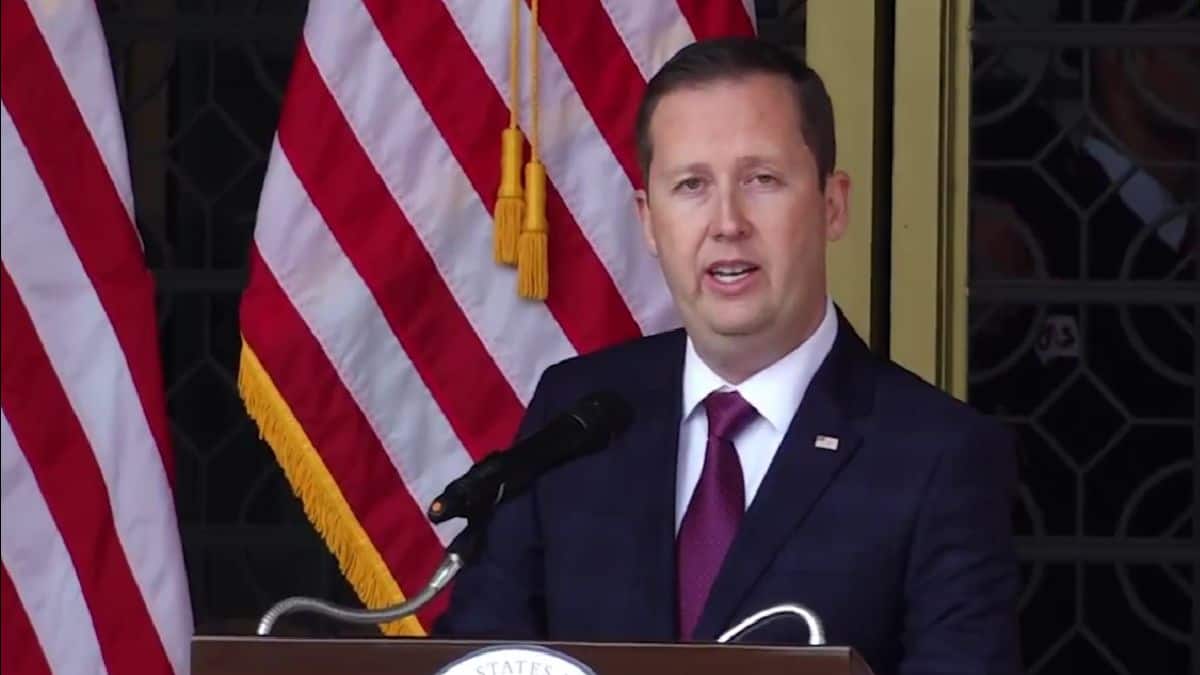
US Ambassador Sergio Gor spoke with India’s atomic energy secretary, Ajit Kumar Mohanty.
Mohanty is expected to visit the United States soon.
India recently passed a law called the SHANTI Act.
This law lets some private companies help build and operate nuclear facilities.
The government will still control important safety and licensing decisions.
US nuclear companies are studying India’s draft rules and preparing comments.
India wants much more nuclear power in the future to meet energy needs and use fewer fossil fuels.

US Ambassador Sergio Gor discussed civil nuclear cooperation with India’s atomic energy chief Ajit Kumar Mohanty.
The discussion took place before Mohanty’s upcoming visit to the United States.
India’s SHANTI Act allows greater private-sector participation in building, operating and researching nuclear facilities.
The US-India Strategic Partnership Forum is coordinating industry feedback on draft SHANTI Act rules due September 4.
India aims to reach 100 gigawatts of nuclear capacity by 2047 and deploy at least five indigenous small modular reactors by 2033.
- Who
- US Ambassador Sergio Gor and Department of Atomic Energy Secretary Ajit Kumar Mohanty, with US and Indian nuclear-sector stakeholders involved in the wider process.
- What
- They discussed cooperation and partnerships in civil nuclear energy.
- Where
- The article does not specify where the conversation took place.
- When
- The conversation occurred before Mohanty’s upcoming visit to the United States; Gor had previously met Mohanty in June.
- Why
- The two countries are seeking deeper civil nuclear cooperation as India implements the SHANTI Act and expands private-sector participation.
Key facts
- Indian legislation
- The Sustainable Harnessing and Advancement of Nuclear Energy for Transforming India (SHANTI) Act.
- Private participation
- Eligible private companies and joint ventures may build, own and operate nuclear facilities, conduct decommissioning, and participate in nuclear research and development.
- Government oversight
- Licensing, regulatory clearances and safety-related matters remain under government oversight.
- Industry comments deadline
- Stakeholders were invited to submit comments on the draft rules by September 4.
- India’s nuclear target
- 100 GW of installed nuclear power capacity by 2047.
- Small modular reactor plan
- India plans to deploy at least five indigenous SMRs by 2033, with each designed to generate up to 300 MW.
Quotes

US Embassy in India
The United States diplomatic mission in India, commenting on bilateral nuclear cooperation
“working closely together to advance civil nuclear capabilities and partnerships”
 firstpost.com
Sources
Related news

US Nuclear Industry Prepares Feedback on India’s SHANTI Rules

SHANTI Act draft rules open India's nuclear power to private firms

India Opens Its Nuclear Power Sector to Private Participation
NPCIL Plans Design Unit as Private Nuclear Entry Expands

SHANTI Rules Seek to Boost India’s Nuclear Investment

Goyal to Visit United States for Trade Agreement Talks

Indian Firms Invest $40 Billion in U.S., Supporting Jobs

US-India Javelin Co-Production Deal Marks Defence Partnership Milestone

India’s Power Corridors See Kashmir Diplomacy, Security, Bureaucratic Reshuffles

Family Seeks US Intervention for Detained Mercenary Matthew VanDyke